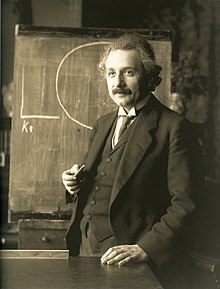
One of the greatest brains of the 20th century, Albert Einstein is renowned for his revolutionary contributions to physics. But there are many lesser-known, occasionally turbulent tales from his personal life—his family, marriages, and children—that provide a fuller picture of the man who was behind the talent.
Childhood and Initial Marriage
In Ulm, Germany, Einstein was born in 1879. Early indications of his academic interest were evident, and his family—particularly his father, Hermann, and uncle Jakob—had a great influence on him. Many of Einstein’s ground-breaking theories were created while he was employed at a patent office in Bern, Switzerland, following his graduation from the University of Zurich.
Mileva Marić, a fellow student at the Zurich Polytechnic, was the sole female student in their physics class when Einstein first met her. As their friendship developed into a loving one, they got married in 1903. Mileva was a Serbian mathematician and physicist. While historians disagree on this point, there is some conjecture that she may have influenced Einstein’s early research.
Lieserl’s Mysteries
Einstein and Mileva had a daughter, Lieserl, born in 1902, before to their marriage. There are still unanswered questions regarding Lieserl. It is thought that she either passed away from scarlet fever in her early years or was given up for adoption. Her destiny is still one of the most heartbreaking mysteries in Einstein’s personal life as there are no formal records of her existence after 1903.
Divorce and Marital Distress
Due to their different personalities and Einstein’s rising reputation, Mileva and him had a rocky marriage. There was a great deal of tension in their relationship because Einstein was so preoccupied with his profession and frequently neglected his household obligations. Hans Albert and Eduard were the couple’s two sons. While Eduard spent a large portion of his life in psychiatric facilities after being diagnosed with schizophrenia, Hans Albert went on to become a renowned professor of hydraulic engineering.
After Einstein accepted a job in Berlin in 1914, the couple parted ways, and Mileva went back to Zurich with their boys. In 1919, they got divorced formally. Einstein promised Mileva his share of the Nobel Prize money as part of the divorce settlement, and he fulfilled this promise in 1921 when he was awarded the prize.
Elsa Löwenthal’s second marriage
In 1919, Einstein wed Elsa Löwenthal, his cousin. Einstein’s home environment became more stable and encouraging as a result of their interaction. Einstein assisted Elsa in raising Ilse and Margot, her two daughters from her prior marriage. Even though he was married twice, Einstein had multiple romantic encounters with different women, which occasionally led to conflict in his marriage with Elsa.
Connections with Kids
The bond between Einstein and his kids was complicated. Throughout his life, he remained in close contact with his older son, Hans Albert. However, because of Eduard’s mental health problems, their connection was problematic. Although deeply saddened by Eduard’s predicament, Einstein could not seem to get close to him.
Subsequent Times and Legacy
Later in life, Einstein made his home in Princeton, New Jersey, where he was employed by the Institute for Advanced Study. He led a simple existence, frequently distinguished by his laid-back style and friendly disposition. Even after gaining notoriety, Einstein stayed committed to both science and charitable work.
Decades after his death, Einstein’s personal papers were made public. They show the depth of his correspondence and his opinions on a range of topics, including love, family, and science. These records offer more insight into Einstein’s personality than just his scientific accomplishments.
Final Thoughts
Complications, paradoxes, victories, and tragedies characterized Albert Einstein’s personal life. His connections with his spouses, kids, and other family members were complex and frequently difficult. These little-known tales provide context for Einstein and reveal more about the man behind the brilliant mind that altered our conception of the cosmos.