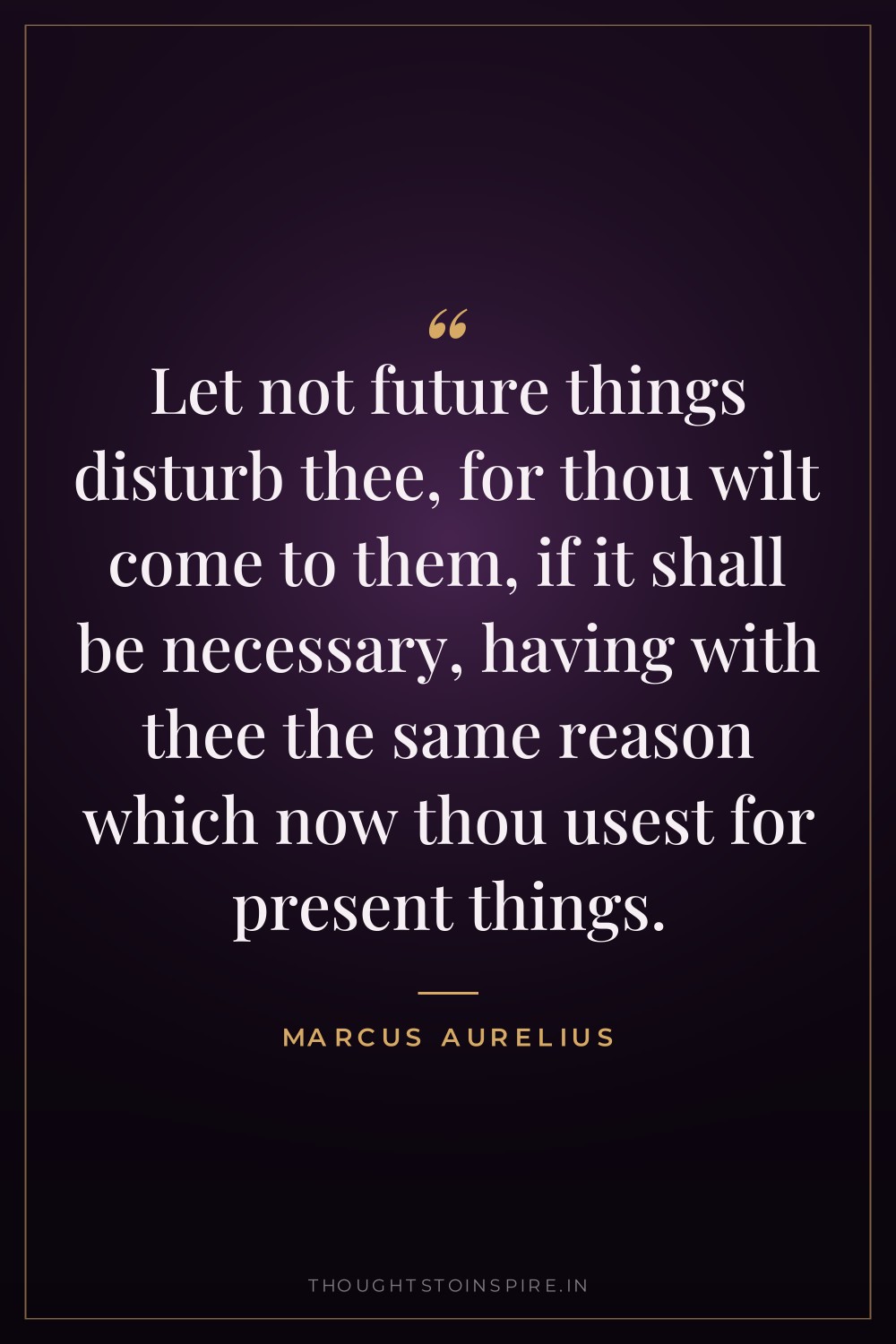
— Meditations, Book 7 (tr. George Long, 1862)
About this quote
हिन्दी में
भविष्य की बातें तुम्हें विचलित न करें; यदि उनका सामना करना ज़रूरी हुआ, तो तुम वहाँ भी उसी विवेक के साथ पहुँचोगे जिससे तुम आज के काम निपटा रहे हो।
What it means
Notice what the sentence does not promise: nothing whatever about the event. It concedes the thing may arrive, and offers no assurance that it will turn out mild or survivable. The only claim made is about what you will be carrying when you get there.
The evidence it offers is in the present tense. You are, at this moment, applying judgement to something; that is the same faculty that will be on duty later, so the comparison is with a capacity you can check rather than a hope about the future. It is consolation that works by claiming less, which is why it wears better than the cheerful kind.
What it teaches you
When you catch yourself running a scenario for the fourth time, ask the specific question the line implies: what would I need there that I do not already have? Usually the answer is information that has not arrived yet, and rehearsal cannot produce it. It also helps to look back at something you dreaded three months ago and notice which faculty actually handled it when it came.
अर्थ और सीख
यह पंक्ति यह नहीं कहती कि आने वाला संकट हल्का होगा — इस बारे में वह कोई वादा ही नहीं करती। वह सिर्फ़ इतना कहती है कि जिस विवेक से तुम आज के काम निपटा रहे हो, वही कल भी तुम्हारे साथ रहेगा। सीख: भविष्य का दृश्य बार-बार दोहराने से पहले पूछो कि वहाँ मुझे क्या चाहिए होगा जो अभी मेरे पास नहीं है — जवाब आम तौर पर वह जानकारी होती है जो अभी आई ही नहीं।
Where it comes from
This is an argument against rehearsing future disasters. Whatever arrives will be met by the same reasoning faculty you are using right now — so the resources you would need are not missing, only not yet called on. Worry pretends you must face tomorrow unequipped; the line answers that you will bring yourself along.
From Book 7 of the Meditations of Marcus Aurelius, as translated into English by George Long in 1862. The conditional phrasing, if it shall be necessary, is Long’s older idiom for if it turns out to be necessary.