— Moby-Dick (1851), Chapter 1
About this quote
हिन्दी में
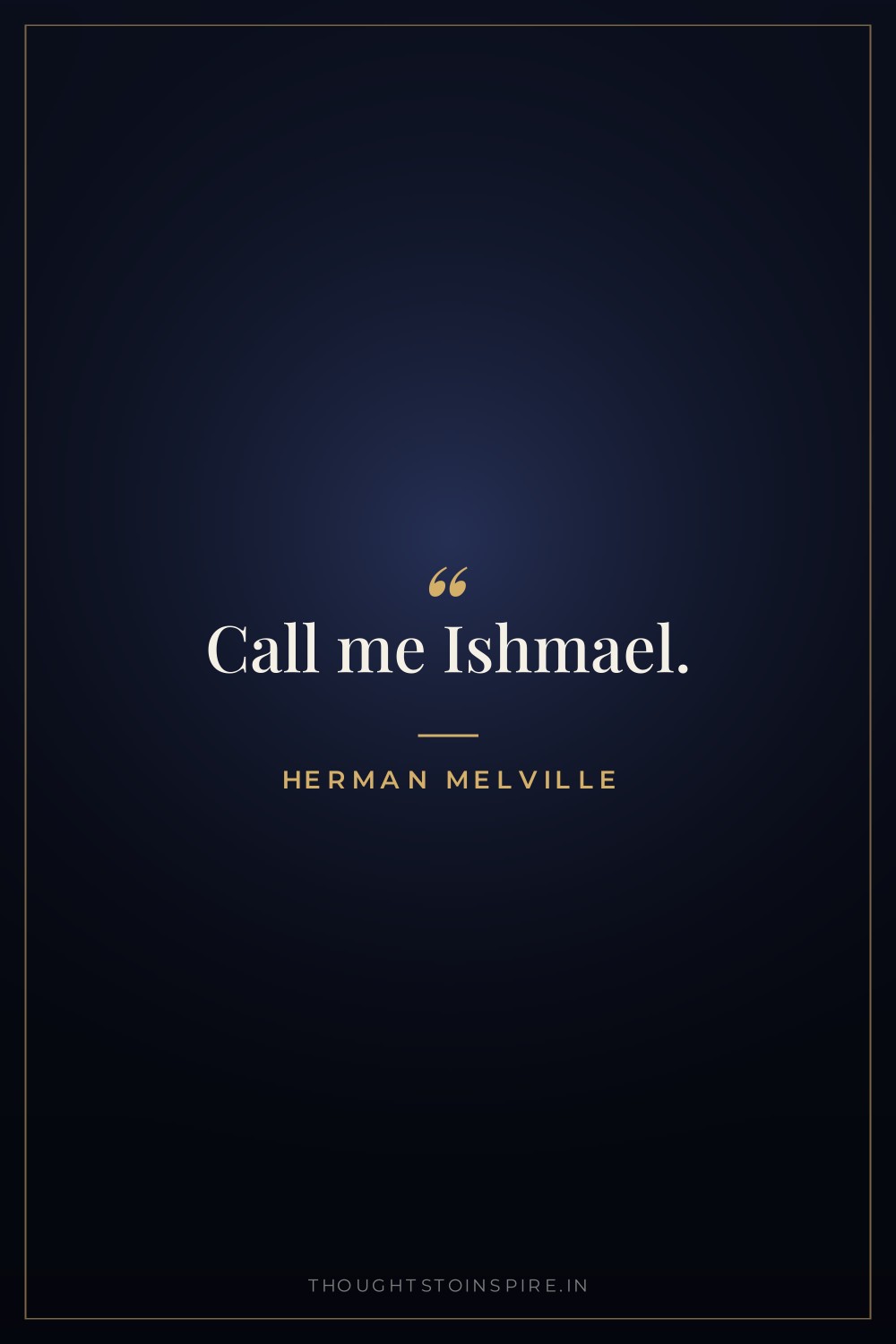
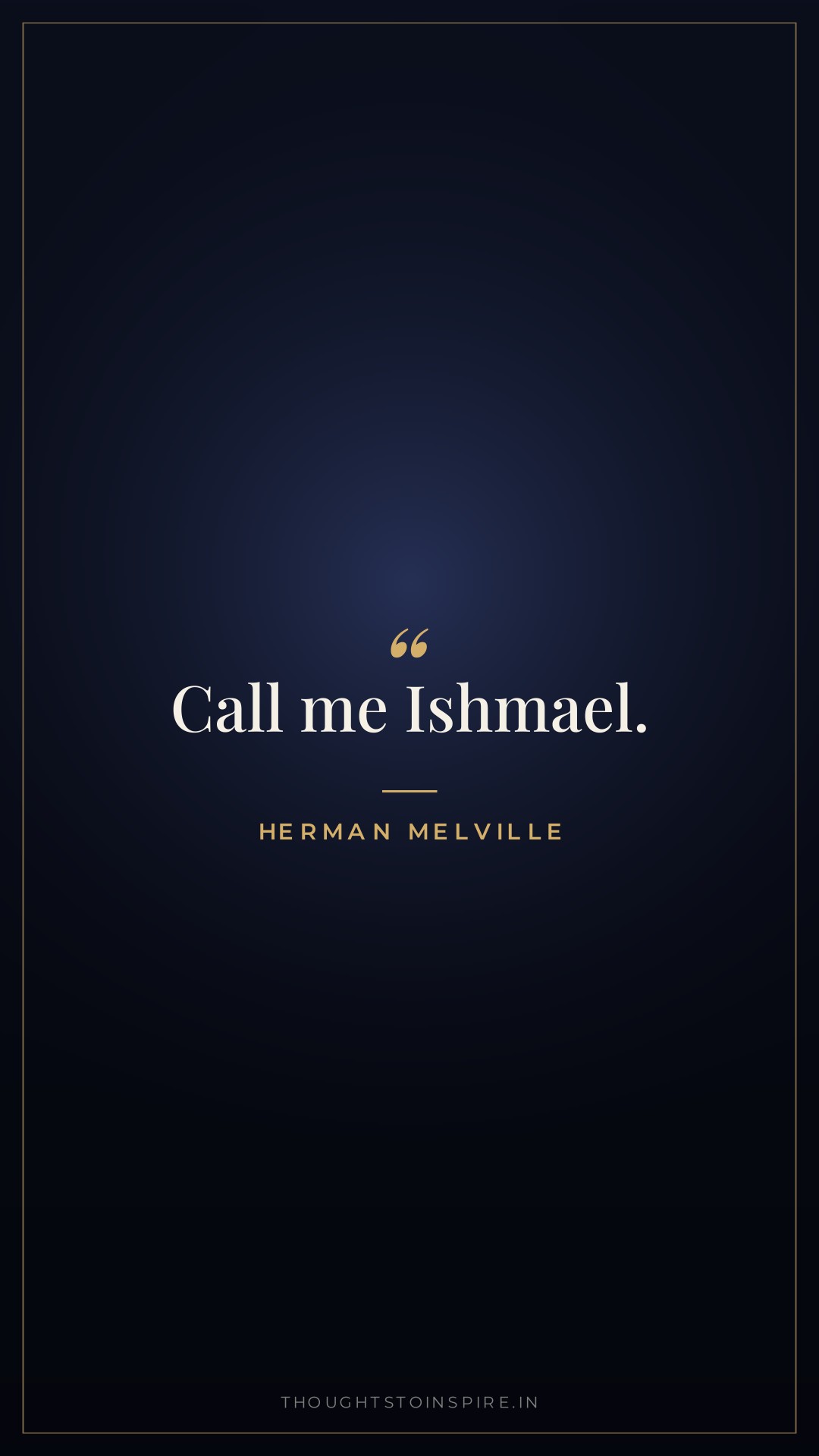
मुझे इश्माएल कह लीजिए।
What it means
The three words presuppose a second person. Something is being asked of someone, which means a listener exists before anything else in the book does, and that listener is you. The novel begins by putting the reader into a relationship rather than into a place or a year, and the reader agrees without being asked twice.
The name itself is not neutral. Readers have long heard in it the Biblical Ishmael, the outcast son sent away into the wilderness, which loads the opening with a claim about the speaker’s position in the world that the sentence does not have to state. Quoted on its own as the model of a perfect first line, it is usually being admired for its brevity, which is the least interesting thing about it.
What it teaches you
When a first sentence strikes you as perfect, separate what it asserts from what it merely requests, and notice how readily you granted the request. Here you have been given a form of address, an allusion, and a companion, and no verifiable information whatever. The same move happens outside fiction every time someone introduces themselves by a role, a handle or a title: you have accepted a term to use, which is not the same as having learnt who is speaking.
अर्थ और सीख
यह पंक्ति पाठक को पहले ही वाक्य में एक साझेदार बना लेती है: बात किसी सुनने वाले से की जा रही है, और वह सुनने वाला आप हैं। ‘इश्माएल’ बाइबिल के उस बेदखल बेटे का नाम है जिसे जंगल भेज दिया गया था, और पाठक सदियों से यह गूँज सुनते आए हैं — यानी नाम ख़ुद एक दावा है। सीख यह है कि किसी शुरुआत को ‘बेहतरीन’ कहने से पहले देखिए कि उसने आपको क्या दिया और आपसे क्या सिर्फ़ मान लेने को कहा।
Where it comes from
Three words that open the novel, and among the most recognised in American literature. The economy is deliberate: no surname, no explanation, an instruction rather than an introduction.
Melville gives you a narrator who tells you what to call him without telling you who he is — a small opening move in a book that spends six hundred pages refusing to settle what anything means.