— Widely circulated under Rumi’s name; no source identified
About this quote
हिन्दी में
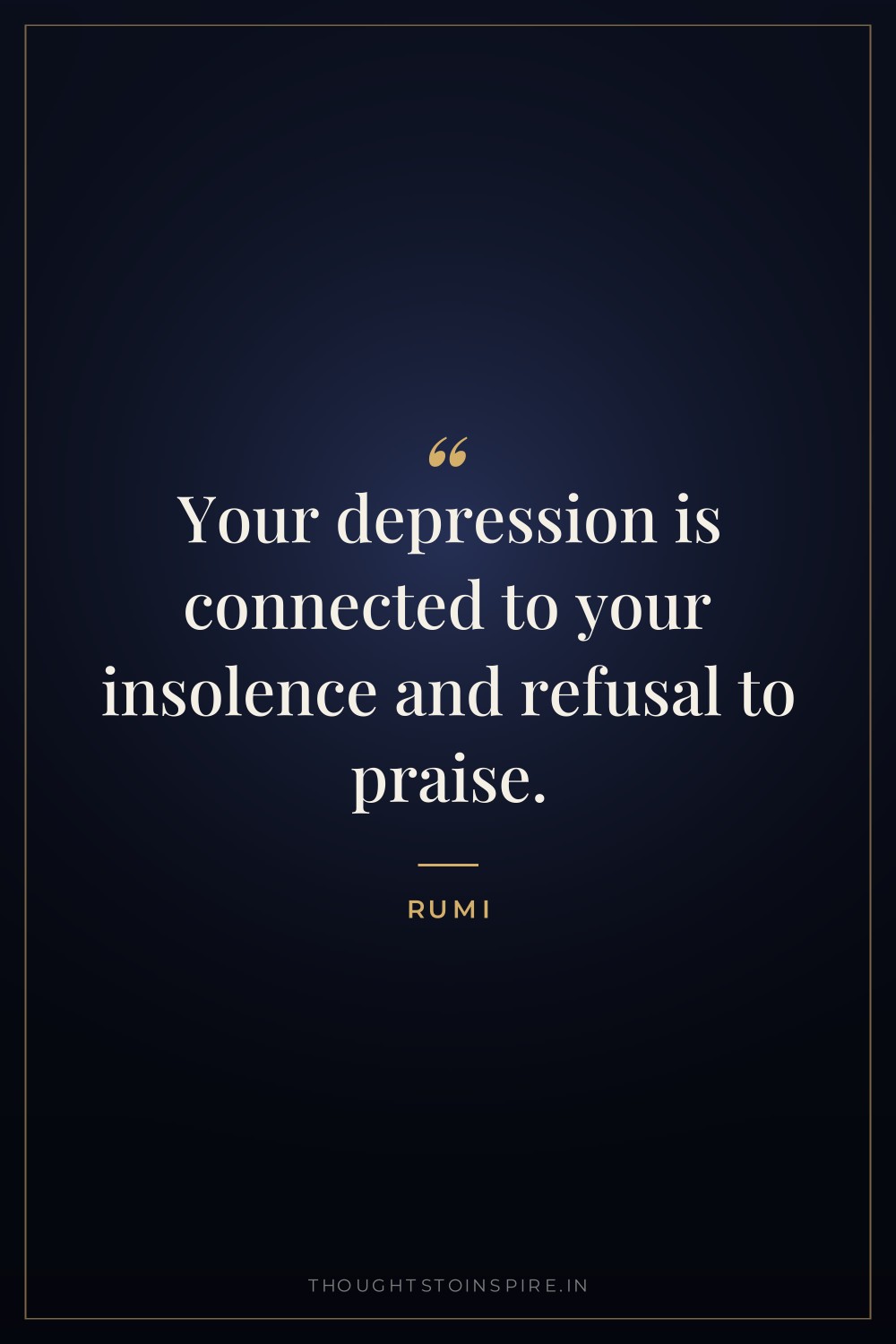
तुम्हारा अवसाद तुम्हारी अकड़ और प्रशंसा करने से इनकार से जुड़ा हुआ है।
What it means
This is the least consoling line in wide circulation under Rumi’s name, and the accusation is specific: not sadness, not grief, but insolence and a refusal — an active withholding, something you are doing rather than something you lack. It treats praise as a faculty that can be exercised or declined, and it puts the cost of declining on the one who declines.
It is often softened into a wellness tip, that gratitude lifts your mood. The mechanism claimed is rougher than that: contempt, kept up long enough, produces a world in which nothing is worth praising, and such a world is unlivable. Said honestly, the line also predates the clinical category by centuries — read as a statement about a diagnosed illness, or repeated to someone who has one, it is both false and cruel.
What it teaches you
If the week has gone flat, count the things you actually said were good — out loud, to a person — and set that against the number of things you found the flaw in. The claim on offer is that the fault-finding comes first and the flatness follows, which is at least testable, unlike most claims about mood.
अर्थ और सीख
यह पंक्ति उदासी को नहीं, एक रवैये को दोषी ठहराती है — अकड़ और प्रशंसा करने से इनकार, जो ‘न होना’ नहीं बल्कि करना है। इसका तर्क यह है कि लगातार नुक़्स निकालते रहने से ऐसी दुनिया बन जाती है जिसमें सराहने लायक कुछ बचता ही नहीं, और वैसी दुनिया में रहना मुश्किल है। ध्यान रहे, यह चिकित्सकीय अवसाद का निदान नहीं है और किसी बीमार व्यक्ति पर इसे थोपना निर्दयता होगी — सबक बस इतना है कि इस हफ़्ते आपने कितनी चीज़ों को अच्छा कहा, यह गिनकर देखिए।