— Dhammapada, verse 1 (tr. F. Max Muller, 1881)
About this quote
हिन्दी में
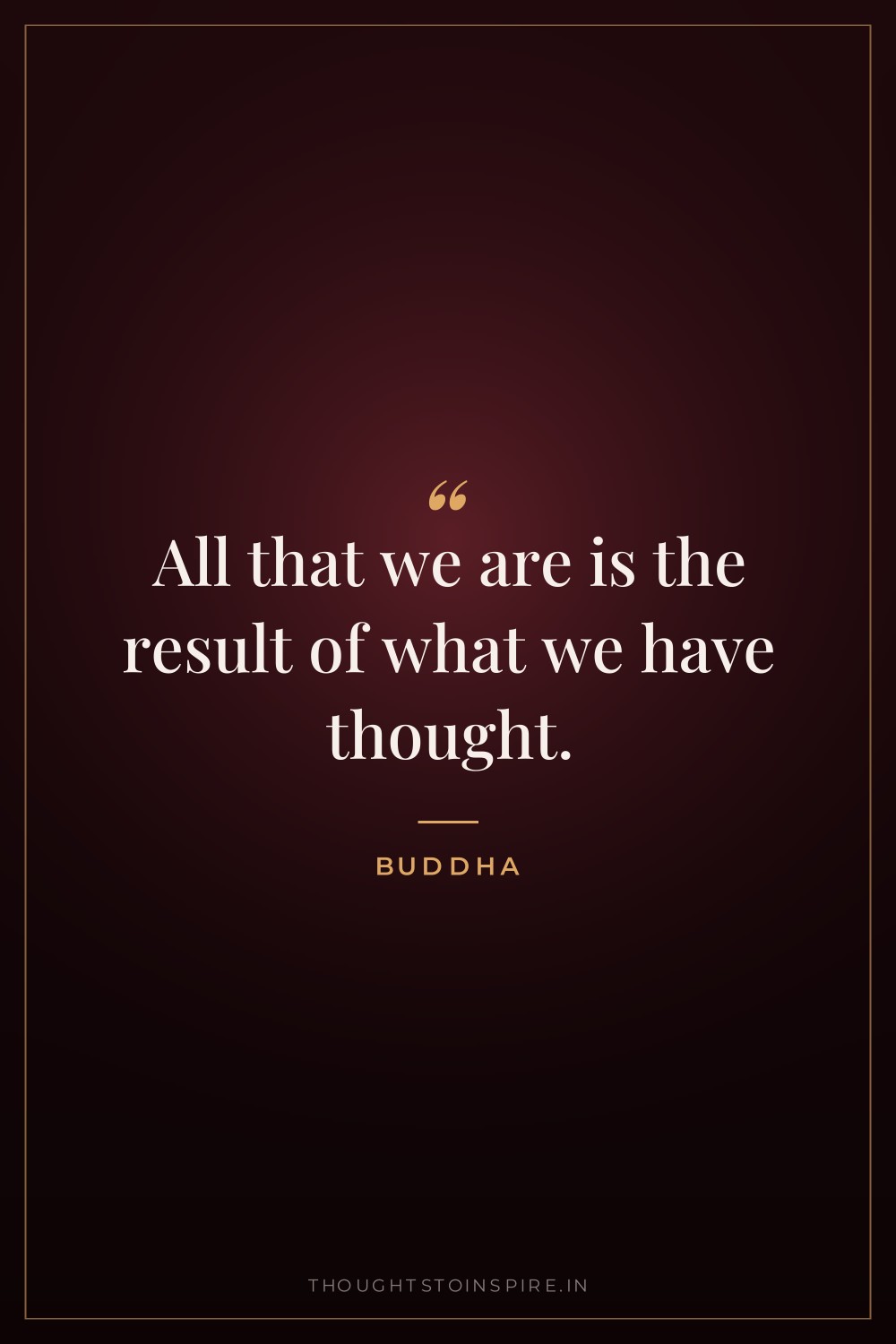
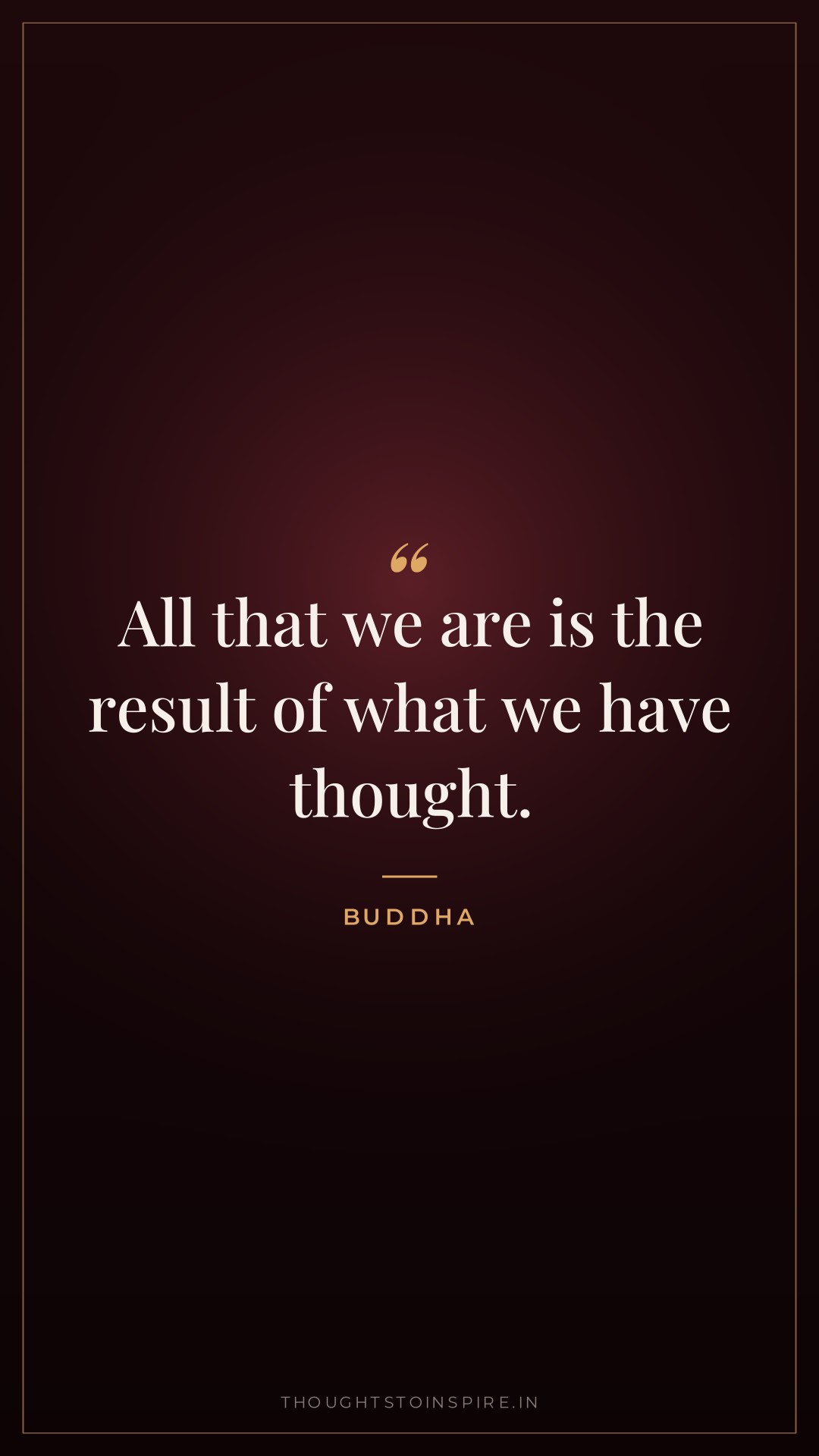
हम जो कुछ हैं, वह हमारे सोचे हुए का ही परिणाम है।
What it means
The tense matters: what we have thought, accumulated, not what we thought this morning. The claim is that character is a deposit left by repetition, which means it is neither fixed at birth nor changeable by a single decision. You are, on this view, the residue of whatever you have most often rehearsed.
The popular reading has quietly swapped the object. It is usually quoted as a manifestation slogan — think about money and money arrives — but the sentence says the product of thought is what we are, not what we get. That is a narrower claim and a much harder one, since it makes no promises about circumstances and assigns no blame to the world for them.
What it teaches you
Identify the thought you rehearse most when nobody is watching — usually an imaginary argument you keep winning, or a grievance replayed with small improvements. Count it as practice, because by this line’s logic it is: repetition is how a mood becomes a temperament, and the private rehearsals are the ones with the most reps.
अर्थ और सीख
यहाँ काल पर ध्यान दीजिए — ‘सोचे हुए का परिणाम’, यानी एक विचार नहीं, बरसों की पुनरावृत्ति का जमाव; स्वभाव जन्म से तय नहीं है, पर एक निर्णय से बदलता भी नहीं। आजकल इसे ‘जो सोचोगे वही मिलेगा’ के अर्थ में उद्धृत किया जाता है, जबकि पंक्ति कहती है कि विचारों से परिस्थिति नहीं, स्वयं व्यक्ति बनता है। सीख यह है कि अकेले में जो कल्पित बहस या शिकायत आप बार-बार दोहराते हैं, वही असली अभ्यास है, क्योंकि उसी की आवृत्ति सबसे अधिक है।
Where it comes from
Genuine — this is the opening of the Dhammapada, verse 1, in F. Max Müller’s 1881 translation. The full verse continues: ‘it is founded on our thoughts, it is made up of our thoughts,’ with pain following a corrupted mind as the wheel follows the ox.
The complete twin verses 1 and 2 are on this site with full citations.