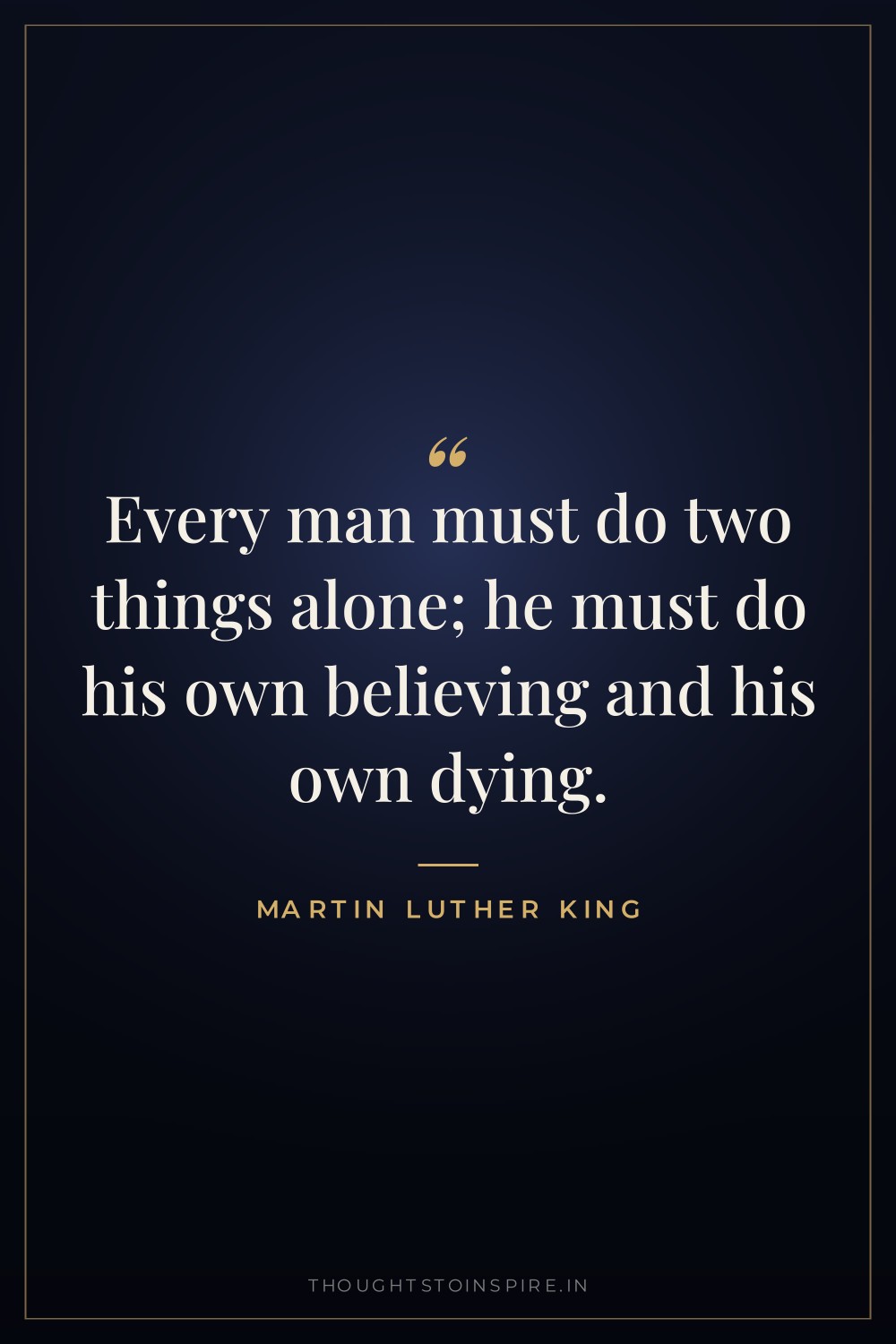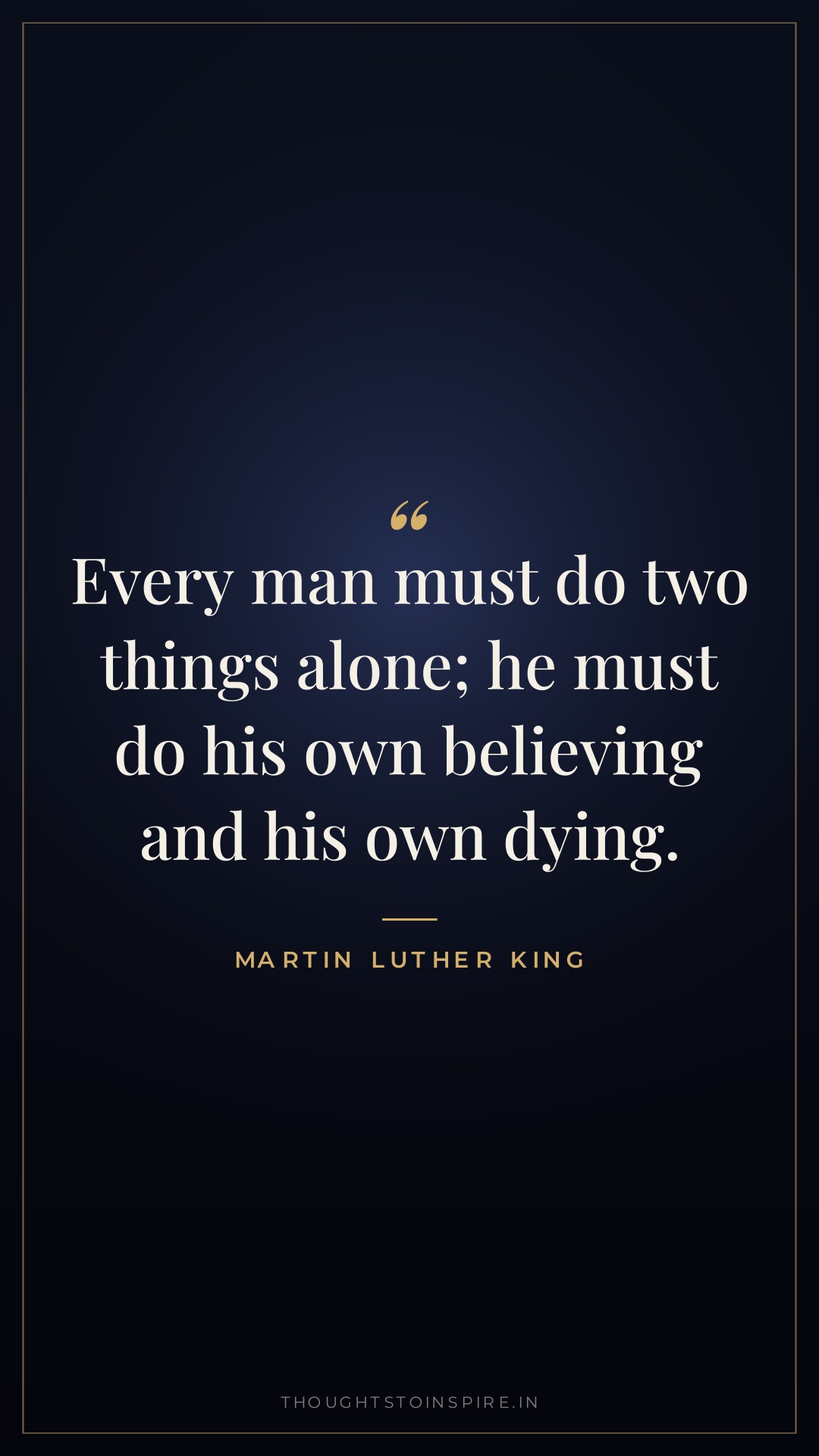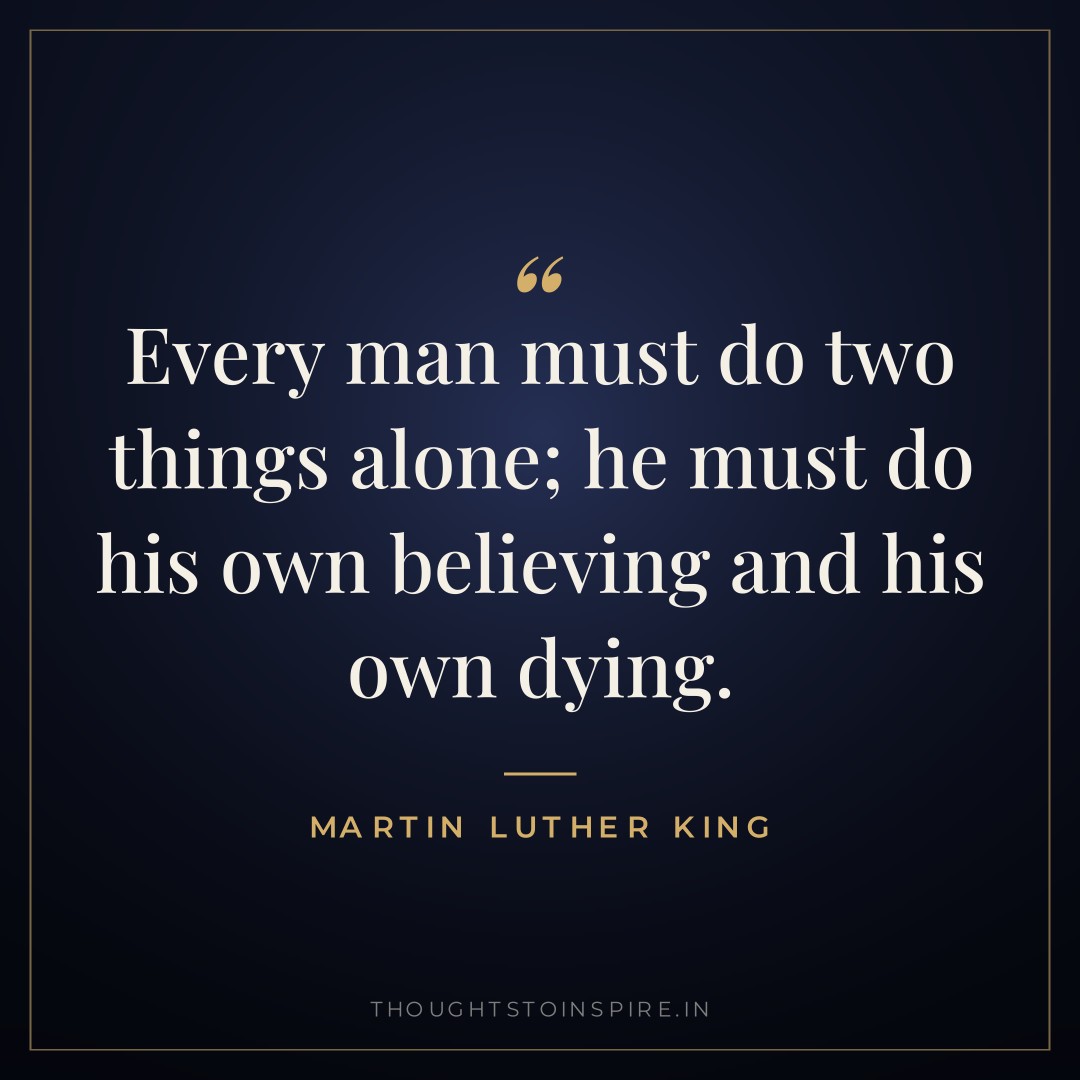
— Martin Luther, 1522 sermon; misattributed to Martin Luther King Jr
About this quote
हिन्दी में
हर इंसान को दो काम अकेले ही करने होते हैं — विश्वास उसे ख़ुद करना होता है, और मरना भी ख़ुद ही पड़ता है।
What it means
The sentence names exactly two items, and the pairing is the argument. Believing is placed in the same class as dying — not because faith is grim, but because both are acts nobody can perform on your behalf. A community can teach you, argue with you, and sit beside you, and none of that transfers the act itself.
It is usually quoted as general self-reliance, but the line is narrower and more interesting than that: by listing only two things, it concedes that nearly everything else in a life can be shared, carried, or done by someone else. It marks the limit of company rather than making a case against it.
What it teaches you
Take one conviction you actually hold — about God, about politics, about what your work is for — and ask when you last examined it rather than inherited it. The test the line implies is blunt: would it still stand if the people who handed it to you were not in the room? Where the answer is no, what you have is agreement, not belief, and agreement is exactly the thing that does not travel into the two situations named here.
अर्थ और सीख
इस पंक्ति का कहना है कि दो काम ऐसे हैं जो कोई दूसरा आपके लिए नहीं कर सकता — विश्वास करना और मरना। बाक़ी लगभग सब कुछ बाँटा जा सकता है, इसलिए यह अकेलेपन की तारीफ़ नहीं, बल्कि साथ की सीमा बताने वाली बात है। सीख यह है कि अपनी आस्था को उधार की तरह न रखें — जाँचिए कि वह सचमुच आपकी अपनी है, या सिर्फ़ घर और समाज से मिली हुई सहमति।
Where it comes from
A famous misattribution: these are the words of Martin Luther, the 16th-century German reformer — not Martin Luther King Jr. Luther wrote the thought in a 1522 sermon. The shared name causes the confusion, and the quote now circulates under both.