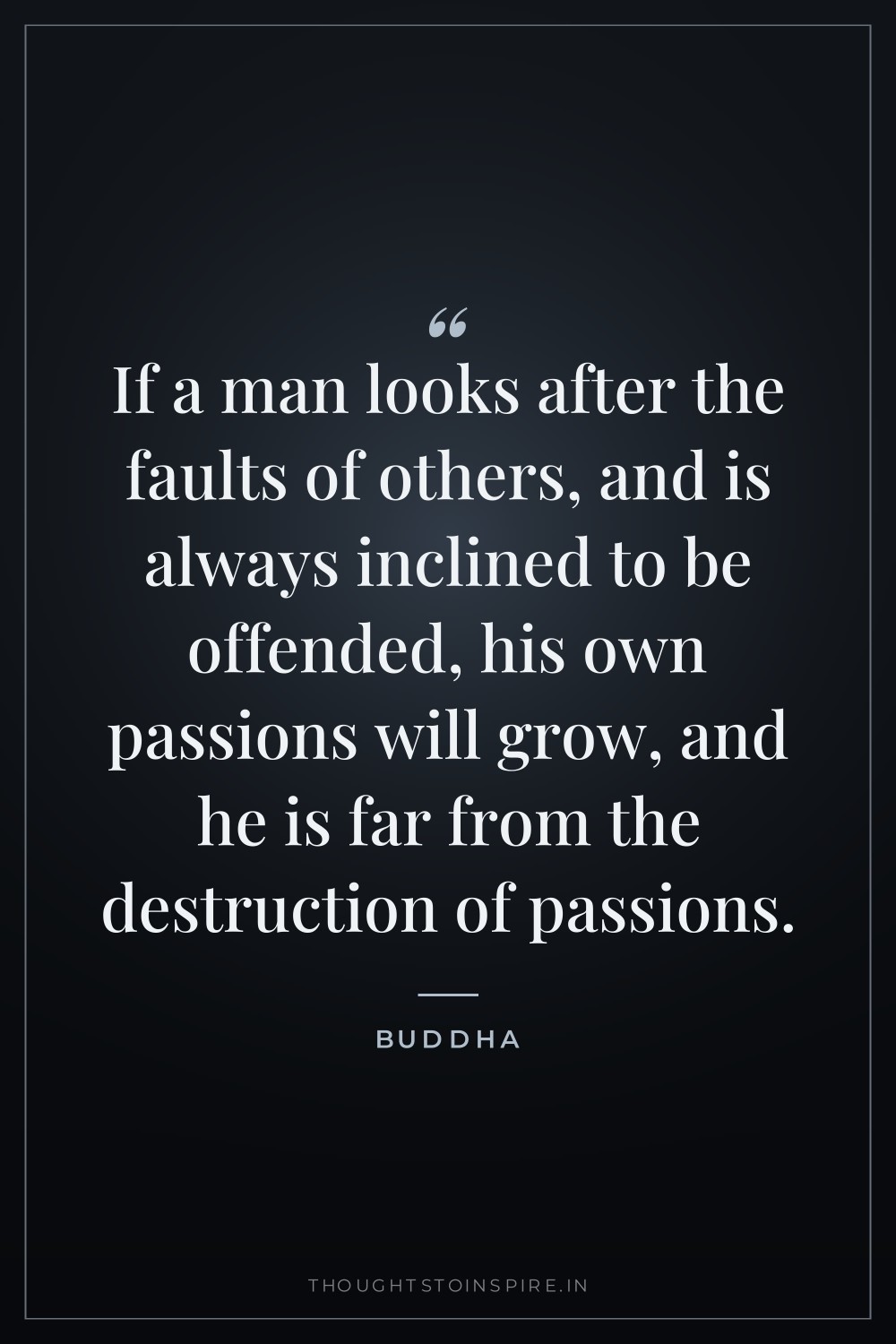
— The Dhammapada, verse 253 (tr. F. Max Müller, 1881)
About this quote
हिन्दी में
जो दूसरों के दोष ही ढूँढ़ता रहता है और बात-बात पर चिढ़ जाता है, उसके अपने विकार बढ़ते जाते हैं; वह विकारों के अंत से और दूर होता चला जाता है।
What it means
The claim here is mechanical rather than moral. Watching for other people’s faults and being quick to take offence is said to grow the very impurities the watcher presumably believes they stand above, and the closing measurement is distance — such a person is far from the end of the passions — not guilt or wickedness.
Notice what the line does not say. It does not say the faults are imagined, or that the offence is unearned. Every entry in the ledger may be accurate. The cost lies in the keeping of the ledger, a habit of attention that has to be fed daily and that returns the feeling of discernment while quietly producing the opposite.
What it teaches you
The tell is fluency. If you can deliver an ordered account of a colleague’s or a relative’s failings with no preparation at all, that readiness took maintenance, and this verse’s point is that you were the one paying for it. Treat how quickly the list arrives — not whether it is correct — as the thing to examine.
अर्थ और सीख
यह पद उपदेश से ज़्यादा एक यांत्रिक बात कहता है: दूसरों के दोष गिनते रहने और बात-बात पर बुरा मान जाने से अपने ही विकार बढ़ते हैं और मनुष्य उनके अंत से दूर होता जाता है। ध्यान दीजिए, यहाँ यह नहीं कहा गया कि दूसरों के दोष झूठे हैं — हिसाब सही भी हो सकता है, नुक़सान हिसाब रखने की आदत से होता है। सीख यह है कि किसी के दोषों की पूरी सूची अगर बिना सोचे तुरंत सुनाई जा सकती है, तो वह तैयारी आपने ही की है।
Where it comes from
This is verse 253 of the Dhammapada, from the chapter called Impurity — the impurities blown off little by little, as a smith purifies silver.
The Dhammapada is a collection of 423 verses in Pali, among the oldest and most widely read records of the Buddha’s teaching. This English translation is by F. Max Müller (1881), the pioneering Oxford scholar of Indian texts; the verse number is cited with this quote.