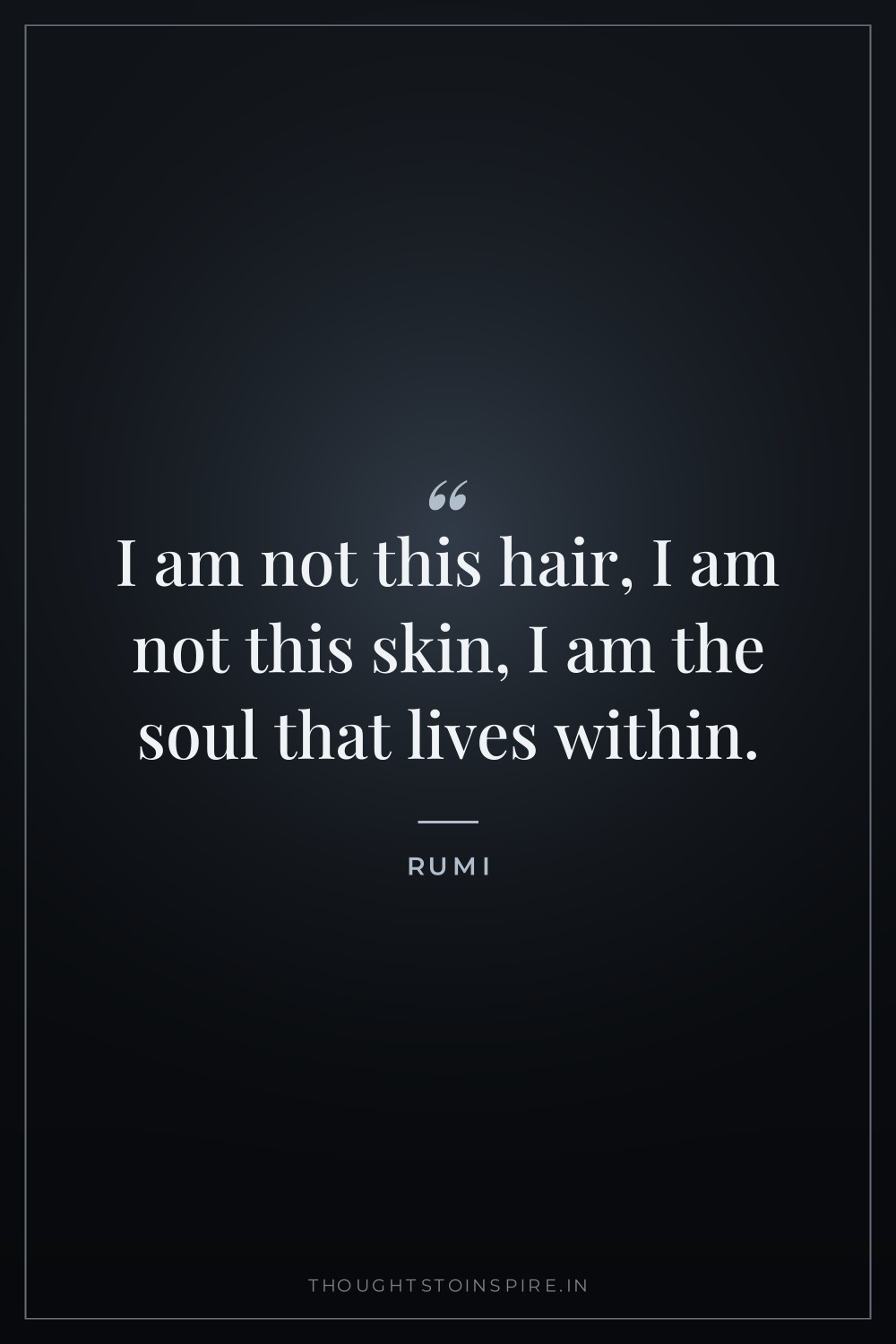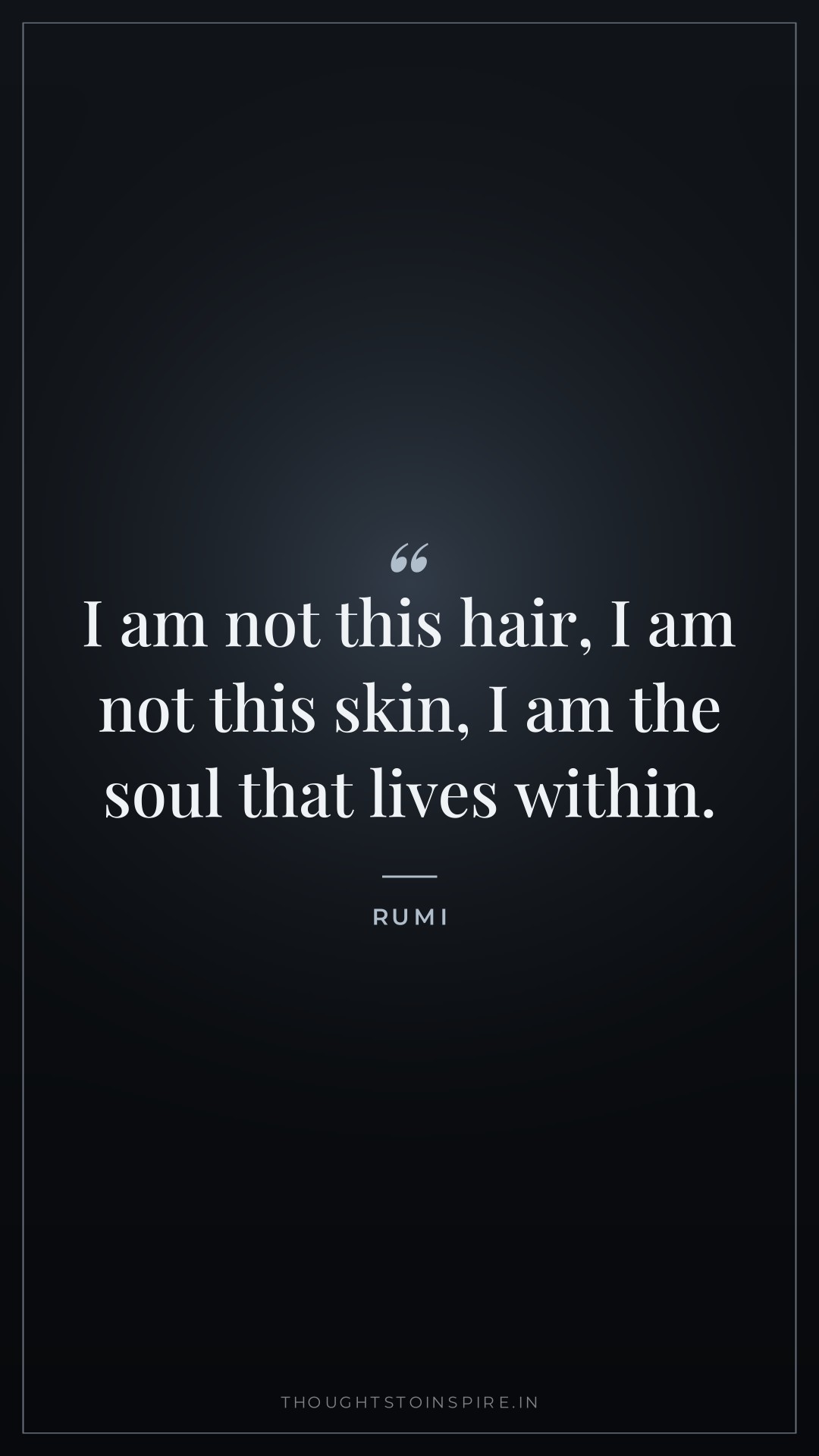
— Rumi (1207-1273); a modern English rendering, not a literal translation
About this quote
हिन्दी में
मैं ये बाल नहीं हूँ, मैं यह त्वचा नहीं हूँ; मैं वह आत्मा हूँ जो भीतर बसती है।
What it means
The two things named are not random pieces of the body. Hair and skin are precisely the parts by which people are sorted, praised, married off and refused — texture, colour, how much of each remains. The line picks the two attributes most heavily loaded with other people’s judgement and sets them down, which is a far more pointed opening than I am not this body would have been.
It is worth being honest about the third clause, because it does something the first two forbid. After two refusals of description, the soul that lives within supplies one — a resident, with a location, inside a container. Strictly, that reinstalls the very thing the negations were clearing away; the method stops one step early. Whether you read that as a failure of nerve or as the only way to end a sentence in English is a fair question to sit with, and it is the most interesting thing about the line.
What it teaches you
Notice which remarks about your appearance you brush off and which ones land, because the difference is not in the remark. The comment that stings marks a description you have quietly accepted as yourself; the one that bounces marks a description you never took on. That flinch is better evidence of what you are identified with than any amount of deciding you are not your body.
अर्थ और सीख
यह पंक्ति शरीर के उन्हीं दो हिस्सों को चुनती है जिनसे समाज सबसे ज़्यादा आँकता है — बाल और त्वचा, यानी रंग, बनावट, कितने बचे हैं। पहले दो हिस्से हर पहचान को नकारते हैं, पर तीसरा हिस्सा फिर एक पहचान दे देता है — भीतर बसने वाली आत्मा, यानी फिर से एक जगह और एक निवासी। पढ़ते हुए यह देखिए कि अपनी सूरत पर की गई कौन-सी बात आपको चुभती है — वही बताती है कि आपने ख़ुद को किससे जोड़ रखा है।
Where it comes from
A stripping away of everything that can be photographed. What remains after hair and skin are set aside is not a better description of the self but the refusal to accept any description at all — the Sufi’s version of the Upanishadic neti neti, not this, not this.
A modern English rendering; the neat internal rhyme is a feature of the English, not of Rumi’s Persian. Rumi (1207–1273) wrote in Persian; almost every English line shared online is a modern rendering rather than a literal translation. Sourced passages from the Masnavi, with their selection titles, are collected under Rumi on Love.