— Songs of Kabir, I.82 (tr. Rabindranath Tagore, 1915)
About this quote
हिन्दी में
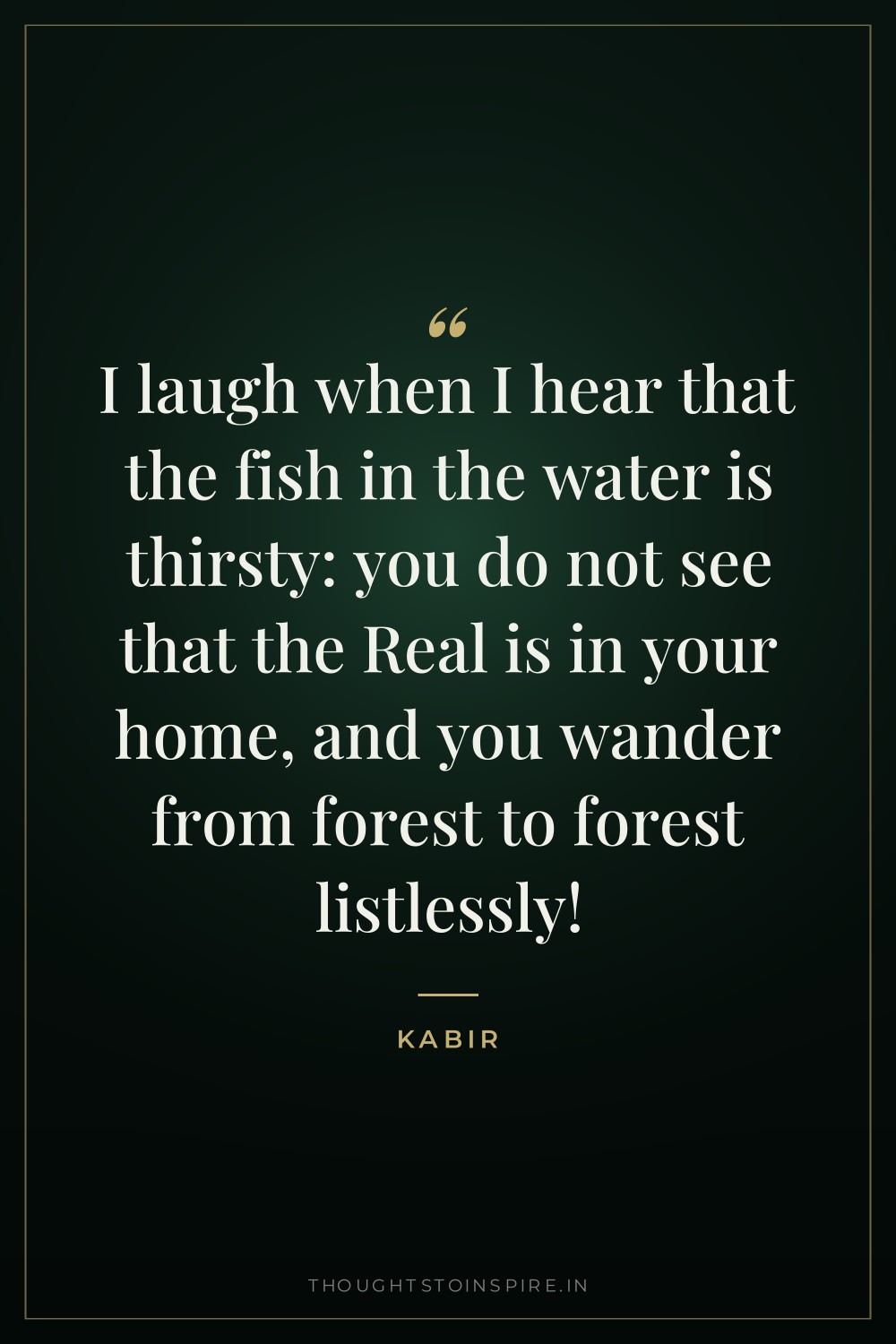
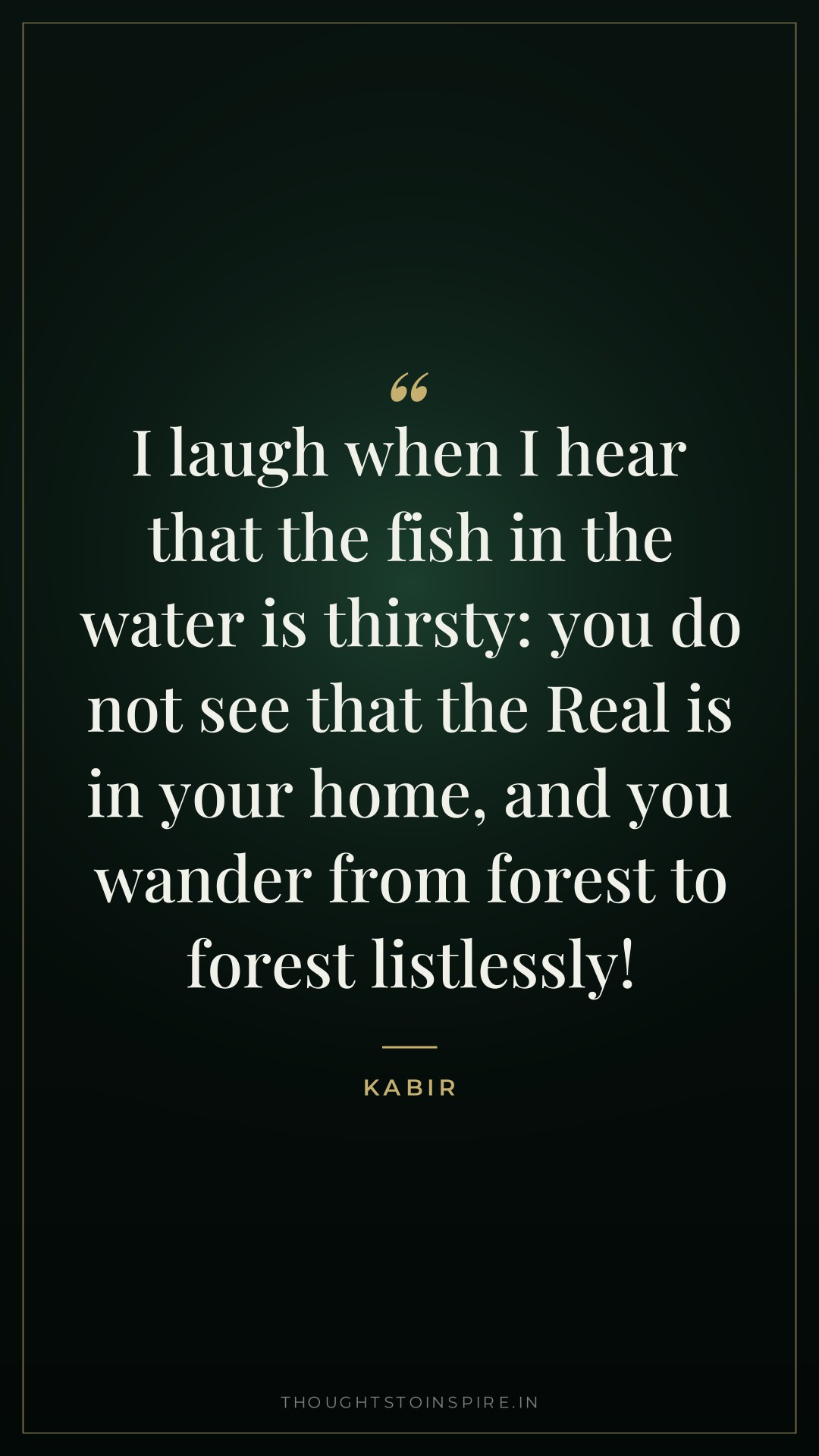
मुझे हँसी आती है जब मैं सुनता हूँ कि पानी में रहने वाली मछली प्यासी है — तुम्हें दिखाई नहीं देता कि सत्य तुम्हारे अपने घर में है, और तुम बेमन से एक वन से दूसरे वन भटकते फिरते हो!
What it means
The first word is the point: Kabir does not sigh at the thirsty fish, he laughs. What he describes is not a hard search failing but a mistake of category — the seeker is not far from what he wants, he is inside it. An error of that shape cannot be corrected by trying harder, which is why laughter, and not sympathy, is the fitting response.
The second half is sharper than the reassurance it usually becomes. You do not see is an accusation, and listlessly denies the wanderer even the dignity of effort — the forests are not a heroic quest, they are drifting. The line does not say the route is inefficient. It says the travelling is itself the error.
What it teaches you
Take the next thing you plan to go and find — a teacher, a retreat, a better city — and ask what you would have to stop doing at home for it to become findable there. Often the going is the function: a search is an occupation, and an occupied person is excused from noticing what is already in the room. The test is not where you look but whether you would recognise the thing if it stopped being far away.
अर्थ और सीख
कबीर कहते हैं कि जो पाना है वह पहले से मौजूद है — जैसे मछली पानी में रहकर प्यासी फिरे, वैसे ही मनुष्य उस सत्य को जंगल-जंगल ढूँढ़ता है जो उसके अपने घर में है। ध्यान दीजिए कि वे दुख नहीं जताते, हँसते हैं: यह भूल मेहनत की कमी की नहीं, दिशा की है। सीख यह कि खोज को ही साधना मान लेना अक्सर सामने रखी चीज़ को न देखने का बहाना बन जाता है।
Where it comes from
Kabir’s most famous image, from the songs collected in Songs of Kabir (I.82), translated by Rabindranath Tagore in 1915. The fish thirsting in water is the human being searching for God while standing in God — wandering ‘from forest to forest’ after what was never absent.
Kabir (15th century) was a weaver of Benares, claimed by Hindus and Muslims alike and owned by neither — his poems mock the search for the sacred anywhere but within.