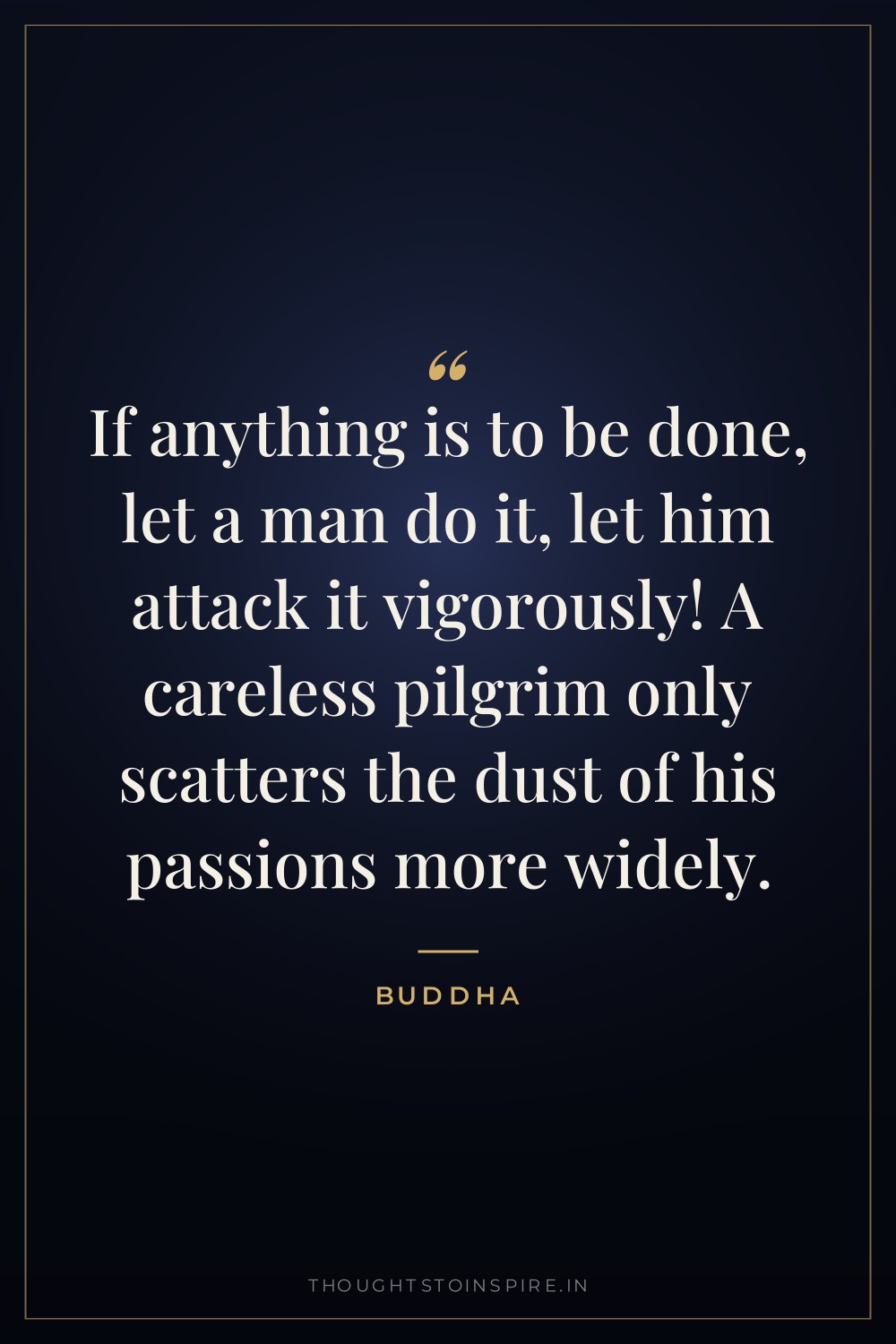
— The Dhammapada, verse 313 (tr. F. Max Müller, 1881)
About this quote
हिन्दी में
जो काम करना है, उसे पूरे ज़ोर से करो, डटकर करो! ढीला-ढाला पथिक तो अपने विकारों की धूल और चारों ओर बिखेरता है।
What it means
The second half is the argument, and it is harsher than the first half sounds. A careless pilgrim is not someone who has failed to make progress — he is someone whose walking is actively raising dust. Half-done practice is not a smaller amount of practice; it has a different effect, and the effect runs the wrong way.
It reads like generic exhortation to work hard, but the person addressed has already set out. The warning is aimed at someone inside the discipline, not outside it, and it says that the discipline itself can become the occasion for the very passions it was undertaken to settle.
What it teaches you
Take one practice you have actually taken up — a sitting, a fast, an abstention, a study routine — and ask what it has been producing lately. If it mostly generates irritation with people who do not keep it, or a running commentary about how you are doing, the dust is being scattered rather than settled. The verse’s remedy is not to abandon it but to do it properly, which usually means doing less of it with full attention.
अर्थ और सीख
यह पद कहता है कि जो करना है उसे आधे मन से नहीं, पूरी शक्ति से करो — क्योंकि लापरवाह साधक की चाल से विकारों की धूल दबती नहीं, और फैलती है। यानी अधूरा अभ्यास कम अभ्यास नहीं होता, उसका असर उल्टा होता है। सीख यह है कि अपनी किसी साधना को देखें — अगर वह चिड़चिड़ाहट या अपने बारे में बड़ाई ही पैदा कर रही है, तो उसे छोड़ना नहीं, पूरे ध्यान से करना है, चाहे कम करना पड़े।
Where it comes from
This is verse 313 of the Dhammapada, from the chapter called The Downward Course — the fates of the false and the consequences of wrong practice.
The Dhammapada is a collection of 423 verses in Pali, among the oldest and most widely read records of the Buddha’s teaching. This English translation is by F. Max Müller (1881), the pioneering Oxford scholar of Indian texts; the verse number is cited with this quote.