— Attributed to Vivekananda; this exact wording not traced to a source in the Complete Works
About this quote
हिन्दी में
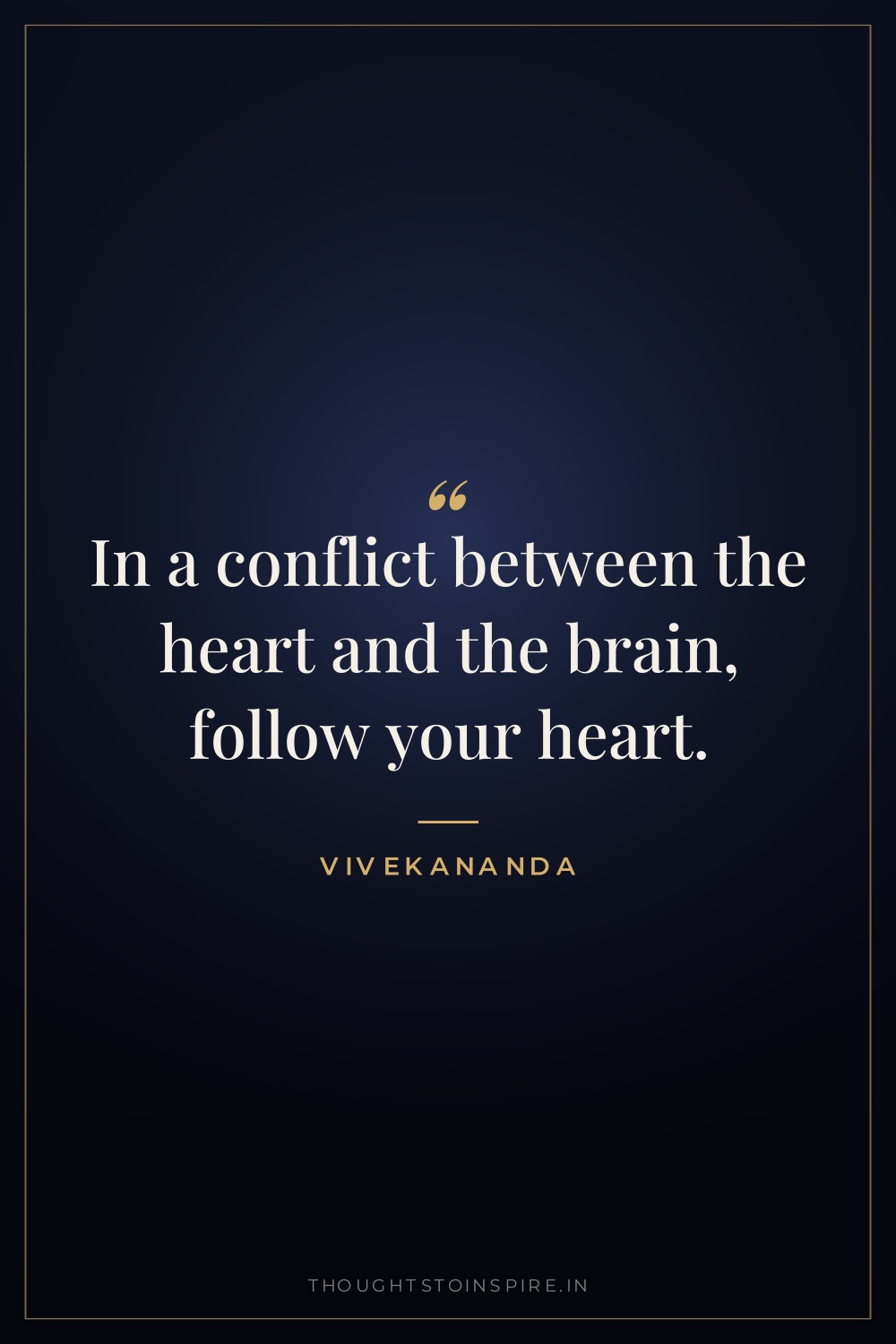
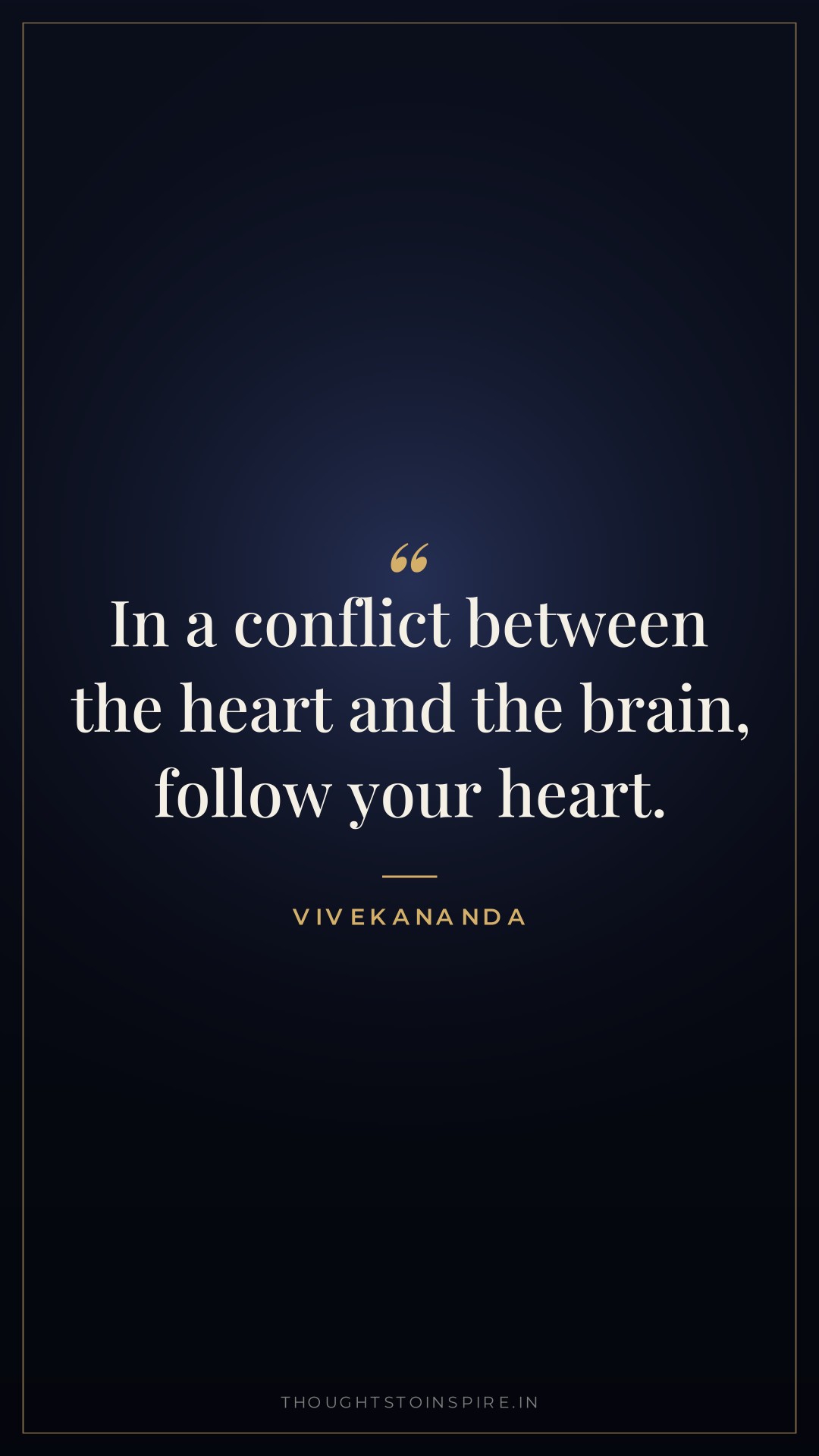
जब हृदय और बुद्धि में टकराव हो, तब हृदय की सुनो।
What it means
The whole weight sits on the opening clause: in a conflict. This is not advice to consult feeling first, and it says nothing about the ordinary case where head and heart agree, or where only one of them has an opinion at all. It describes a narrow situation: both have spoken, and they disagree.
What makes that situation worth a rule is that the two fail differently. The intellect is unusually good at constructing respectable reasons for whichever option costs you least, and it produces them fluently enough to pass for analysis. The claim is that in a genuine deadlock the heart is less often the side that has been bought. The common misreading substitutes impulse for heart, which the line does not cover.
What it teaches you
At such a deadlock, write each side as one plain sentence. If the head’s sentence turns out to be a justification for the cheaper, safer, more face-saving option, you are in the case this line is about. If the heart’s side cannot be stated without ‘I just feel’, you are probably handling an impulse instead — the working test is whether you would still endorse it a year from now, which impulses reliably fail.
अर्थ और सीख
पूरा ज़ोर पहले हिस्से पर है — ‘टकराव’ पर। जहाँ मन और बुद्धि सहमत हैं, वहाँ इस बात का कोई मतलब नहीं; बात केवल उस स्थिति की है जहाँ दोनों ने राय दे दी हो और वे अलग-अलग हों। बुद्धि की आदत है कि वह सबसे सुविधाजनक रास्ते के लिए सम्मानजनक बहाने गढ़ लेती है, इसलिए ऐसे गतिरोध में हृदय आमतौर पर कम बिका हुआ पक्ष होता है — पर क्षणिक इच्छा को ‘हृदय’ समझ लेना इसका अर्थ नहीं है।
Where it comes from
A line that has become popular precisely because it is unexpected from a teacher of Vedanta — a philosophy usually associated with discrimination and restraint. Read carefully, it is not anti-intellectual: it says that where the two genuinely conflict, the heart is the better instrument.
Widely attributed to Vivekananda and consistent with his letters, though we have not traced this exact wording to a specific source; treat it as attributed rather than verified. Swami Vivekananda’s lectures and letters are collected in the nine-volume Complete Works, which is fully searchable — so his sayings can be checked, and we flag the ones that cannot.