— A Tale of Two Cities (1859), Book 1, Chapter 1
About this quote
हिन्दी में
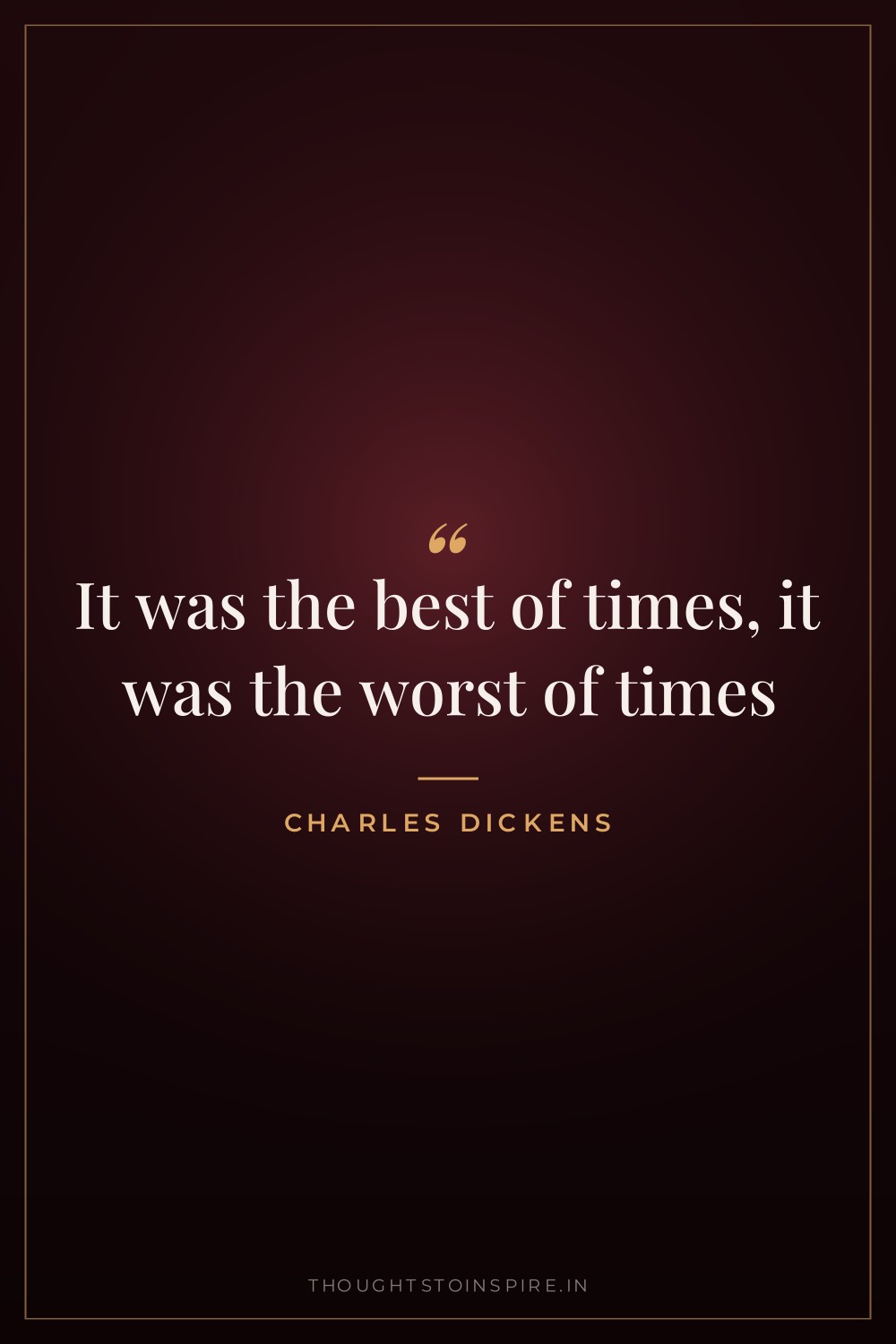
वह सबसे अच्छा समय था, वही सबसे बुरा समय भी था।
What it means
Both clauses are flat assertions about one period, and Dickens joins them with a comma. No but, no yet, no ranking — neither half is allowed to qualify the other, and neither is softened into seemed. Grammatically the sentence is not balancing two things; it is stating two superlatives about the same thing and leaving them standing. The friction is deliberate and unresolved, which is why the line survives being quoted a thousand times badly.
Where the common use goes wrong is in shrinking it to a mood — a year that was up and down, a job with good days and bad. That reading needs the sentence to be about a single observer’s mixed feelings. It reads far better as a claim about accounts: two confident descriptions of the same years, each complete, each true from where it was written. Nothing in the line tells you the era was moderate, and nothing offers to adjudicate.
What it teaches you
When you hear a period called mixed — a decade, a government, a company’s boom — separate the two halves and ask which people each describes. Best and worst were rarely experienced by the same person; almost always they map onto different groups, and the word mixed is what lets you avoid naming them. Doing that split takes one sentence and usually changes the answer.
अर्थ और सीख
दोनों वाक्यांश एक ही दौर के बारे में हैं और डिकेंस उन्हें ‘लेकिन’ से नहीं, सिर्फ़ अल्पविराम से जोड़ते हैं — कोई पक्ष दूसरे को हल्का नहीं करता, दोनों पूरे दावे की तरह खड़े रहते हैं। इसे अक्सर ‘ज़िंदगी में अच्छा-बुरा दोनों होता है’ जैसी भावुक बात बना दिया जाता है, जबकि यह एक ही समय के दो अलग-अलग, पूरे-पूरे बयानों की बात है। सीख यह कि जब कोई दौर ‘मिला-जुला’ कहा जाए, तो पूछें कि ‘सबसे अच्छा’ किनके लिए था और ‘सबसे बुरा’ किनके लिए — अक्सर वे एक ही लोग नहीं होते।
Where it comes from
The opening of the novel, and the most parodied sentence Dickens ever wrote. What is usually forgotten is that it keeps going — the full sentence piles up contradiction after contradiction for another hundred words before it ends on the claim that the period was, in the end, very much like the present one.
The point is not that the age was mixed. It is that every age insists its own moment is the most extreme in history.