— Swami Vivekananda, lectures, Complete Works
About this quote
हिन्दी में
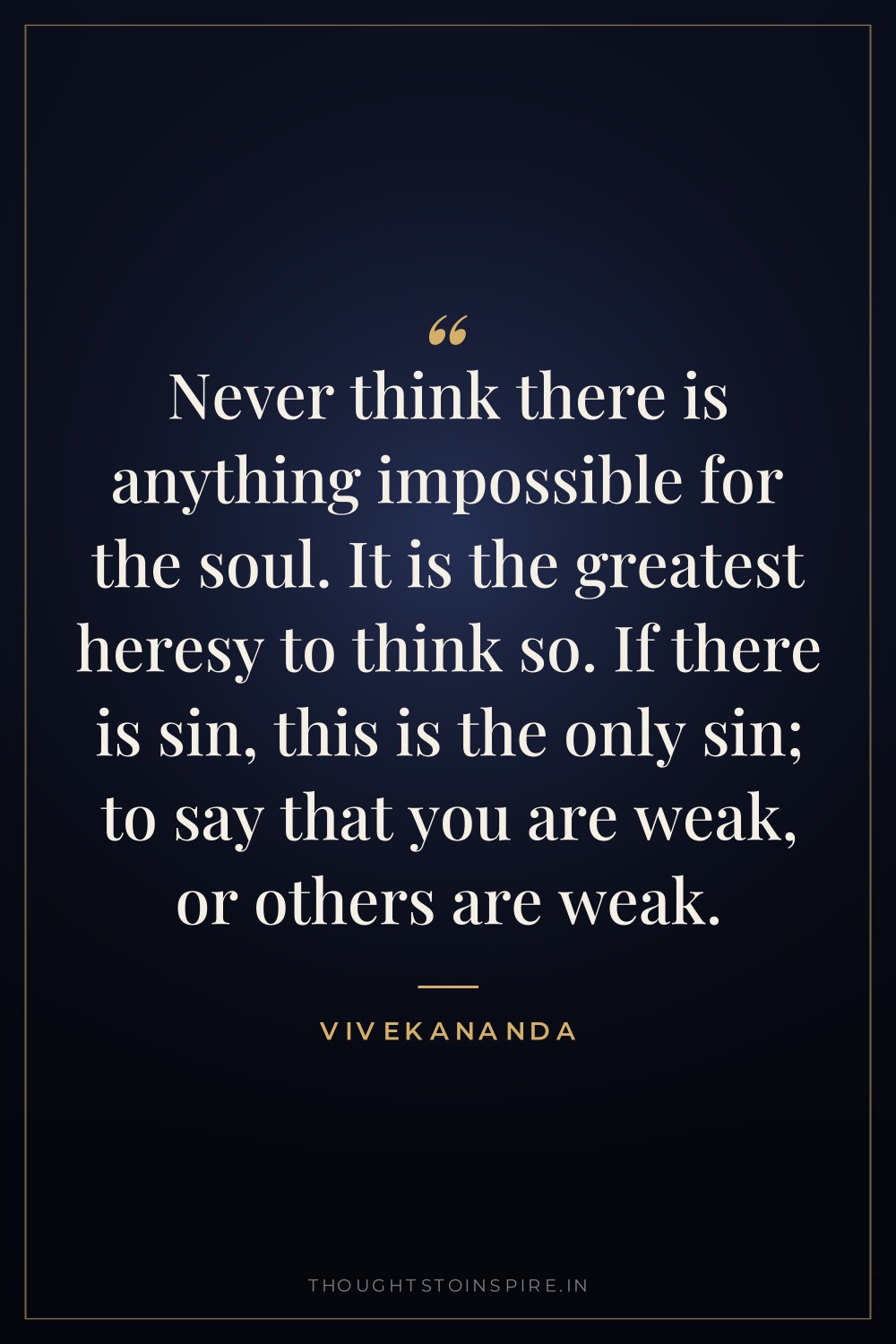
कभी मत सोचो कि आत्मा के लिए कुछ असंभव है। ऐसा सोचना ही सबसे बड़ा धर्मद्रोह है। अगर पाप है, तो बस यही एक पाप है — यह कहना कि तुम कमज़ोर हो, या दूसरे कमज़ोर हैं।
What it means
Half of this sentence is about other people, and it is the half that gets dropped. Or others are weak extends the charge from self-talk to your verdicts on everyone else, so the line is at least as much about how you appraise a colleague, a student, a servant, a caste, as about your own confidence. Quoted as self-belief material, it loses its social edge entirely.
Note too that the claim is about the soul, not about circumstances. Bodies tire, money runs out, doors stay shut; none of that is denied here. And the word heresy is borrowed deliberately from the vocabulary of the systems being displaced — the apparatus of sin and heresy is kept intact, and only the content is swapped.
What it teaches you
Audit the sentences you say about other people this week: he is not that type, she will never manage it, they cannot be taught. By this line those count exactly as the ones you say about yourself, and they are far easier to miss because they feel like realism rather than defeat. The concrete move is to notice when a prediction about someone’s ceiling is doing the work that a decision about your own effort should be doing.
अर्थ और सीख
इस वाक्य का आधा हिस्सा दूसरों के बारे में है — या दूसरे कमज़ोर हैं — और यही हिस्सा उद्धरणों में सबसे ज़्यादा छूट जाता है; यानी बात सिर्फ़ आत्मविश्वास की नहीं, दूसरों के बारे में दिए गए आपके फ़ैसलों की भी है। बात आत्मा के बारे में है, परिस्थितियों के बारे में नहीं — शरीर थकता है, पैसा ख़त्म होता है, यह वाक्य उससे इनकार नहीं करता। सीख यह है कि इस हफ़्ते अपनी वे बातें पकड़िए जो दूसरों की सीमा तय करती हैं — वह उसके बस का नहीं, वह कभी नहीं सीख पाएगी — क्योंकि वे व्यावहारिकता जैसी लगती हैं, इसलिए पकड़ में नहीं आतीं।
Where it comes from
The most radical sentence Vivekananda ever wrote about sin. Every tradition he grew up around had a list of transgressions; he replaced the entire list with one item — calling yourself, or anyone else, weak. Everything else in his teaching follows from that inversion.
From his lectures in the Complete Works. Swami Vivekananda’s lectures and letters are collected in the nine-volume Complete Works, which is fully searchable — so his sayings can be checked, and we flag the ones that cannot.