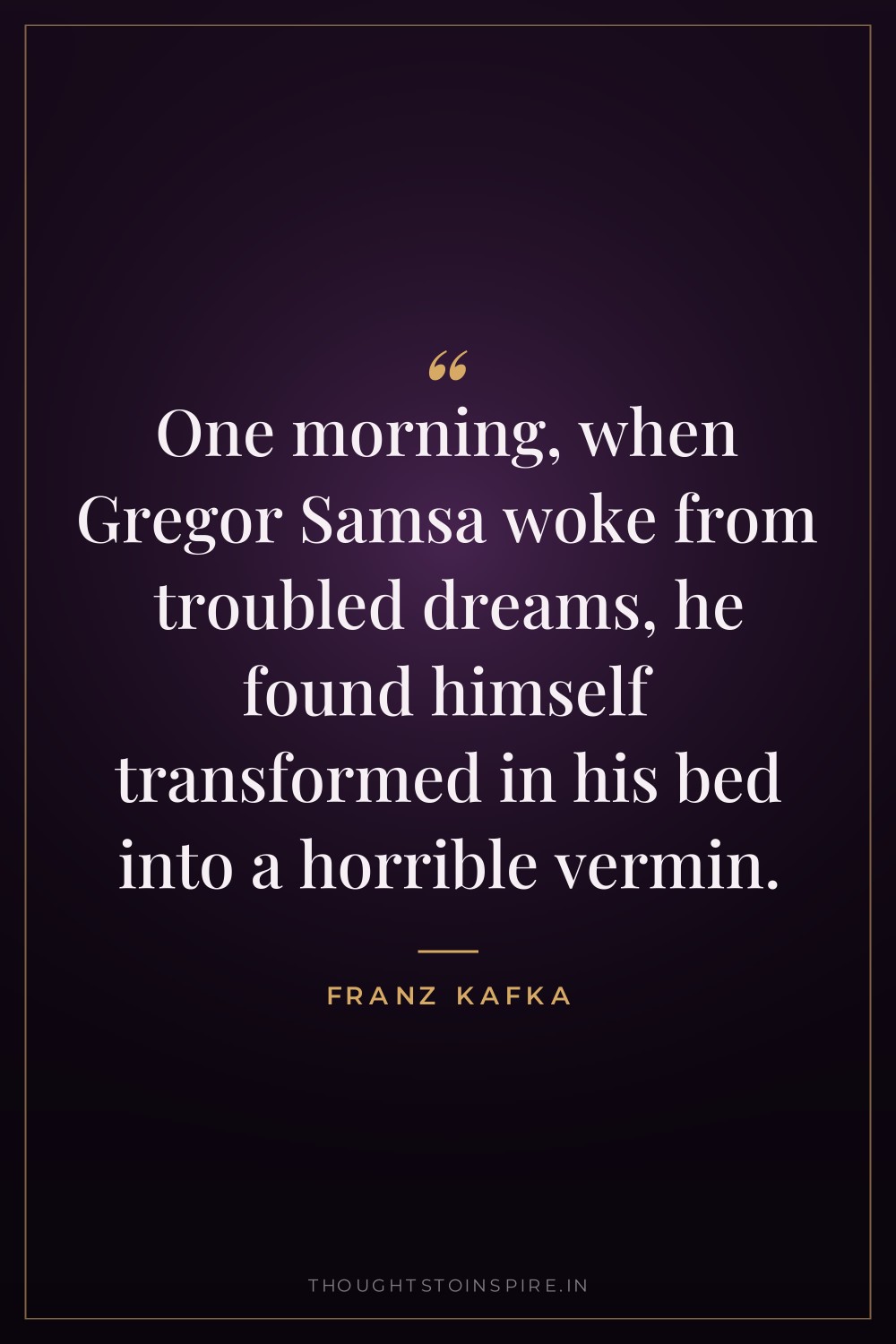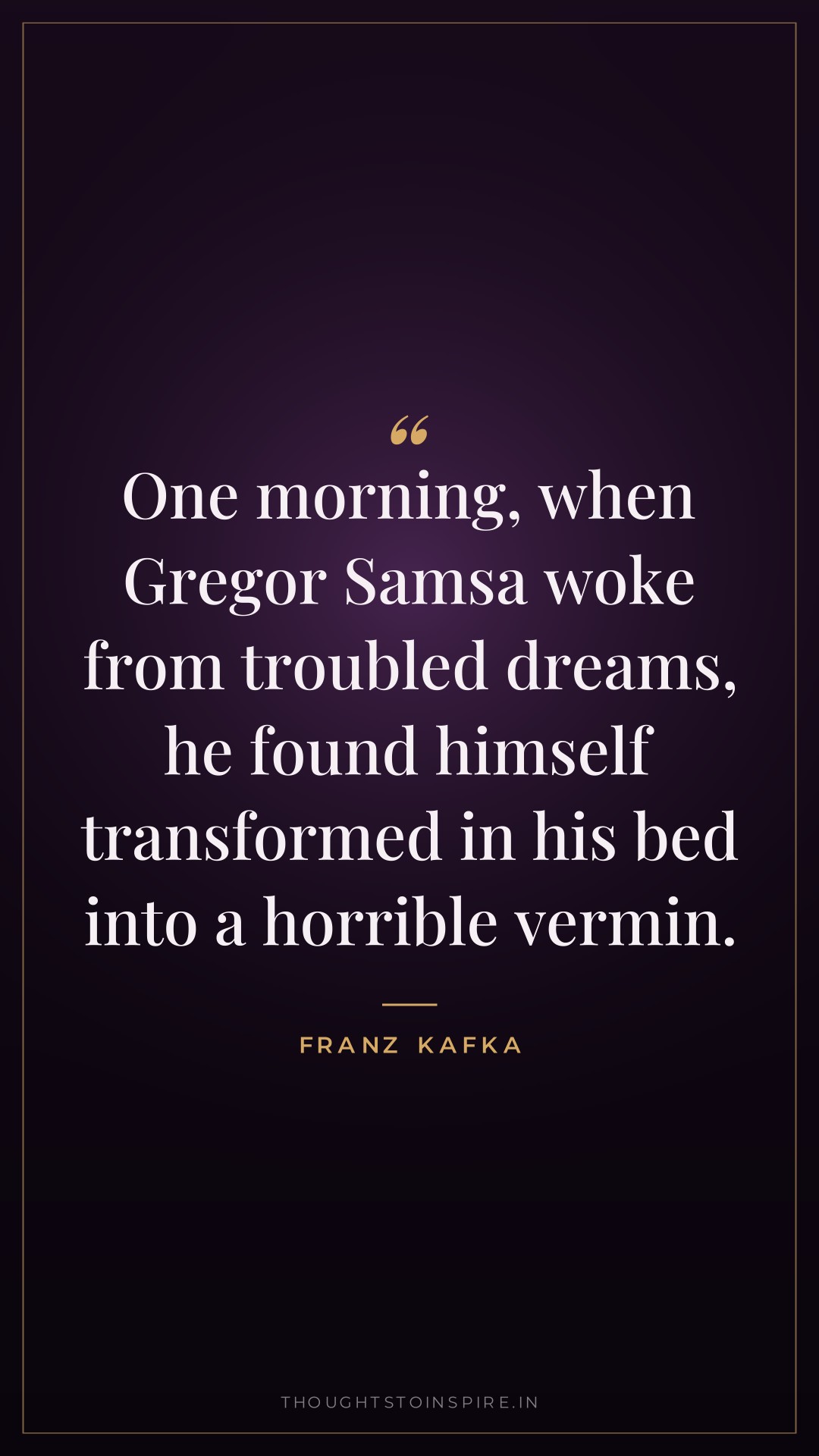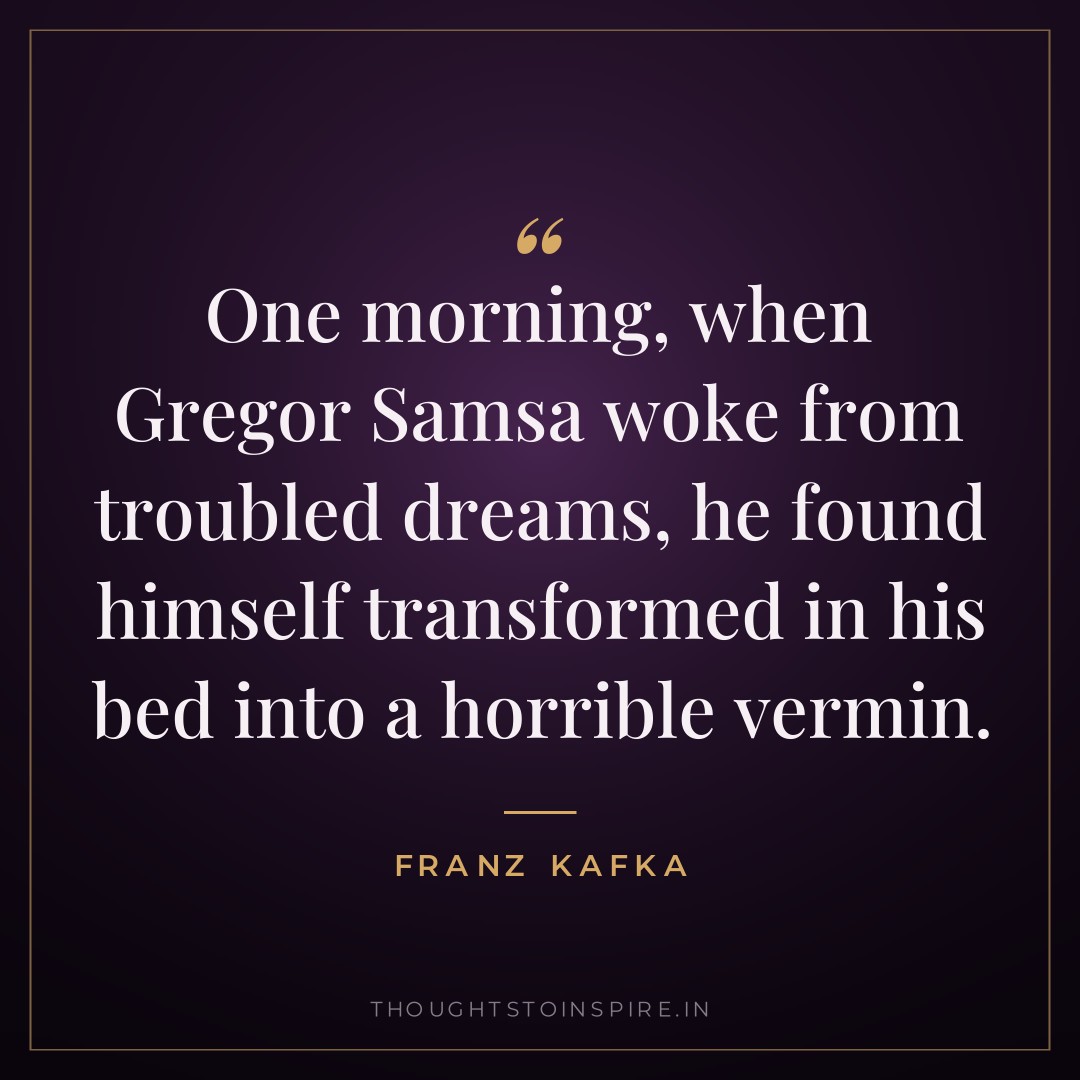
— The Metamorphosis (1915), Chapter 1
About this quote
हिन्दी में
एक सुबह, जब ग्रेगोर ज़ामज़ा बेचैन सपनों से जागा, तो उसने पाया कि वह अपने बिस्तर में एक घिनौने कीड़े में बदल चुका है।
What it means
Read the grammar rather than the horror. The sentence puts the waking first and the transformation second, and the dreams are explicitly over — he woke from them. Whatever this is, the line refuses to let it be a nightmare. It also arrives with no cause attached: the change is already complete before the first word, and the sentence offers no agent, no reason, no process. The only verb attached to Gregor is found. He is a witness to his own condition.
What makes it worth keeping is the tone. The information is catastrophic and the delivery is clerical — a time of day, a name, a place, a fact. There is no exclamation and no interpretation. The commonest reading treats the line as a symbol to be decoded, usually as alienation or disgust at the self; the sentence itself makes no such claim and states nothing that needs decoding. Its unease comes from the mismatch between what is reported and how calmly it is reported, and the story that follows keeps that register, attending to practical consequences rather than to explanation.
What it teaches you
When you next describe something irreversible that has happened to you, notice which tense you reach for and how much of the sentence goes to why. Kafka spends none, and the flatness is what makes the line land — whereas the usual instinct is to explain first and describe later, which converts an event into an argument. Try the reverse order once, in writing, on something you have been over-explaining: the bare description, then nothing.
अर्थ और सीख
यह वाक्य एक भयानक बात को बिलकुल सपाट, दफ़्तरी लहजे में दर्ज करता है — समय, नाम, जगह, तथ्य। ध्यान दीजिए कि ग्रेगोर सपनों से जाग चुका है, यानी यह कोई दुःस्वप्न नहीं; और बदलाव का कोई कारण नहीं बताया गया, वह पहले ही पूरा हो चुका है। सीख यह है कि किसी अपरिवर्तनीय घटना को बयान करते समय हम तुरंत ‘क्यों’ समझाने लगते हैं; यहाँ की ताक़त उसी ‘क्यों’ के न होने से आती है।
Where it comes from
The opening sentence, in the public-domain English translation used here (David Wyllie’s, on Project Gutenberg). Translators have never agreed on the key word: Kafka’s ungeheueres Ungeziefer appears in English as vermin, insect, cockroach and bug.
The German is deliberately imprecise — Ungeziefer is an unclean creature unfit for sacrifice, not a species. Kafka insisted the creature never be drawn on the cover.