— Bhagavad Gita 3.8, close rendering
About this quote
हिन्दी में
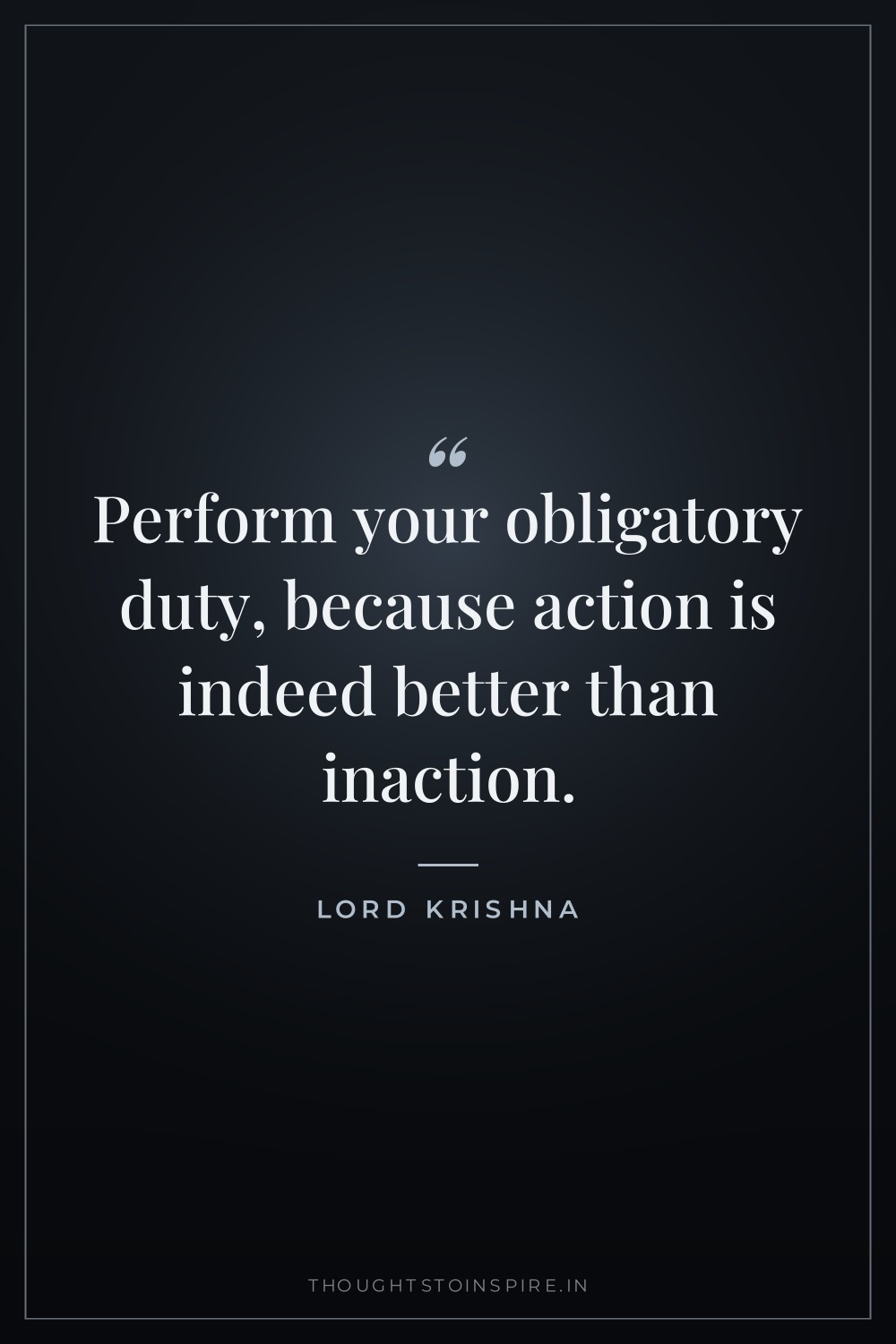
अपना नियत कर्म करो, क्योंकि निष्क्रियता से कर्म ही श्रेष्ठ है।
What it means
Two qualifiers do the work, and both are easy to read past. Obligatory narrows the instruction to the duty that is already yours by position and circumstance — it is not a licence for any action that appeals to you, and it does not let you substitute a more interesting duty for the assigned one. And better than is comparative, not absolute: the sentence ranks action above inaction without claiming that action is good in itself.
Keep it for that restraint, because the line is usually quoted as though it praised activity — do something, anything, keep moving. It does not. It addresses a specific temptation, the idea that standing back is the clean or blameless option, and answers only that: stepping away is itself a position, and the weaker of the two. What action is worth doing is a question the sentence deliberately leaves to the word obligatory.
What it teaches you
When you are tempted to stay out of something, stop treating abstention as a neutral state with no entry in the ledger — the line’s claim is that it is a choice, and one that has already been compared unfavourably. Then apply the narrower half, which is the harder one: identify the duty that is actually yours here rather than the more appealing task nearby, since action is better than inaction gives you no cover for doing the wrong work energetically.
अर्थ और सीख
इस वाक्य का भार दो शब्दों पर है — ‘नियत’ और ‘श्रेष्ठ’। ‘नियत’ का अर्थ है वही कर्म जो आपकी स्थिति से आपका बनता है, कोई भी मनचाहा काम नहीं; और ‘श्रेष्ठ’ तुलना है, यह नहीं कहा गया कि कर्म अपने आप में भला है। सीख: हट जाने को तटस्थता मानना छोड़ दें, वह भी एक चुनाव है — और यह पंक्ति उत्साह से ग़लत काम करने की छूट नहीं देती, पहले यह तय करना पड़ता है कि यहाँ आपका कर्म कौन सा है।
Where it comes from
A close rendering of Bhagavad Gita 3.8: niyatam kuru karma tvam. Krishna’s blunt practicality — even maintaining the body is impossible without action, so the question is never whether to act but how.