— The Great Gatsby (1925), Chapter 9
About this quote
हिन्दी में
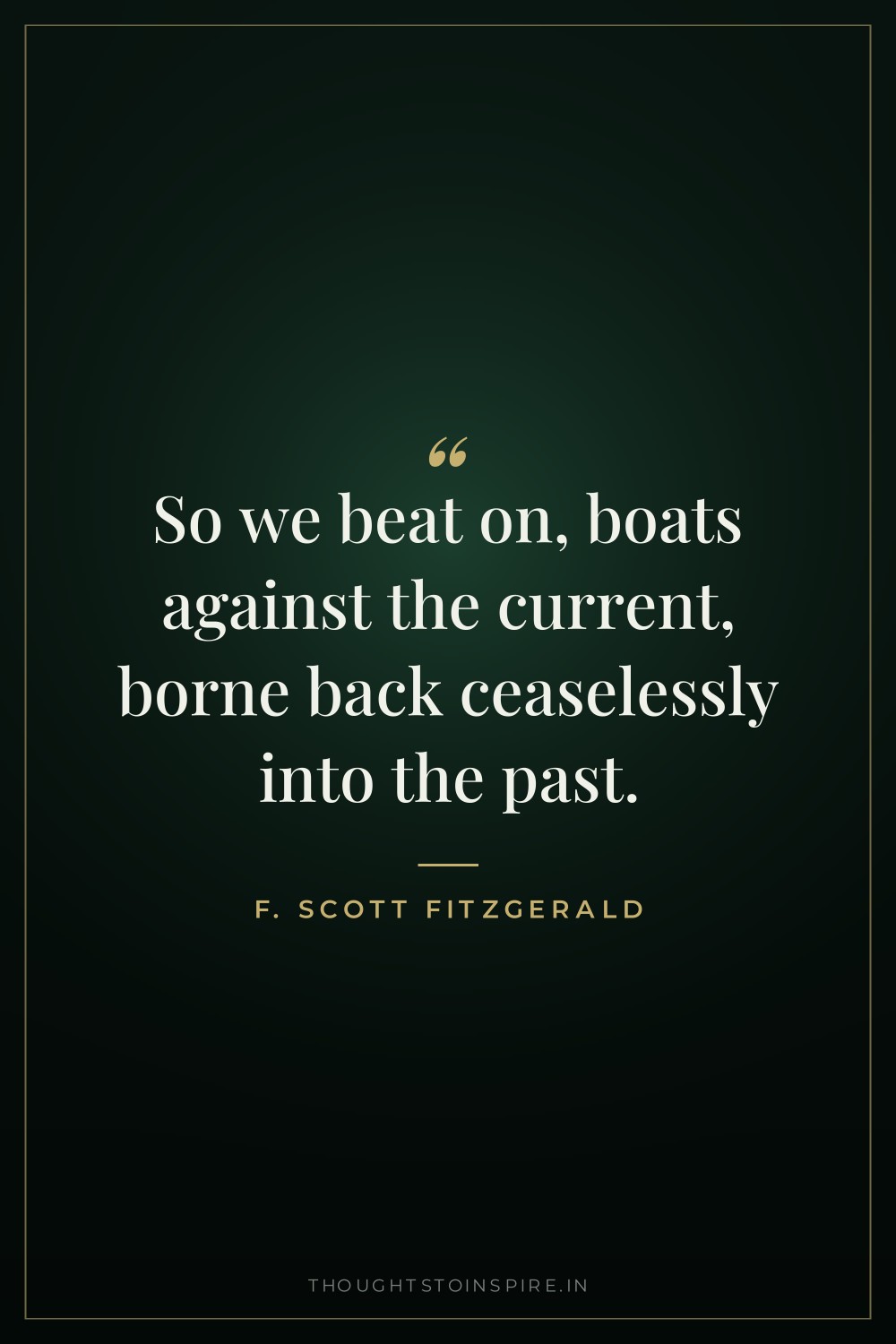
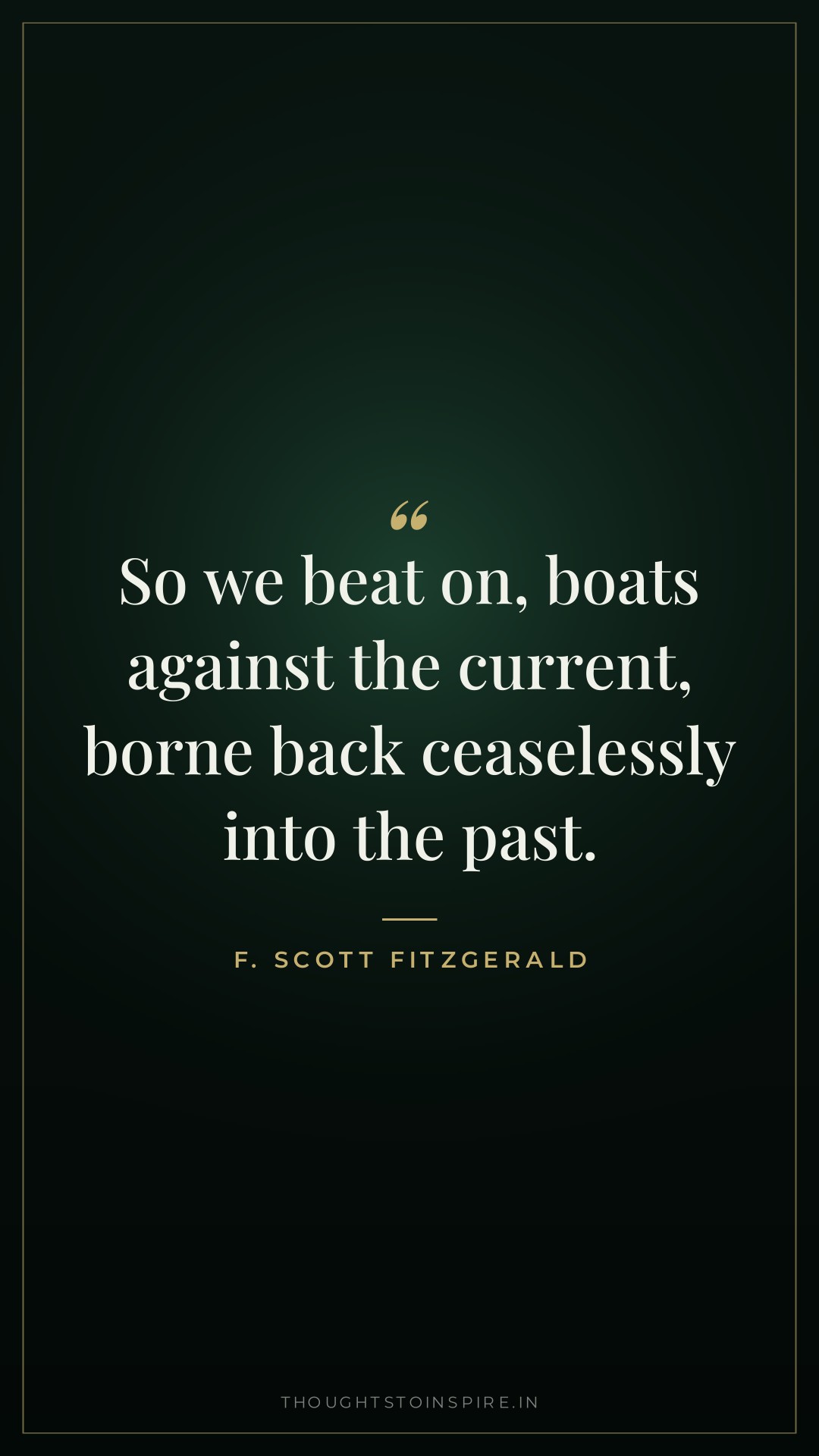
और इसी तरह हम खेते रहते हैं, धारा के विरुद्ध लड़ती नावों की तरह, और लगातार पीछे, अतीत की ओर बहा दिए जाते हैं।
What it means
The sentence is built so that its subject loses control of it. It opens on a verb of effort — beat on is a sailing term, working a boat forward against the wind in zigzags — and closes in the passive: borne back. Somewhere between those halves the rowers stop being the ones acting. The current is never described as an obstacle that might be overcome; it is simply stronger, and it is named as the past.
It gets quoted as a line about persistence, and the first four words support that; the rest of it takes that reading away. Nothing here says the beating on succeeds, or is noble, or will end. What makes it worth keeping is that it is honest about a shape of effort most encouragement refuses to name — where the work is real, the direction is chosen, and the net movement is still backward.
What it teaches you
When the goal of a plan is to get something back — a relationship as it was, a city as you remember it, the version of yourself that existed before a particular year — it is worth naming that as restoration rather than progress, because the two are measured differently and only one of them can ever be finished. Gatsby’s mistake was not wanting the past; it was budgeting for it as though it were a future.
अर्थ और सीख
यह पंक्ति मेहनत और नतीजे के बीच का फ़र्क़ दिखाती है — नाव खेने वाला आगे बढ़ने का पूरा ज़ोर लगाता है, फिर भी धारा उसे लगातार पीछे, अतीत की ओर ले जाती है। वाक्य की शुरुआत में इंसान कर्ता है और अंत तक वह सिर्फ़ बहाया जा रहा है; यानी यह हार न मानने की तारीफ़ नहीं, एक ख़ास तरह की कोशिश की सच्चाई है। सीख यह कि जो कोशिश बीते हुए को वापस पाने के लिए है, उसे तरक्की समझकर मत नापिए।
Where it comes from
The last sentence of the novel, and the reason it is carved on Fitzgerald’s gravestone. The image reverses the usual direction of American striving: the boats are rowing forward and being carried backward at the same time.
It follows immediately from Nick’s vision of the Dutch sailors seeing Long Island for the first time — so the past being rowed against is not only Gatsby’s, it is the country’s.