— Meditations, Book 6 (tr. George Long, 1862)
About this quote
हिन्दी में
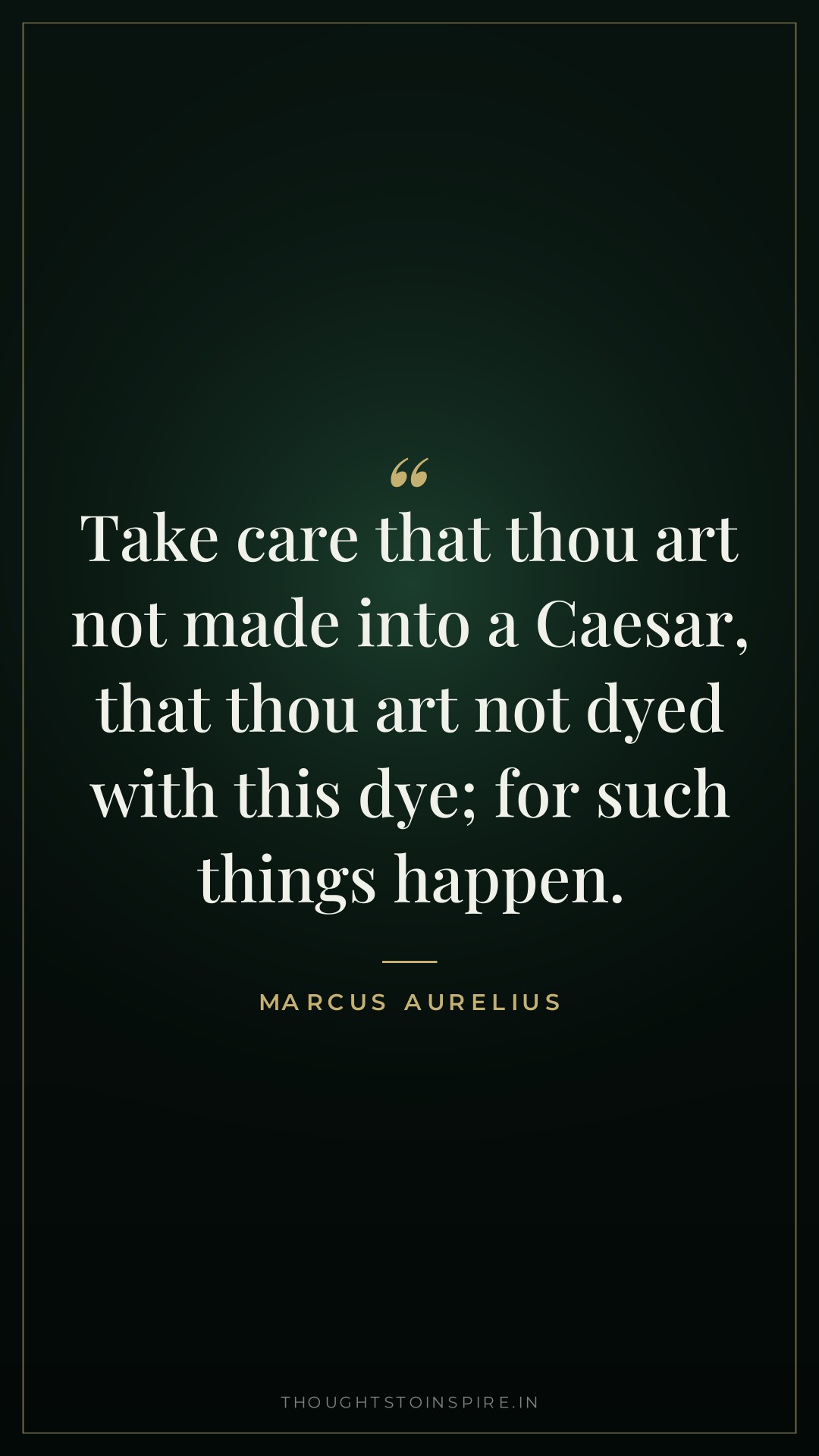
ध्यान रखो कि तुम ‘सीज़र’ न बना दिए जाओ, कि इस रंग में रँग न जाओ — ऐसा हो जाया करता है।
What it means
The verb is passive, and that is the whole force of it: not do not become a Caesar but take care that you are not made into one. The change is something done to a person by surroundings — by people who agree too fast, by never being interrupted, by rooms that rearrange themselves on arrival — rather than anything a person decides. That is why the only instruction offered is to watch.
It is also worth noticing that Caesar was his own legal title. He is not warning against holding office; he holds it, and goes on holding it. He is separating the job, which is not optional, from a character the job tends to manufacture, which is.
What it teaches you
The symptoms are small and checkable: irritation when you are contradicted, mild surprise when someone does not rearrange their day around yours, treating quick agreement as evidence that you were right. The people who see this most clearly are the ones least able to mention it, so the check has to come from outside your reach — someone whose salary, marks or promotion you have no hand in.
अर्थ और सीख
यह पंक्ति पद छोड़ने को नहीं कहती; वह यह कहती है कि पद अपने साथ जो स्वभाव लाता है — चिढ़, चापलूसी की आदत, हर बात पर सहमति की अपेक्षा — उससे बचकर रहना पड़ता है। ख़ास बात यह है कि यह बदलाव कोई जान-बूझकर नहीं चुनता, वह आसपास के लोगों के व्यवहार से अपने आप हो जाता है। इसलिए बचाव का एक ही रास्ता है — रोज़ अपने ऊपर नज़र रखना, और ऐसे लोगों की राय सुनते रहना जिन पर आपका कोई अधिकार न हो।
Where it comes from
Written by a man who actually held the throne, this is a warning about what power does to a personality over time. “Caesar” here is not an office but a stain — the imperiousness, the flattery-fed vanity, the habit of being obeyed — and the image of dyed cloth is exact: the dye soaks in, changes the fibre, and cannot be rinsed out. The closing shrug, “for such things happen,” refuses to treat the danger as remote; it is the ordinary fate of people in his position, and the only defence is daily vigilance.
The line comes from Book 6 of the Meditations, in George Long’s English translation of 1862. Long renders the Greek in the archaic second person — “thou,” “thy art” — which was already deliberately old-fashioned in his own century, and his phrasing is what most English readers of the last hundred and fifty years have known.