— Songs of Kabir, II.85 (tr. Rabindranath Tagore, 1915)
About this quote
हिन्दी में
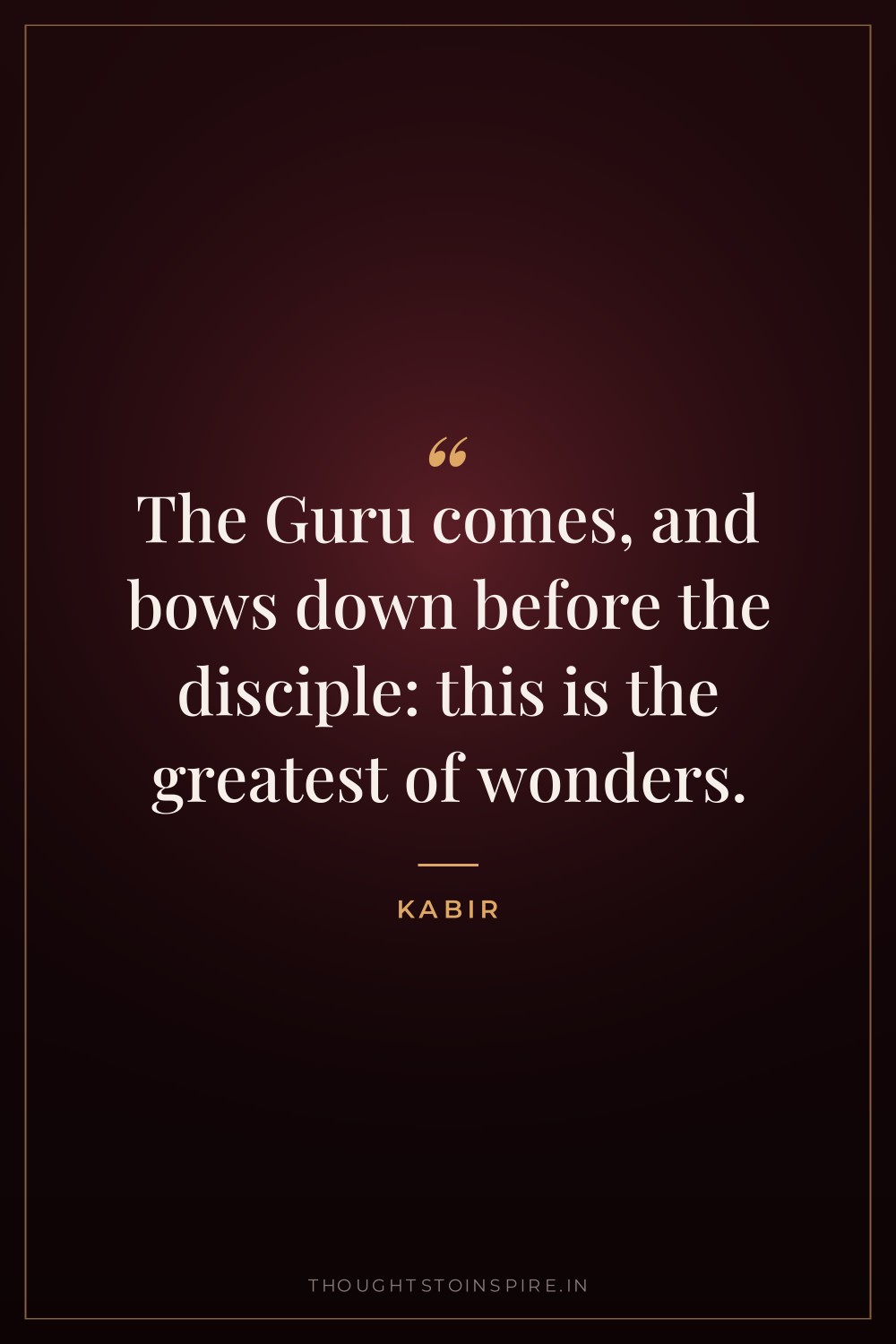
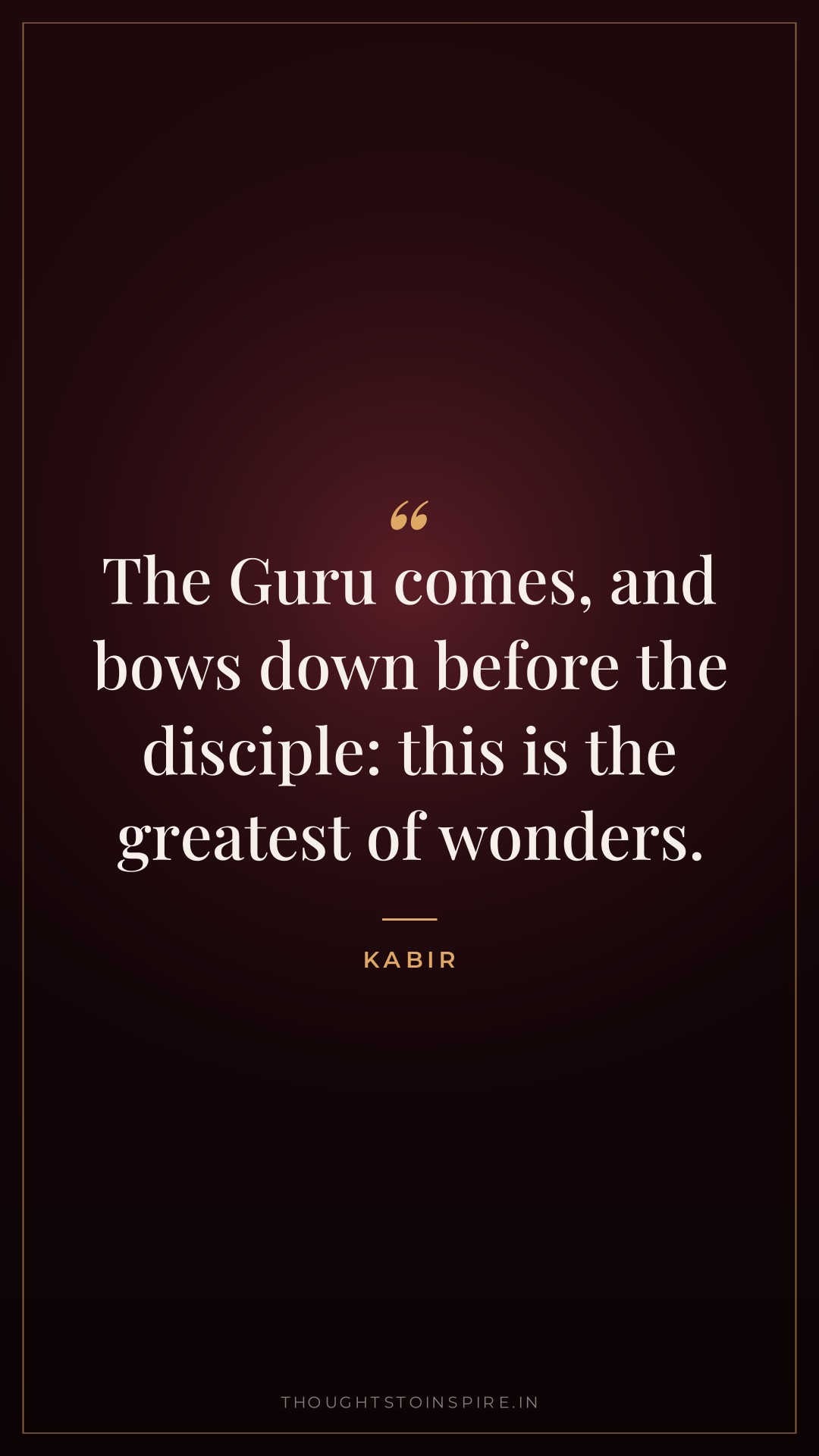
गुरु आते हैं और शिष्य के आगे झुक जाते हैं — इससे बड़ा आश्चर्य और कोई नहीं।
What it means
The line reverses the one direction of respect that everyone in its world took for granted, and then rates that reversal above every other marvel on offer. What makes it more than a paradox is the logic underneath: if the teacher has found what the seeker came looking for, he has found it in the seeker too, and the hierarchy he occupies stops describing anything real.
It is worth keeping for what it refuses as much as for what it says. The catalogue of wonders available to a religious poet is long — miracles, visions, the dead raised — and the greatest of them is named here as an old man bending, an act that requires nothing supernatural and only costs standing.
What it teaches you
Apply it where you hold the senior position rather than where you hold the junior one — as the manager, the parent, the person who has done this for twenty years. The specific thing to watch is what happens when something genuinely useful comes up from below: whether you can take it, say where it came from, and leave it there, or whether it gets absorbed and reappears later as your own point. That, not humility as a manner, is what the line is describing.
अर्थ और सीख
कबीर यहाँ आदर की दिशा उलट देते हैं — गुरु शिष्य के आगे झुकते हैं — और इसी को सबसे बड़ा आश्चर्य कहते हैं। बात के पीछे तर्क यह है कि शिष्य जिसे ढूँढ़ने आया है, गुरु उसे शिष्य के भीतर भी देख लेता है, इसलिए ऊँच-नीच का क्रम अपने-आप बेमानी हो जाता है। इसकी परख वहाँ होती है जहाँ आप बड़े हैं: जब आपसे छोटे किसी व्यक्ति से कोई सचमुच काम की बात आए, तो क्या आप उसे लेकर उसका श्रेय वहीं रहने देते हैं।
Where it comes from
From song II.85 of the Songs of Kabir.
Kabir (15th century) was a weaver of Benares whose songs mock every search for God outside one’s own heart; Hindus and Muslims both claimed him, and he refused both. This rendering is from Songs of Kabir, translated by Rabindranath Tagore (1915); the song number is cited with this quote.