— The Persian Mystics: Jalalu'd-din Rumi (tr. F. Hadland Davis, 1907), "The Love of the Soul"
About this quote
हिन्दी में
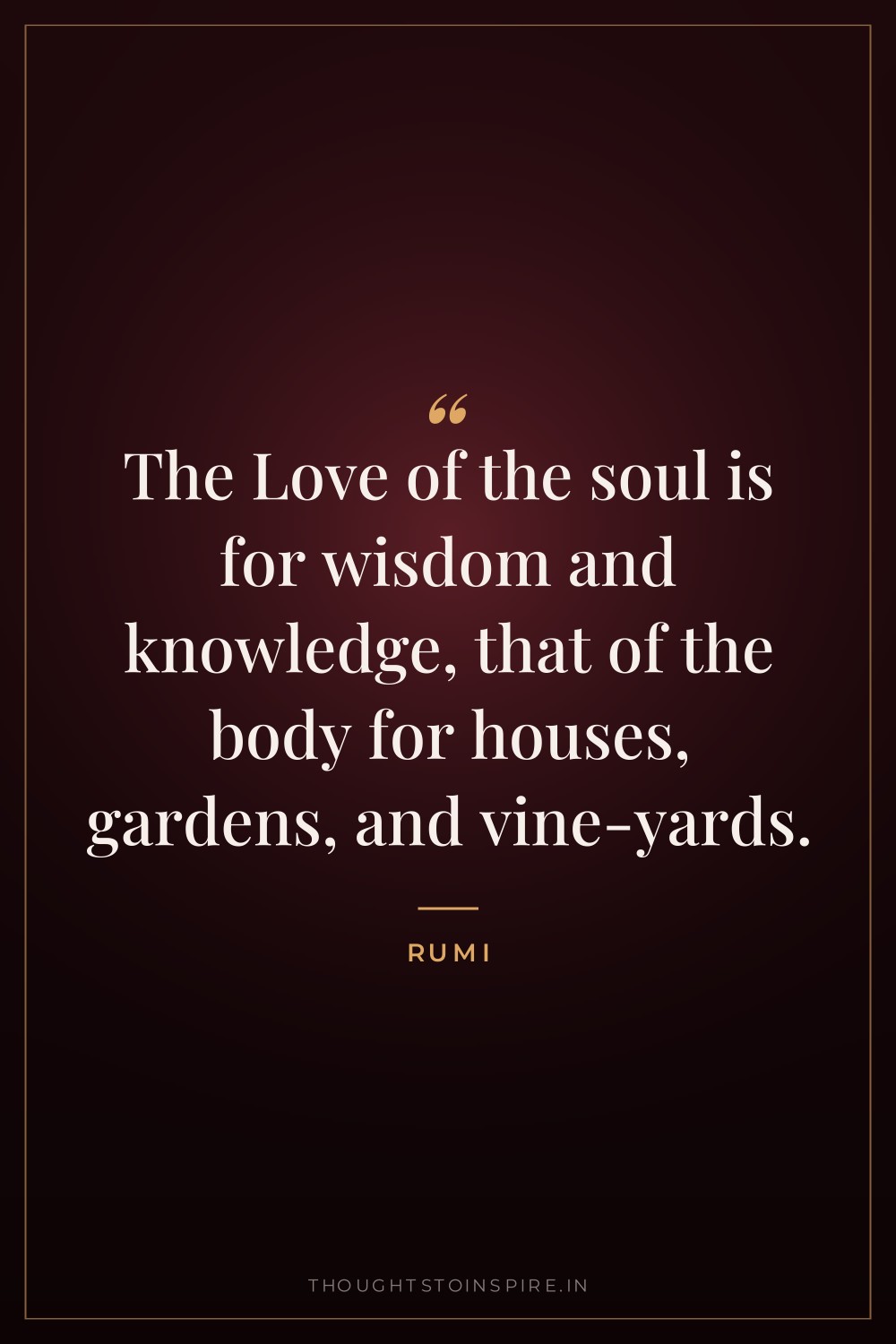
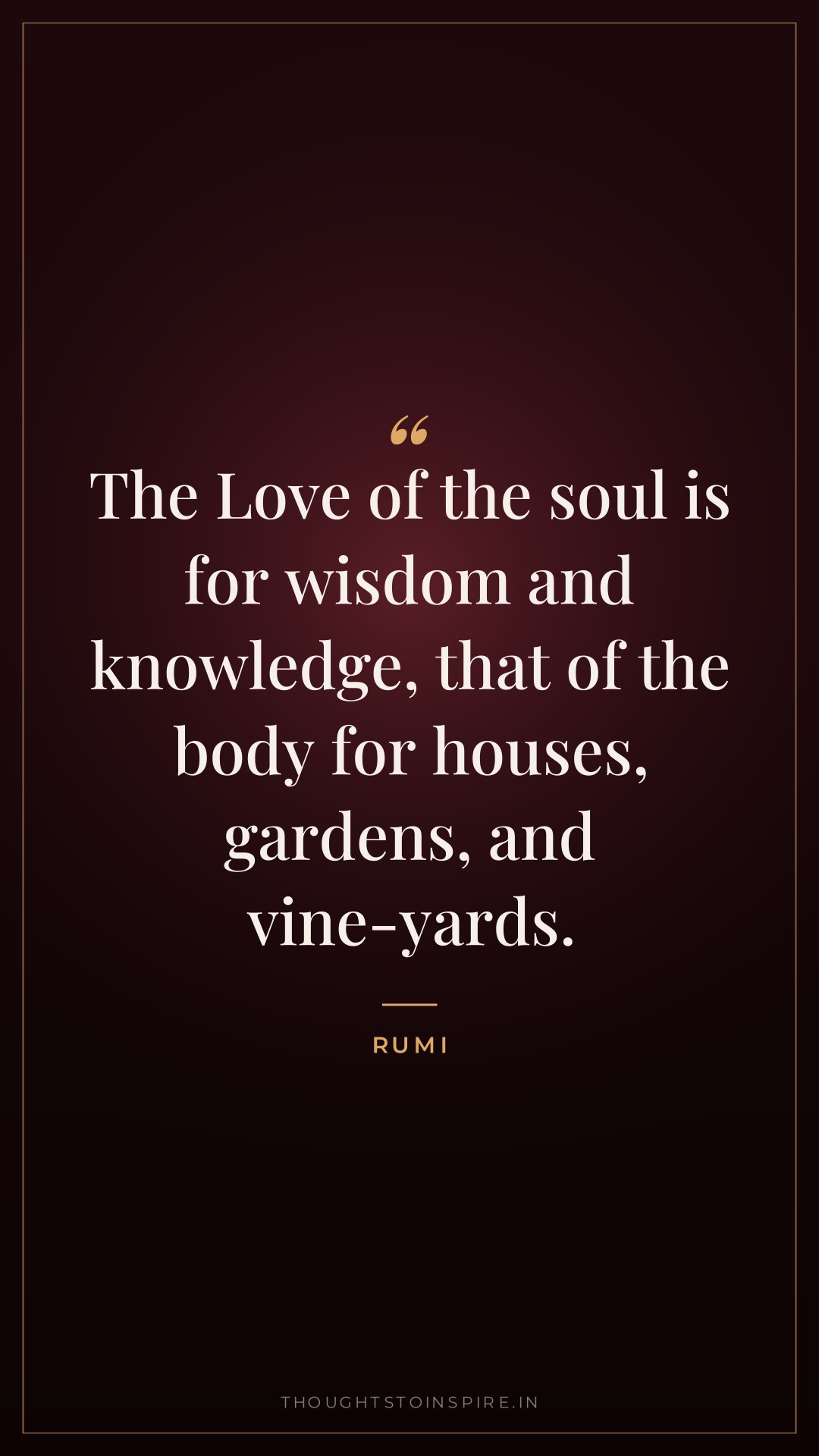
आत्मा का प्रेम ज्ञान और विवेक से है, और देह का प्रेम घरों, बगीचों और अंगूर के बागों से।
What it means
The sentence is built as a parallel, not as an accusation: both are called love, and each is given its own proper objects. What separates them is what those objects are made of — the body’s list is concrete and fixed in place, things with boundaries and title deeds, while wisdom and knowledge cannot be enclosed, inherited, or handed across.
It is worth keeping because it declines the easy sermon. Houses and vineyards are not called sinful; they are called what a body will naturally love, the way each hunger moves toward the food that resembles it. Worth adding that most lines circulating under Rumi’s name in English have no traceable original at all — this one sits in a printed translation, which is rarer than readers assume.
What it teaches you
Use it as a sorting question rather than a verdict: when you want something, ask what would actually end the wanting — possession of a thing, or an understanding that changes only by being understood. Mistaking the second appetite for the first is the usual reason acquiring more of one never quiets the other.
अर्थ और सीख
रूमी यहाँ दो प्रेमों की तुलना कर रहे हैं, निंदा नहीं: आत्मा का प्रेम ज्ञान की ओर जाता है, देह का प्रेम घर, बाग़ और ज़मीन की ओर। बात यह है कि हर भूख अपने जैसे भोजन की ओर जाती है — जो वस्तुएँ जमा की जा सकती हैं, वे आत्मा की भूख नहीं मिटातीं। सीख: चाह उठे तो पूछिए कि इसे शांत क्या करेगा — कोई चीज़ जो आपकी हो जाए, या कोई समझ जो आपको बदल दे।
Where it comes from
From the selection titled The Love of the Soul in Rumi’s Masnavi.
Jalalu’d-din Rumi (1207–1273) composed the Masnavi — some 25,000 couplets of stories and teaching — in Konya, in present-day Turkey, after the loss of his teacher Shams of Tabriz. This passage follows the public-domain selections published in The Persian Mystics (1907); the selection title is cited with this quote.