— Meditations, Book 2 (tr. George Long, 1862)
About this quote
हिन्दी में
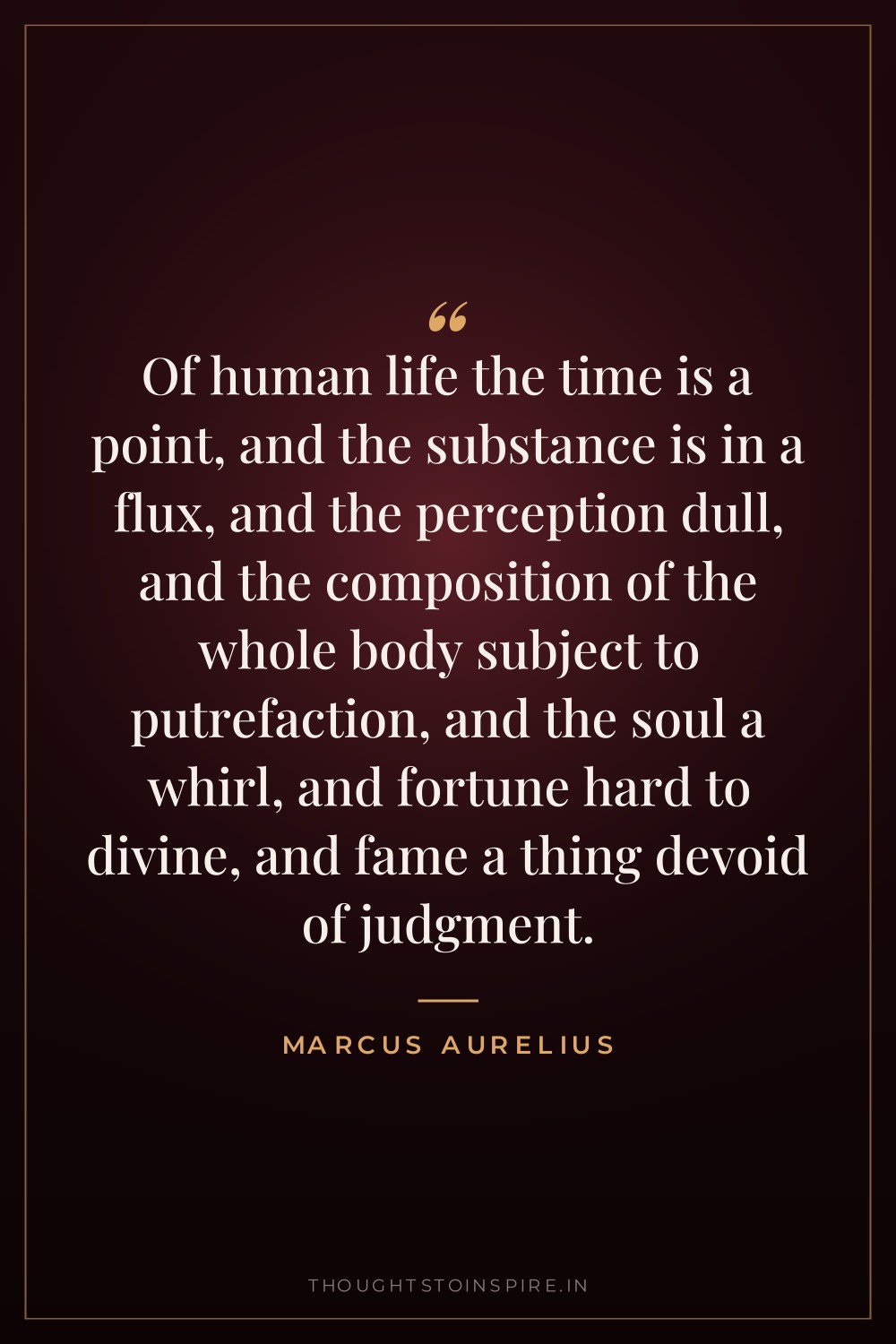
मनुष्य के जीवन में समय एक बिंदु भर है, पदार्थ निरंतर बहता हुआ, इंद्रियाँ धुँधली, सारा शरीर सड़नशील, आत्मा एक भँवर, भाग्य अबूझ, और यश विवेक से रहित।
What it means
Seven items, each named and then immediately disqualified, with no verb of judgment anywhere and no therefore at the end. The harshest clause is not the famous one about time being a point but the last: fame is not called brief or hollow, it is called devoid of judgment — the people handing it out are said to have no faculty for assessing what they are rewarding. That makes reputation not a weak signal about your work but no signal at all.
Worth keeping because of what the third item does to the rest. Perception dull puts the instrument on the list: the very senses you would use to check whether any of this holds are themselves declared unreliable. Excerpted as a memento mori about life being short, the passage sounds merely wistful; taken entire, it is a man striking out every external source of confirmation, one by one.
What it teaches you
Since the passage rates applause as unjudged, stop using reception as the check on a decision. Write down at the time you decide what you expect and why, then review the reasoning later against what you knew then — not against how it turned out or who praised it. The clause about dull perception applies here too: your recollection of why you did something is the part most likely to have quietly rewritten itself.
अर्थ और सीख
मार्कस ऑरेलियस एक-एक करके उन सब चीज़ों की सूची बनाते हैं जिन पर टिका नहीं जा सकता — समय, पदार्थ, इंद्रियाँ, शरीर, भाग्य और यश। सबसे तीखी बात अंत में है: यश को क्षणभंगुर नहीं, ‘विवेकहीन’ कहा गया है, यानी उसे बाँटने वालों में परखने की क्षमता ही नहीं। सीख यह है कि अपने निर्णय की जाँच लोगों की वाहवाही से न करें, बल्कि यह लिखकर रखें कि आपने वह निर्णय किन कारणों से लिया था।
Where it comes from
This is an inventory of everything in a human life that will not hold weight: the span of it is a single point, the matter of it is running away, the senses report poorly, the body rots, luck cannot be read, and reputation is handed out by people with no judgment. The list is not despair for its own sake — it clears the table, so that the only thing left worth resting on is one’s own conduct and understanding.
From Book 2 of the Meditations of Marcus Aurelius, in George Long’s English translation of 1862. Long renders the Greek very literally, which is why the clauses pile up joined by “and” rather than being smoothed into modern sentences.