— Meditations, Book 8 (tr. George Long, 1862)
About this quote
हिन्दी में
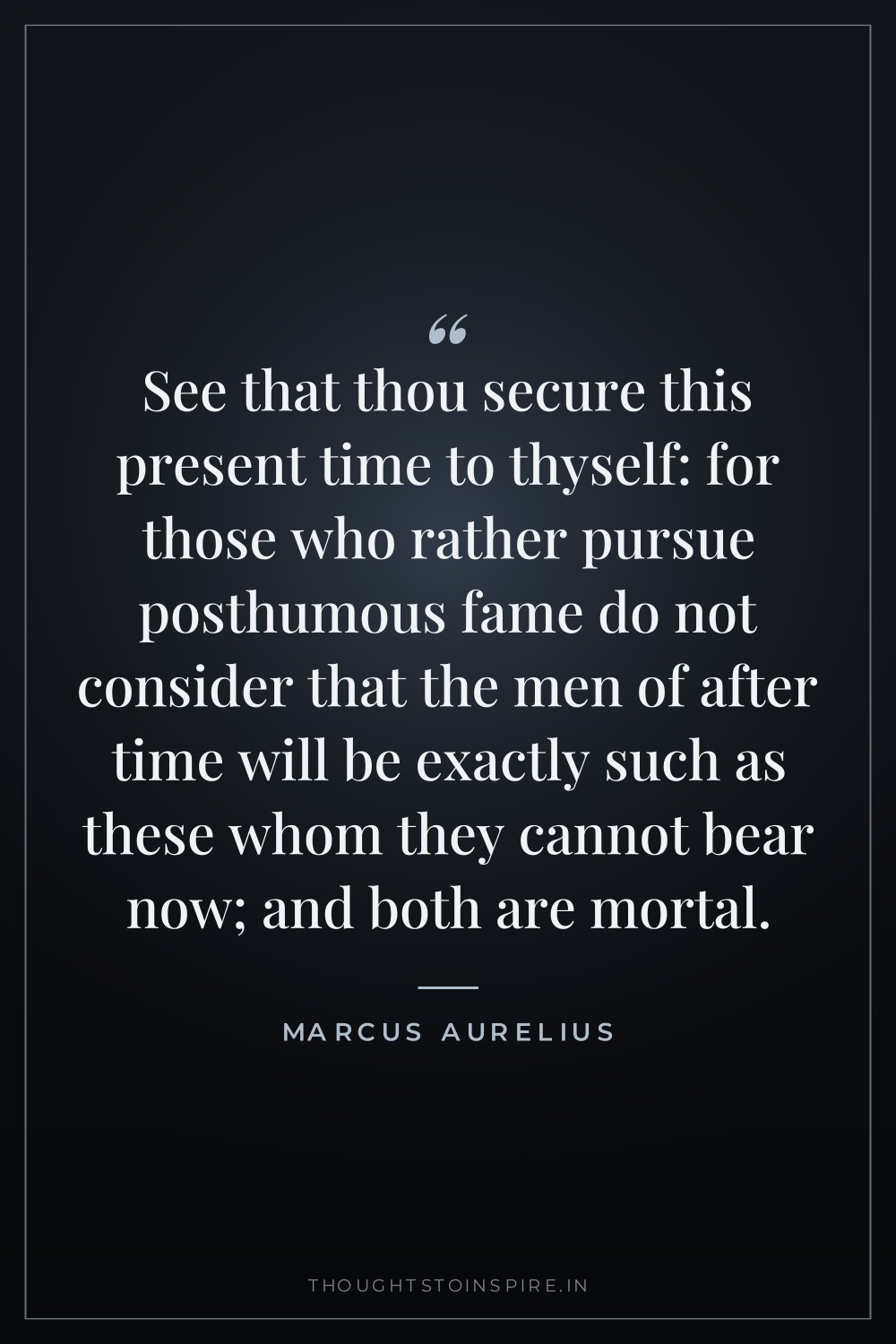
इस वर्तमान समय को अपने लिए सुरक्षित कर लो; जो मरने के बाद की कीर्ति के पीछे भागते हैं, वे यह नहीं सोचते कि बाद के लोग ठीक वैसे ही होंगे जैसे ये लोग, जिन्हें वे आज सह नहीं पाते—और दोनों ही मरणशील हैं।
What it means
The instruction sits in the first clause and it speaks the language of property: secure this present time to thyself. Present time is treated as something you hold and can have taken off you, and the rest of the sentence names the thief — not idleness or pleasure, but an audience that does not exist yet.
The argument is not that fame is worthless. It is that the exchange rate is absurd: you pay in the only thing you actually own, and are paid in the regard of people who, being made of the same stuff as the contemporaries you already find unbearable, will be no better as judges — and who then die, taking the verdict with them. Clipped to its first six words the line gets read as ordinary carpe diem. The whole sentence is not about savouring the moment; it is about refusing to spend it on a jury that never convenes.
What it teaches you
Go back over last week’s hours and mark the ones worked for a reader, viewer or mourner who is not yet born: the legacy-shaped project, the profile being burnished, the achievement whose real value is that it will be mentioned about you afterwards. Then ask what those hours would otherwise have held. Marcus supplies a specific test — picture that future audience as the particular people you currently find hardest to sit in a room with, since that is precisely his claim about who they will be.
अर्थ और सीख
मार्कस कहते हैं कि वर्तमान समय तुम्हारी अपनी संपत्ति है—उसे अपने लिए बचा लो। मरने के बाद की प्रसिद्धि के बदले उसे ख़र्च करना घाटे का सौदा है, क्योंकि आगे आने वाले लोग ठीक वैसे ही होंगे जैसे आज के वे लोग जिन्हें तुम सह नहीं पाते, और वे भी मर जाएँगे। सबक ठोस है: अपने हफ़्ते के उन घंटों को पहचानिए जो किसी ऐसे दर्शक के लिए लगाए जा रहे हैं जो अभी पैदा ही नहीं हुआ।
Where it comes from
An argument against trading the present for a reputation after death. Marcus makes the future audience concrete: those later people will be the same sort as the contemporaries you already find hard to tolerate, and they will die as well. A bargain struck with posterity is therefore paid in real time for an imagined return.
From Book 8 of Marcus Aurelius’s Meditations, as translated by George Long in 1862.