— Attributed to Swami Vivekananda; no primary source given
About this quote
हिन्दी में
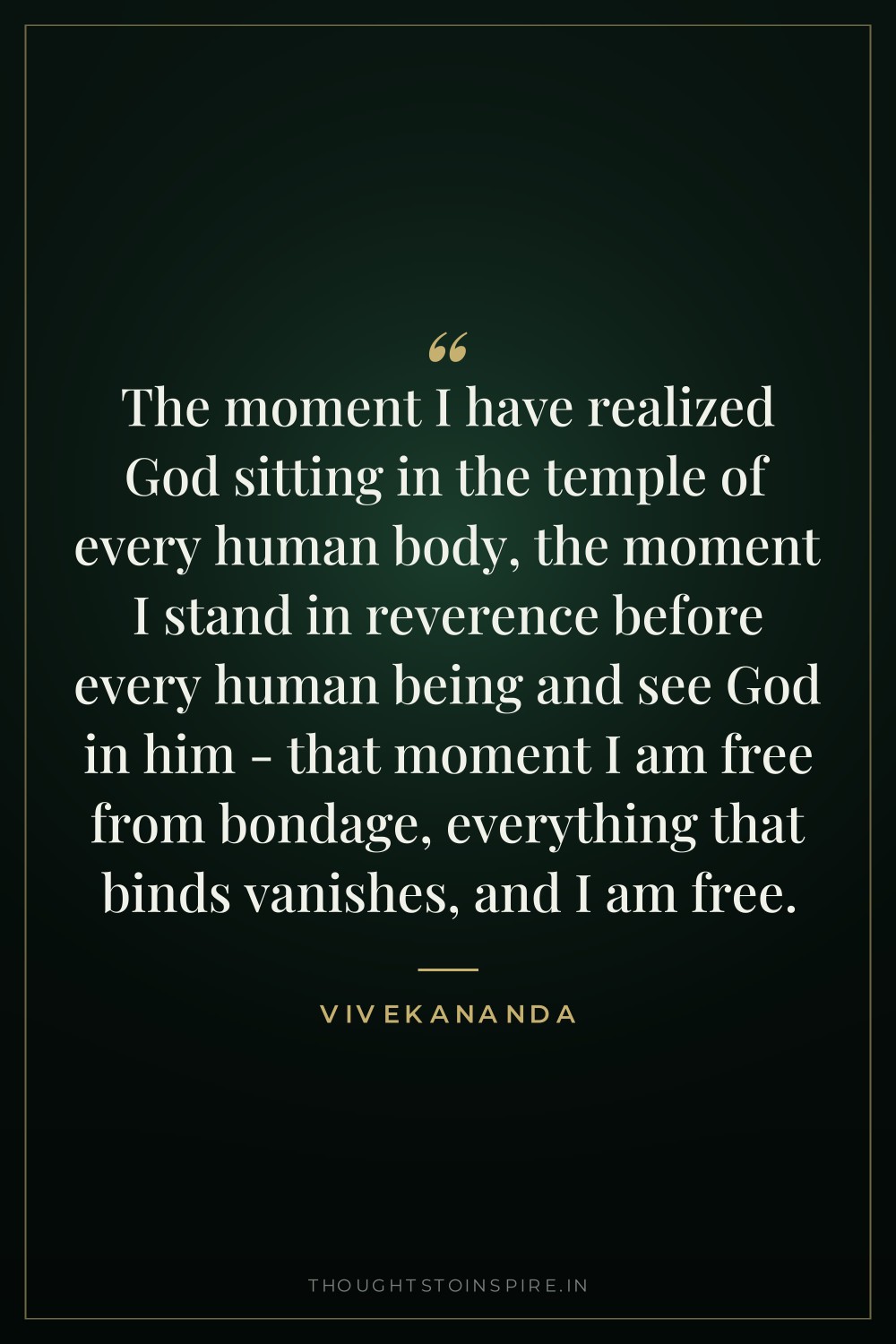
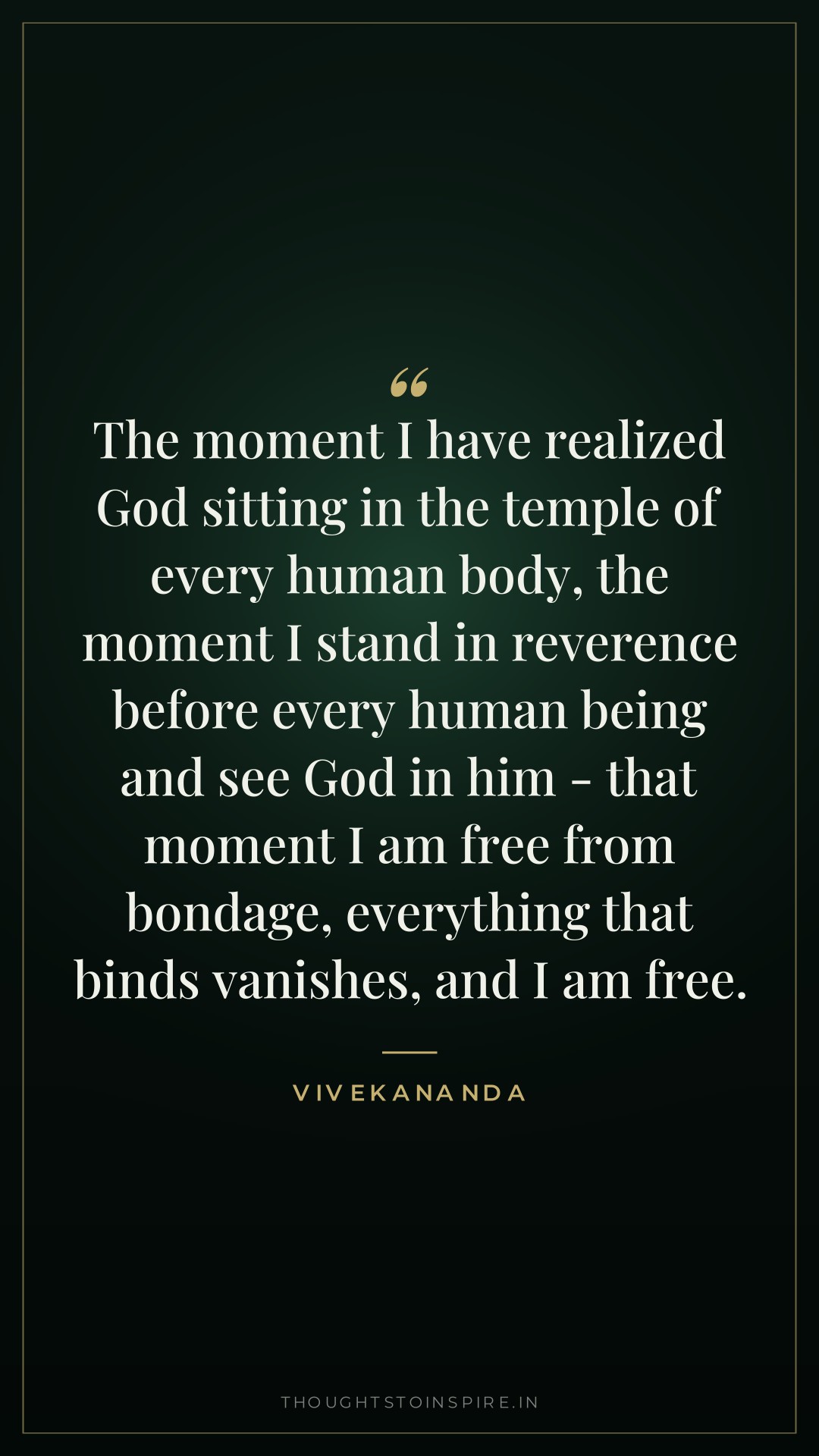
जिस क्षण मैंने हर मनुष्य के शरीर रूपी मंदिर में ईश्वर को विराजमान देख लिया, जिस क्षण मैं हर मनुष्य के सामने श्रद्धा से खड़ा होता हूँ और उसमें ईश्वर को देखता हूँ — उसी क्षण मैं बंधन से मुक्त हो जाता हूँ, हर बाँधने वाली चीज़ मिट जाती है, और मैं मुक्त हूँ।
What it means
The causal arrow runs the opposite way to the one readers expect. Reverence for people is not what a free man produces once he is free; it is what frees him, and the repeated that moment insists the two are simultaneous rather than one being a reward for the other. Freedom arrives through a change in how the person standing in front of you is seen, not through withdrawal from them.
This is often absorbed into the broader service-to-humanity teaching, but the sentence itself never mentions service. It is about seeing and standing — and it is oddly self-interested, since what dissolves is my bondage. The clause that bites is every human body: no category is held back, and the line offers no clause for the person you have good reason to despise.
What it teaches you
Test it where it is expensive. Pick the one person you currently find it hardest to respect — a relative, a boss, someone whose politics you find contemptible — and notice that the sentence grants you no exemption for them. Its actual claim is that the resistance you feel there is a description of your own bondage rather than of their worth, which makes that person the measurement instrument, not the obstacle.
अर्थ और सीख
यह वाक्य दिशा उलट देता है — मनुष्य के प्रति श्रद्धा मुक्ति का फल नहीं, उसका कारण है, और बार-बार आया उसी क्षण बताता है कि दोनों एक साथ घटते हैं। यह सेवा की बात नहीं कर रहा, देखने की बात कर रहा है, और जो टूटता है वह मेरा अपना बंधन है। सबसे कठिन शब्द है हर — इसमें उस व्यक्ति के लिए भी कोई छूट नहीं जिसका सम्मान करना आपको सबसे भारी लगता है, और वहीं आपकी असली नाप होती है।