— Meditations, Book 8 (tr. George Long, 1862)
About this quote
हिन्दी में
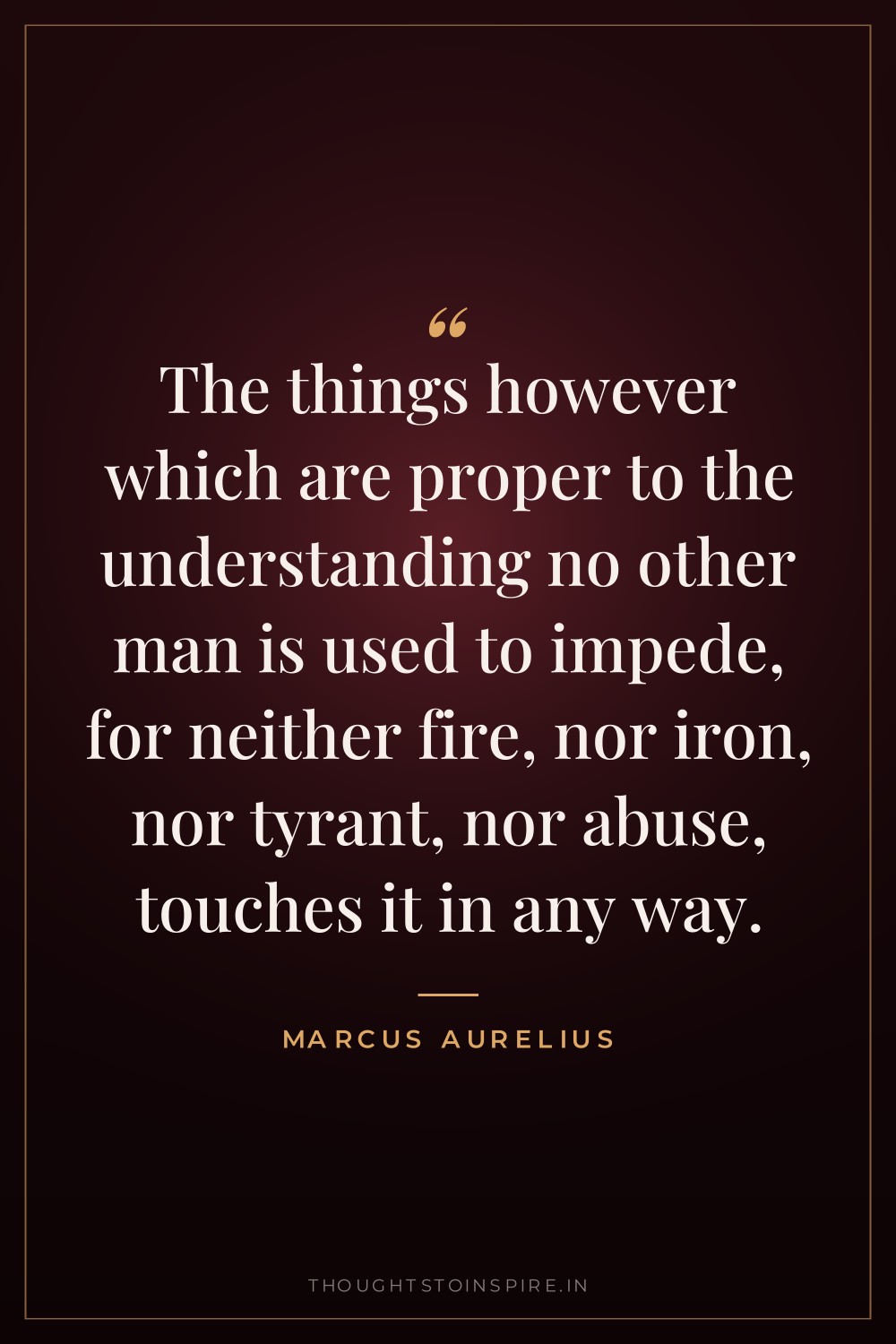
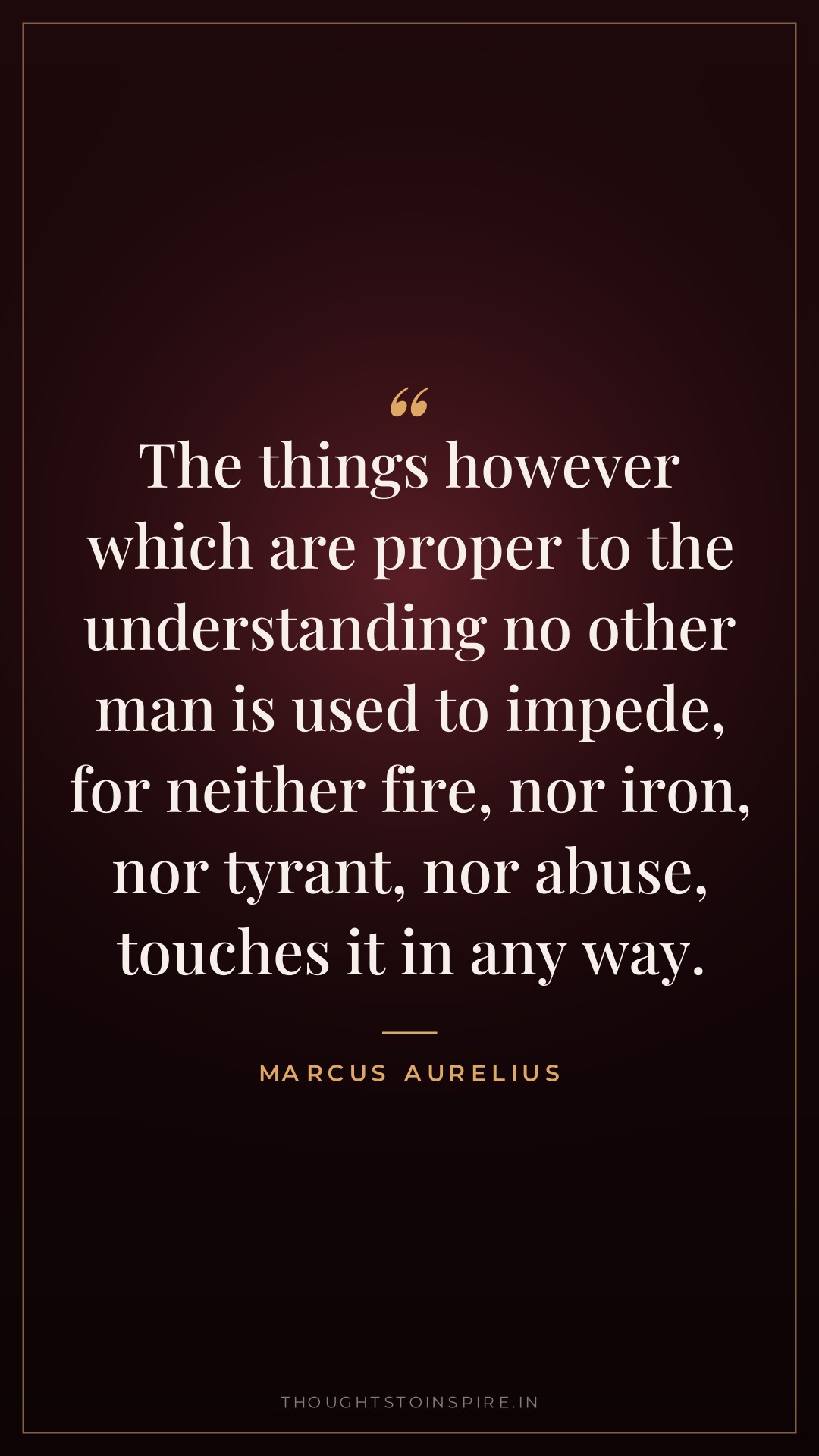
जो बातें समझ के अपने अधिकार की हैं, उन्हें कोई दूसरा मनुष्य रोक नहीं पाता; क्योंकि न आग, न लोहा, न कोई तानाशाह, न गाली — इनमें से कुछ भी उन्हें छू नहीं सकता।
What it means
The claim is narrower than it first sounds. It covers only the things proper to the understanding — the act of judging itself — and says nothing protective about your body, your money, your plans or your standing, all of which fire and iron and tyrants reach quite easily.
The second limit sits in the phrasing: no other man is used to impede it. The immunity is against other people. Nothing here says you cannot obstruct your own understanding, which is the likelier failure — and note that the list ends with abuse, mere words, placed alongside fire, because abuse does its work only if the person receiving it picks it up.
What it teaches you
After an insult or a threat, separate what actually moved from what only felt as though it moved: the deadline, the money, someone’s safety, as against your estimate of yourself. The second is the part no one else can edit — which also means that taking on an angry opponent’s description of you is something you do, not something done to you.
अर्थ और सीख
दावा जितना बड़ा लगता है, उतना बड़ा नहीं है: आग, लोहा, तानाशाह और गाली — ये शरीर, धन और हालात तक पहुँच सकते हैं, पर निर्णय करने की क्रिया तक नहीं। और ध्यान दें कि रुकावट कोई दूसरा आदमी नहीं डाल सकता — अपनी समझ को अपने हाथों बिगाड़ना खुला रहता है। सीख: अपमान के बाद देखिए कि असल में क्या बदला और क्या सिर्फ़ बदला हुआ महसूस हुआ।
Where it comes from
A rising scale of coercion — fire, iron, a tyrant, mere abuse — is listed only to be dismissed. Each can reach the body or the circumstances; none reaches the act of judging itself. Marcus is marking the exact boundary of what force can do, and placing the mind’s own operations outside it.
From Book 8 of Marcus Aurelius’s Meditations, translated by George Long in 1862. Understanding is Long’s word for the reasoning faculty.