— Meditations, Book 10 (tr. George Long, 1862)
About this quote
हिन्दी में
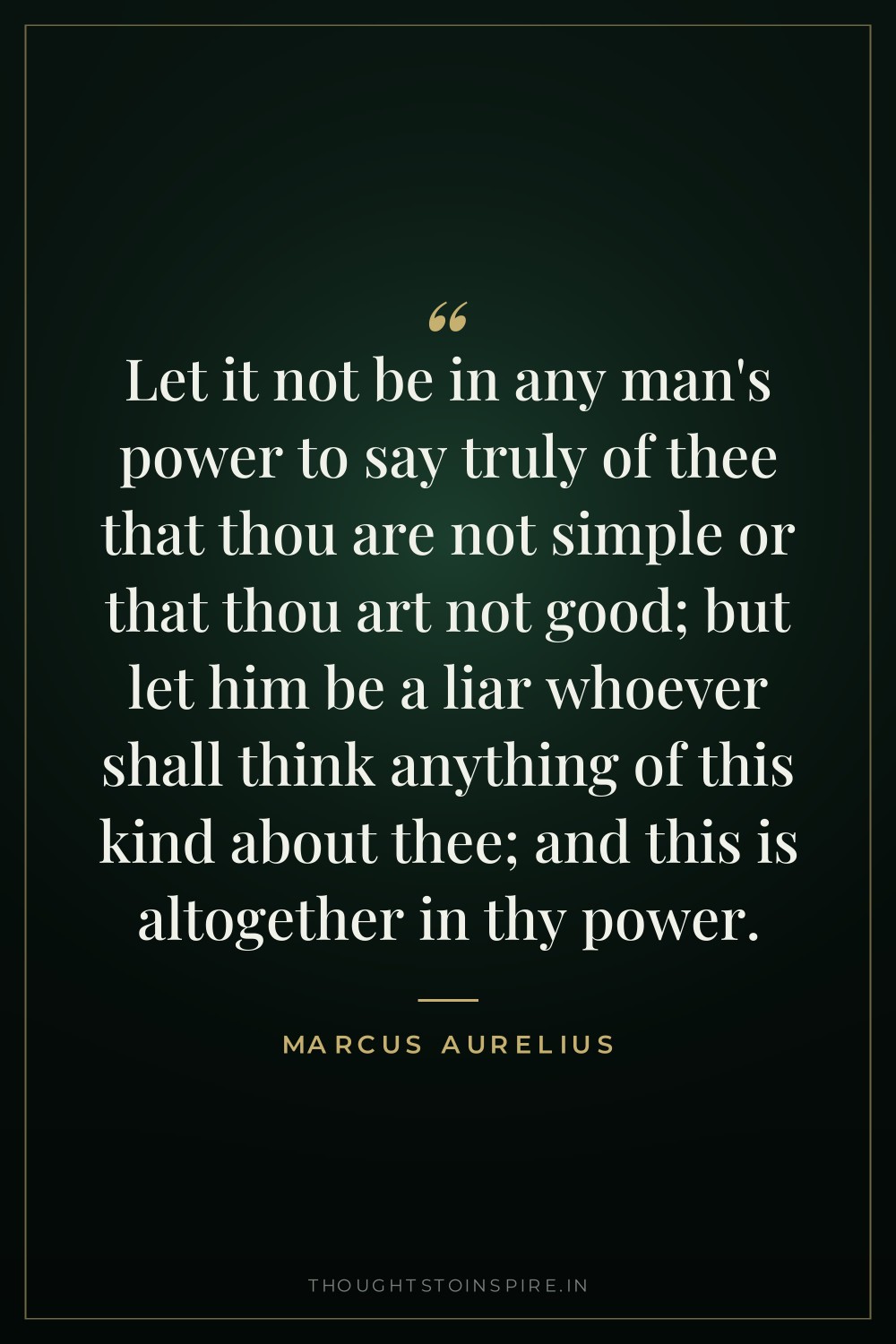
किसी के बस में यह न रहे कि वह तुम्हारे बारे में सच-सच कह सके कि तुम निष्कपट नहीं हो या भले नहीं हो; जो कोई तुम्हें ऐसा समझे, वह झूठा साबित हो — और यह पूरी तरह तुम्हारे अपने हाथ में है।
What it means
This inverts the usual advice about reputation. Marcus does not tell you to ignore what people say, nor to manage it; he tells you to arrange matters so that a particular accusation would be false if made. The opinion is left entirely free to exist — it is simply required to be wrong.
The closing clause compresses the whole Stoic division into six words, and it is worth being exact about what falls on your side of it. Whether the charge gets made is not in your power; whether it is true is. That is why the line ends in reassurance and obligation at once — nobody can take this from you, and nobody else can be blamed for it either.
What it teaches you
When something is said about you, split it immediately into is it true and is it being said, and put your effort only into the first. If it is false, it needs no defending and will usually be disproved by the next few months of your conduct; if it is true, the repair is a change in behaviour, not a better explanation.
अर्थ और सीख
यहाँ कहा गया है कि अपने आचरण को ऐसा रखो कि कोई तुम्हें कपटी या बुरा कहे तो वह बात झूठ साबित हो जाए। लोगों की राय रोकना तुम्हारे हाथ में नहीं, पर उस राय का सच या झूठ होना पूरी तरह तुम्हारे हाथ में है। सीख यह है कि आरोप लगने पर सफ़ाई देने में नहीं, बल्कि यह देखने में ताक़त लगाओ कि आरोप सच तो नहीं — और अगर सच है तो सुधार व्यवहार में करो, शब्दों में नहीं।
Where it comes from
The standard set here is conduct, not reputation — but reputation is the instrument for testing it. If someone calls you neither simple nor good, that verdict should be provably false, and making it false is entirely a matter of what you do. The final clause is the sting: no one else can take this from you, so no one else can be blamed for it.
From Book 10 of the Meditations, in George Long’s translation of 1862. “Simple” here carries its older sense of unmixed or without duplicity rather than unintelligent.