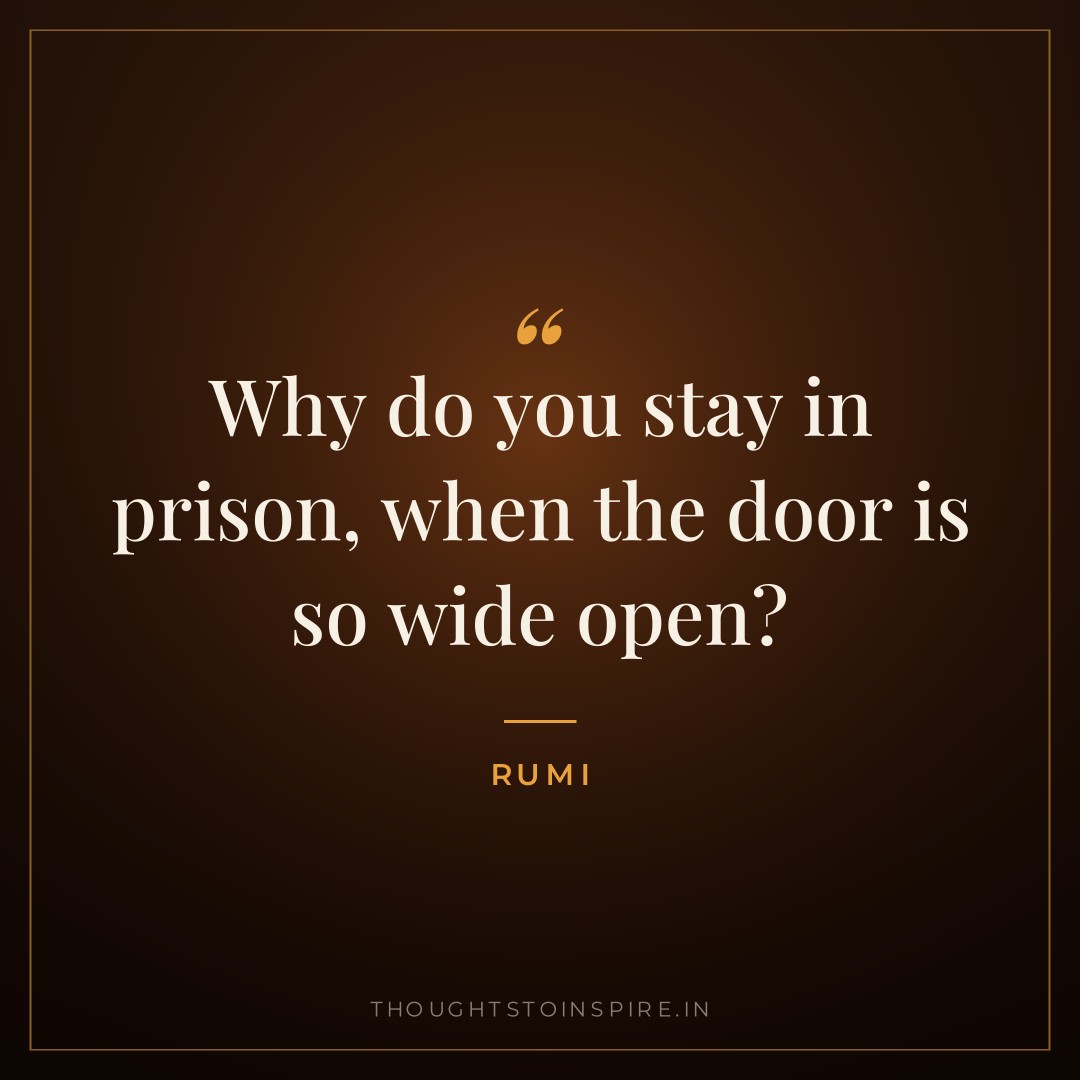
— Attributed to Rumi; a widely shared modern English rendering, not a literal translation
About this quote
हिन्दी में
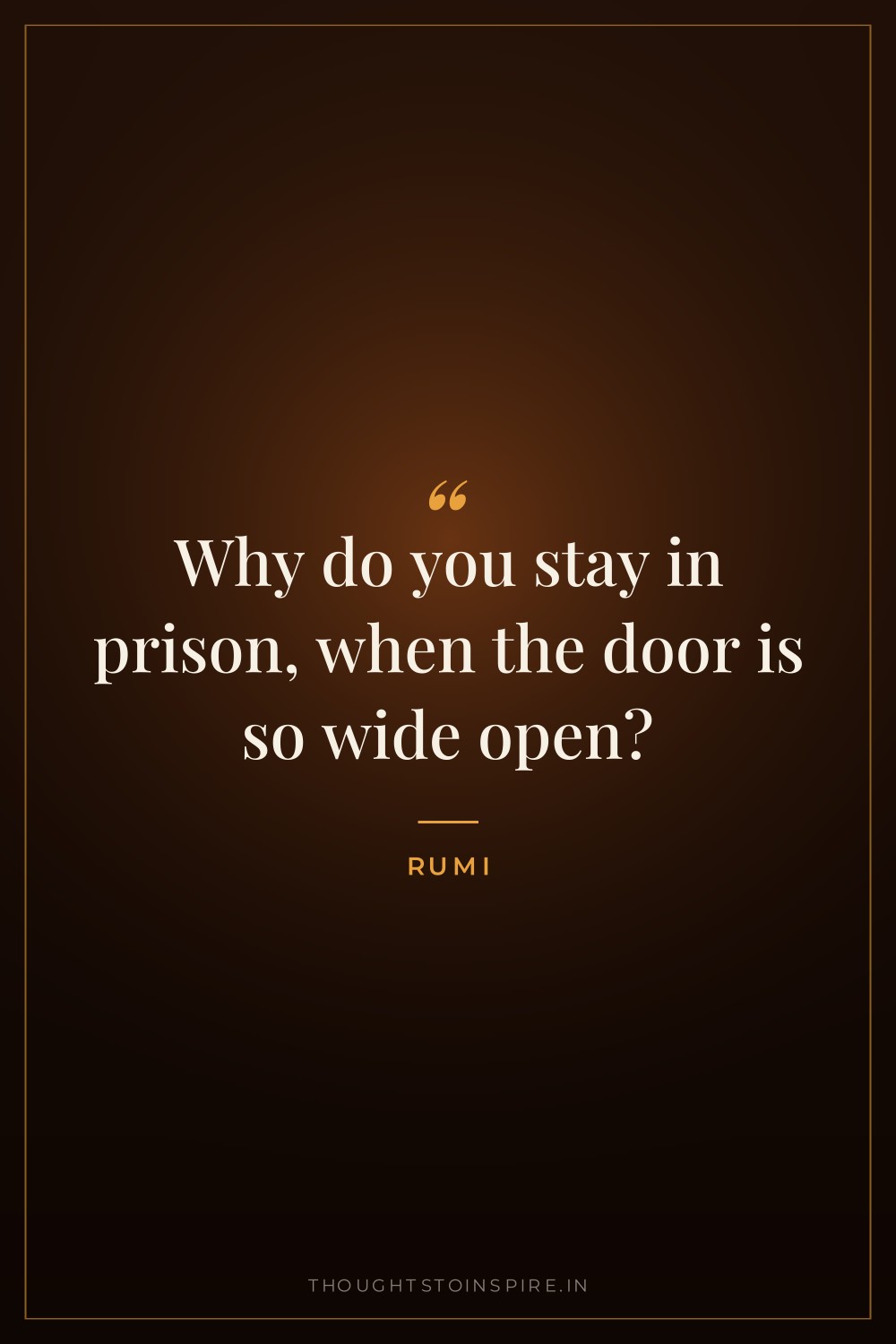
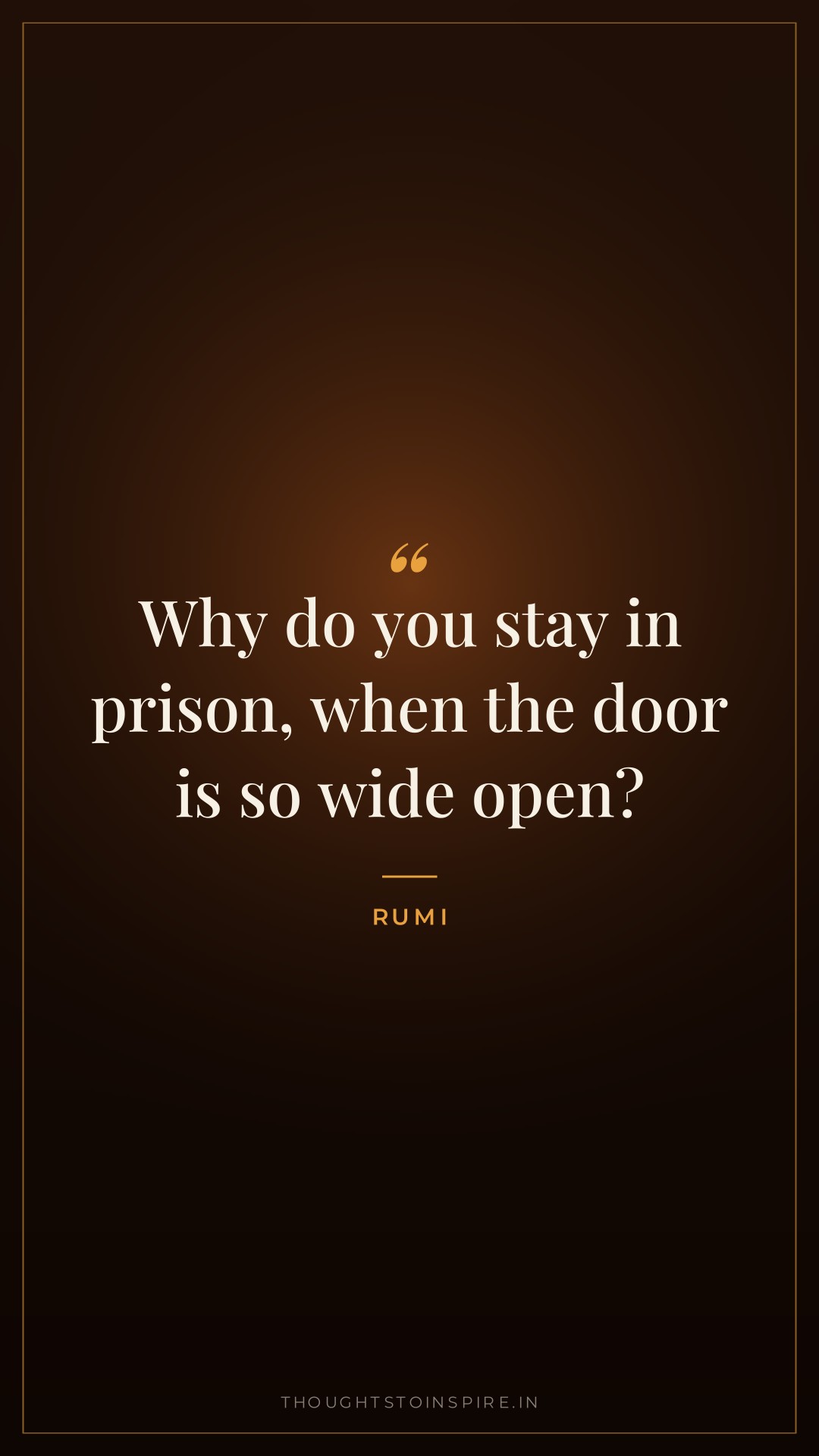
तुम कैद में क्यों बैठे रहते हो, जब दरवाज़ा इतना चौड़ा खुला है?
What it means
The intensifier is where the pressure sits. Not unlocked, not ajar — so wide open, which removes the excuse of not having noticed. The sentence puts the door’s condition down as settled fact and asks about one thing only, your staying, so the entire burden of explanation lands on the reader.
It also has a limit worth stating plainly. Said to someone whose walls are made of money, illness, a visa, or another person’s control, it is not a liberating question but blame dressed as wisdom. It earns its force only where the constraint turns out to be familiarity, identity, or the cost of explaining yourself to people who expect to find you in that cell.
What it teaches you
Finish the sentence I stay because in one line, then look at the object of the verb. If it names a wall, the question is not addressed to you. If it names a preference, an embarrassment, or a habit, you have just written down the lock.
अर्थ और सीख
ज़ोर ‘इतना चौड़ा खुला’ पर है — दरवाज़ा सिर्फ़ खुला नहीं है, इसलिए ‘दिखा ही नहीं’ का बहाना नहीं बचता; सवाल दरवाज़े पर नहीं, आपके बैठे रहने पर है। मगर यह भी सच है कि जिसकी दीवारें असली हैं — पैसा, बीमारी, किसी और का दबाव — उसके लिए यह सवाल आज़ादी नहीं, इलज़ाम बन जाता है। सबक: एक वाक्य लिखिए, ‘मैं यहाँ इसलिए हूँ कि…’ और देखिए कि वजह दीवार है या आदत, पसंद और सफ़ाई देने का डर।
Where it comes from
The question does the work that an instruction could not. Rumi does not tell you to leave; he points out that the door is open and lets you discover how much of your captivity you have been maintaining yourself.
A widely shared modern rendering. Rumi (1207–1273) wrote in Persian; almost every English line shared online is a modern rendering rather than a literal translation. Sourced passages from the Masnavi, with their selection titles, are collected under Rumi on Love.