— from the ghazal beginning “ghamza nahin hota ke ishaara nahin hota”, Akbar Allahabadi (1846–1921)
About this quote
देवनागरी
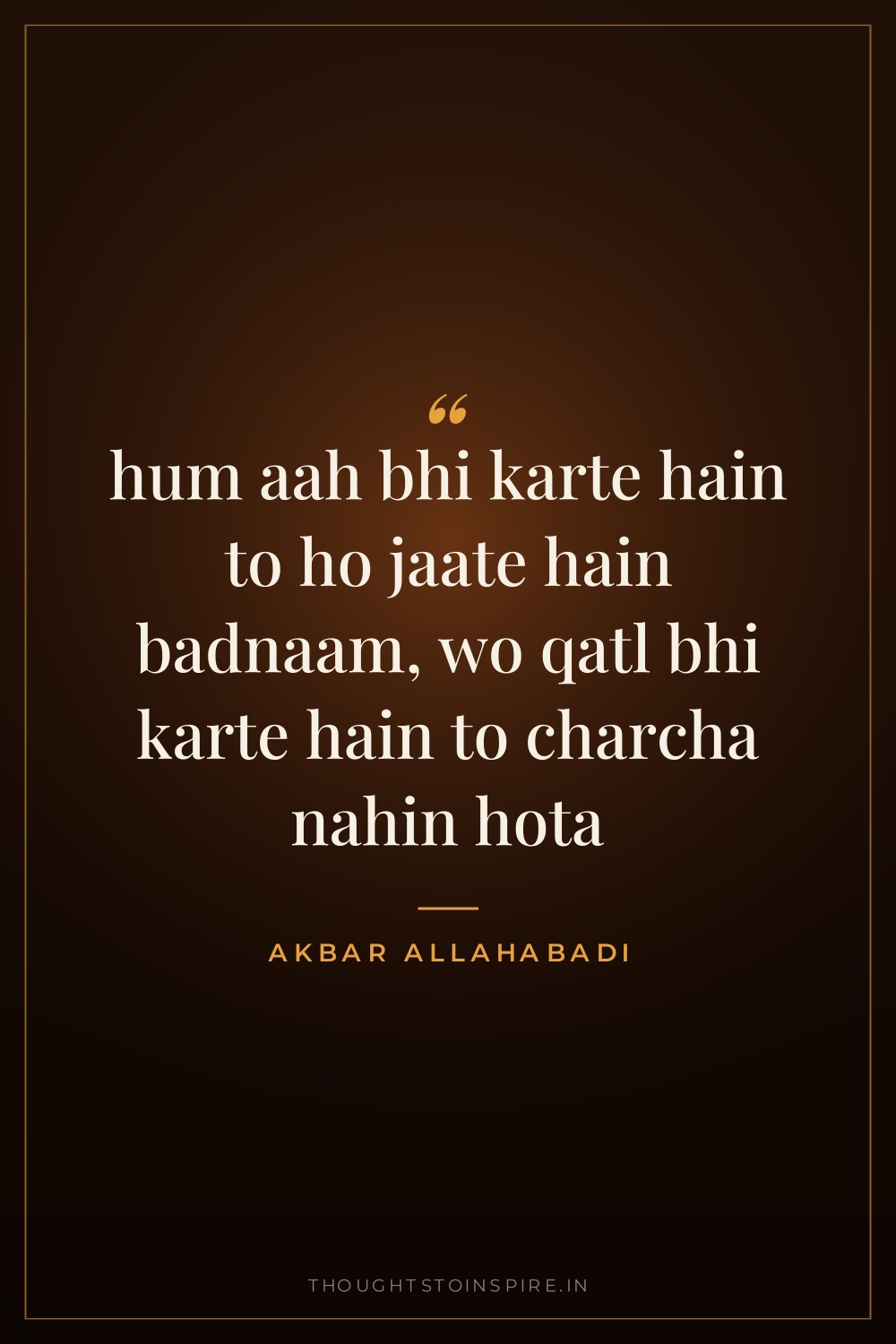
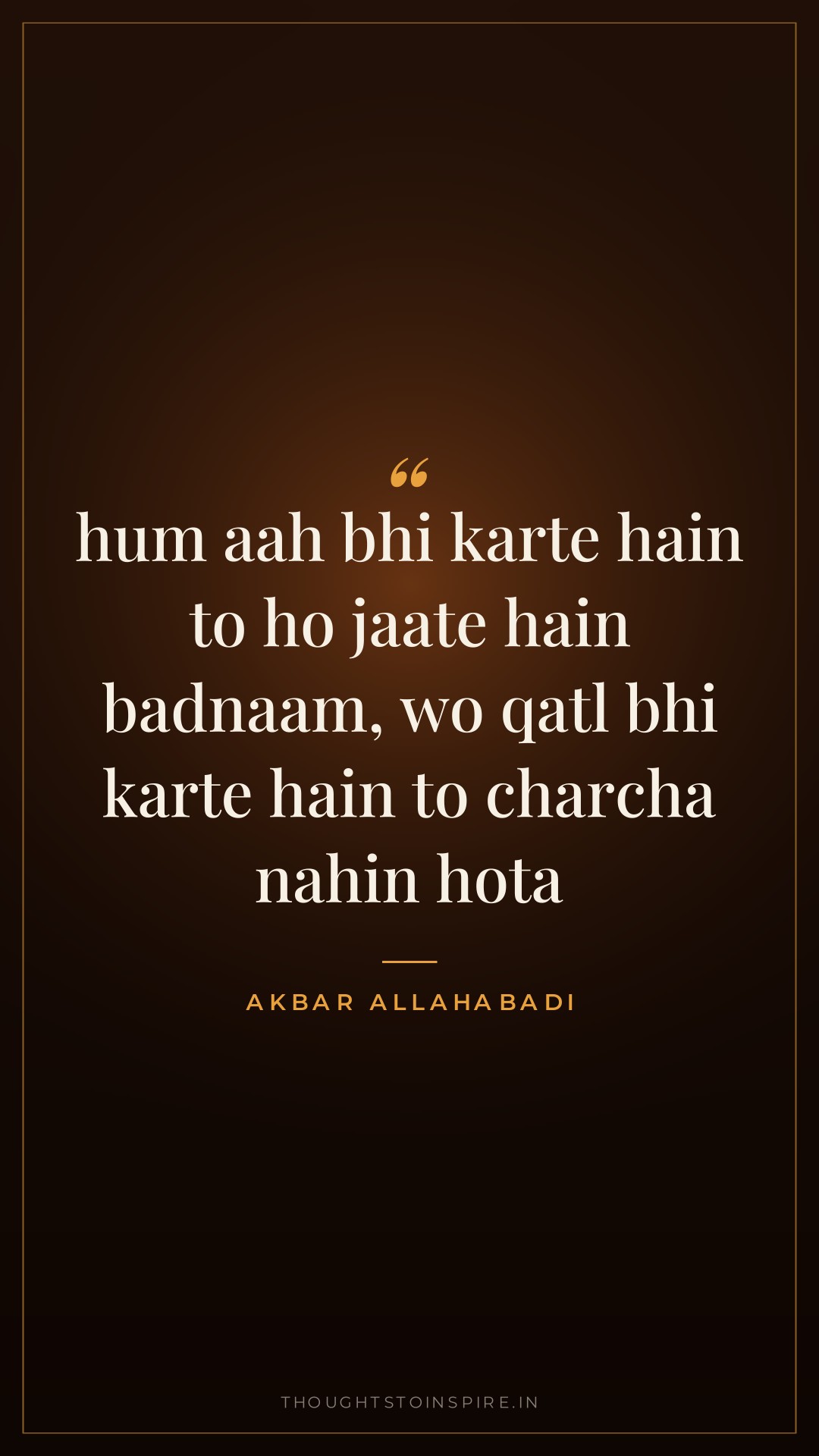
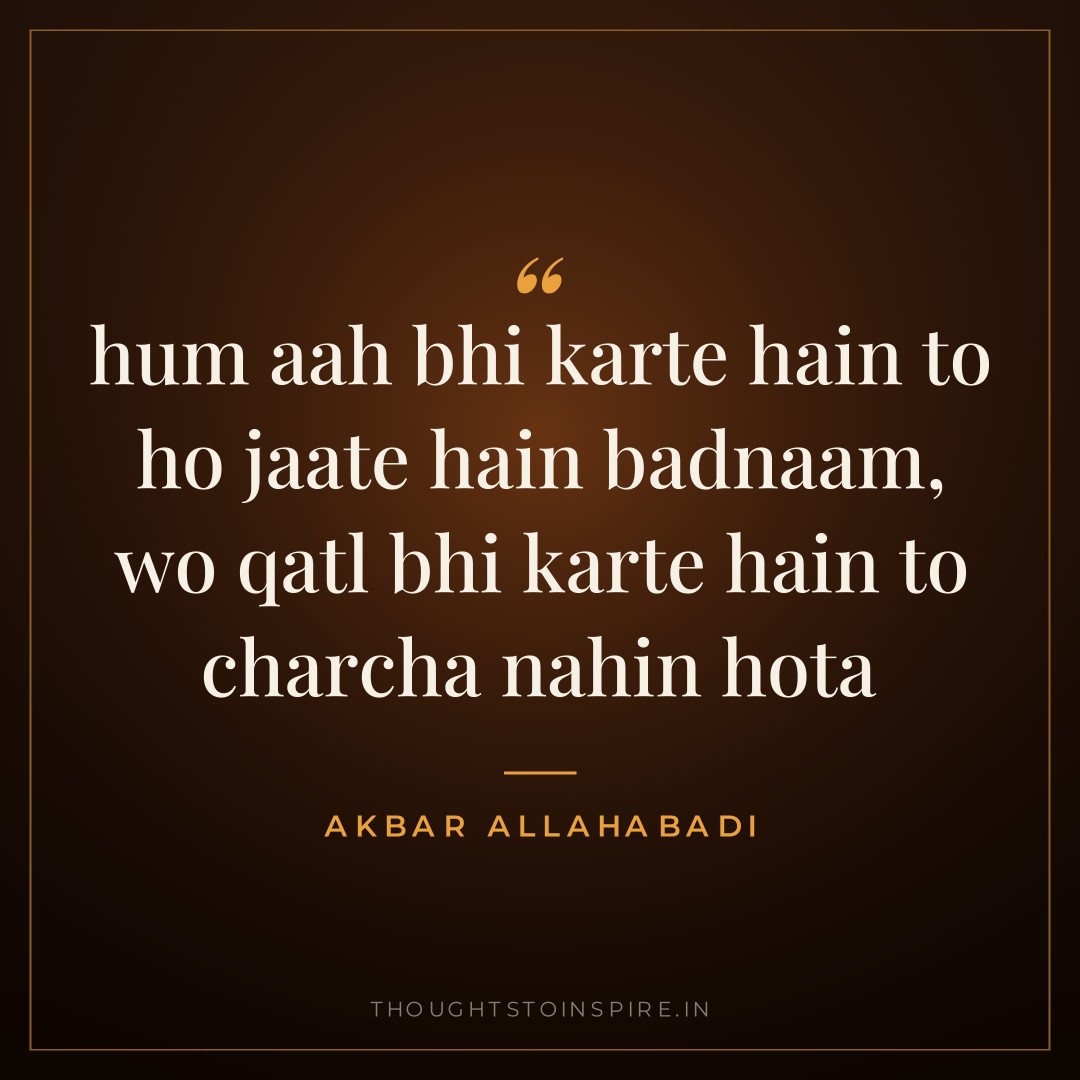
हम आह भी करते हैं तो हो जाते हैं बदनाम
वो क़त्ल भी करते हैं तो चर्चा नहीं होता
اردو
ہم آہ بھی کرتے ہیں تو ہو جاتے ہیں بدنام
وہ قتل بھی کرتے ہیں تو چرچا نہیں ہوتا
English
If I so much as sigh, I am disgraced; when they commit murder, nobody even mentions it.
What it means
Akbar was Urdu’s great satirist, and this is his subject in two lines: the same act judged differently depending on who performs it. Written about lover and beloved, it has been redeployed for a century against every version of one rule for us, another for them.
What it teaches you
Use this as a test rather than as a grievance. Before settling on how bad an act was, swap the two people and ask whether you would still give it the same name — the couplet’s whole charge is that the verdict was tracking the actor, not the act. And if you are the one whose sigh became a scandal, read the noise correctly: the disproportion is information about your standing in that room, not about what you did.
अर्थ और सीख
हमारी आह भी बदनामी बन जाती है और उनका क़त्ल भी चर्चा नहीं बनता। अकबर का तंज़ इश्क़ पर है, मगर यह शेर हर दोहरे मयार पर चस्पाँ होता है।
किसी बात पर राय बनाने से पहले दोनों पक्षों को आपस में बदलकर देखिए — क्या तब भी आप उसे वही नाम देते? और अगर आपकी छोटी-सी बात पर हंगामा हो रहा है, तो वह शोर आपके काम के बारे में नहीं, उस जगह में आपकी हैसियत के बारे में बता रहा है।
Where it comes from
Verified against the collected work of Akbar Allahabadi (1846–1921) on Urdu Wikisource, in the poem beginning ہم آہ بھی کرتے ہیں تو ہو جاتے ہیں بدنام (source). Devanagari transliteration and English rendering are our own.