— Gospel of Matthew 28:20, Jerusalem Bible tradition
About this quote
हिन्दी में
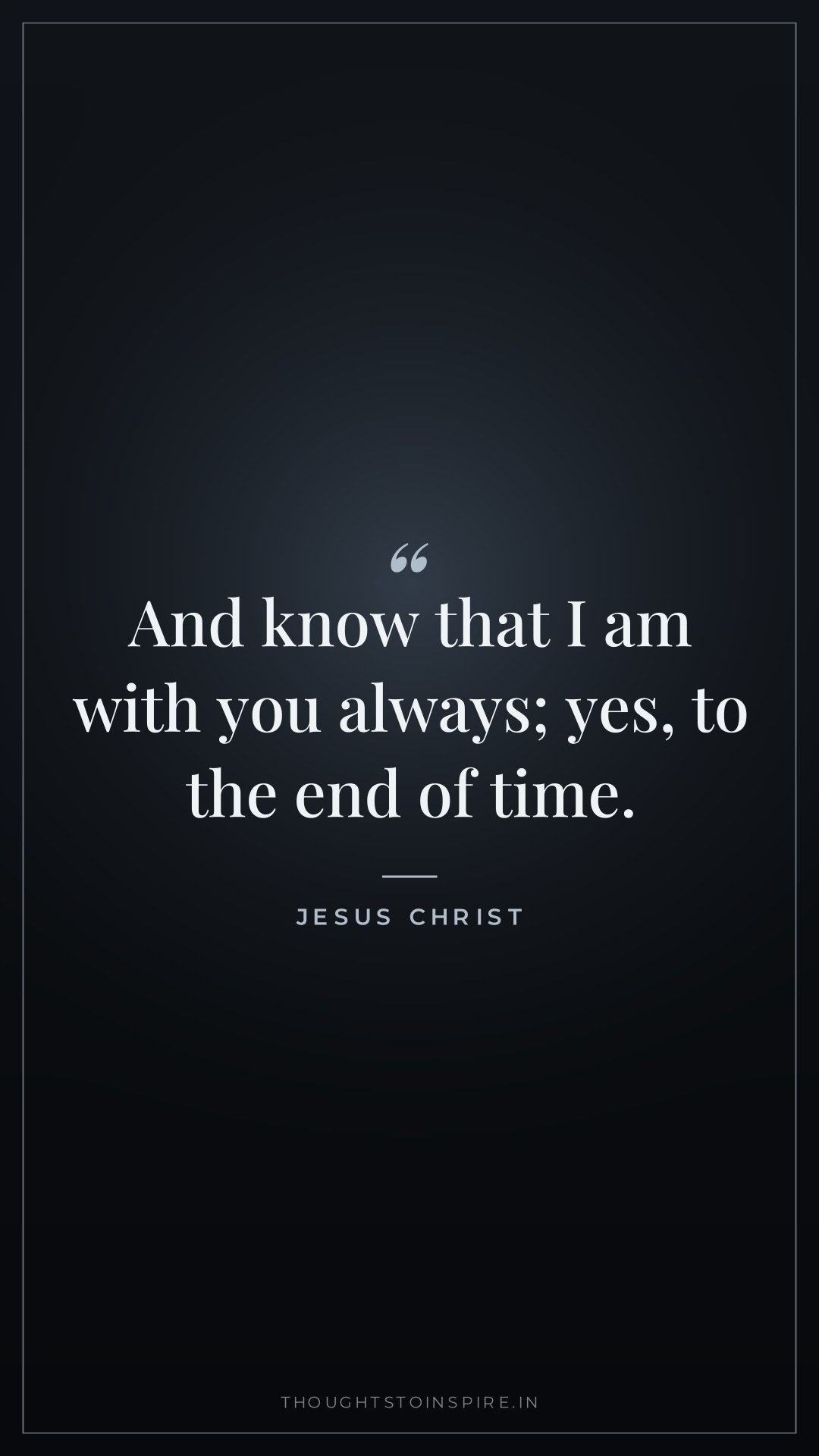
और जान लो कि मैं सदा तुम्हारे साथ हूँ — हाँ, समय के अंत तक।
What it means
The sentence is a promise rather than an instruction, which is uncommon among the lines most often quoted from Jesus, and it is the last thing the book has to say. The assurance is doubled deliberately: always would have been sufficient, and then time itself is named and its end included, so that no stretch of it is left outside the claim.
Notice what the sentence does not contain. There is no condition attached to the hearer’s conduct — nothing about deserving, remembering, or asking. Quoted as general comfort it tends to acquire those conditions. As written it is simply an assertion about presence, with the hearer given nothing to do.
What it teaches you
If you use this line, watch the conditions you add while quoting it — as long as you keep faith, if you stay on the right path. The sentence carries none, and people in the situations where it is most often offered, at hospital beds and funerals, are precisely the least able to meet added conditions. Quote it whole and let it stay unconditional.
अर्थ और सीख
यह आदेश नहीं, वचन है — और आश्वासन जानबूझकर दोहराया गया है: ‘सदा’ कहने के बाद समय का अंत भी जोड़ दिया गया, ताकि कोई कालखंड बाहर न छूटे। ध्यान देने की बात यह है कि इसमें सुनने वाले पर कोई शर्त नहीं लगाई गई — न योग्यता की, न स्मरण की। जब हम इसे सांत्वना के रूप में दोहराते हैं तो अक्सर अपनी ओर से शर्तें जोड़ देते हैं; इस पंक्ति को पूरा और बिना शर्त रहने दीजिए।
Where it comes from
The closing words of the Gospel of Matthew (28:20) — the risen Jesus’s final promise to his disciples in what is called the Great Commission. This phrasing follows the Jerusalem Bible tradition; the King James Version reads ‘lo, I am with you alway, even unto the end of the world.’