— Popularly attributed to Vivekananda; not found in his Complete Works – a modern composition
About this quote
हिन्दी में
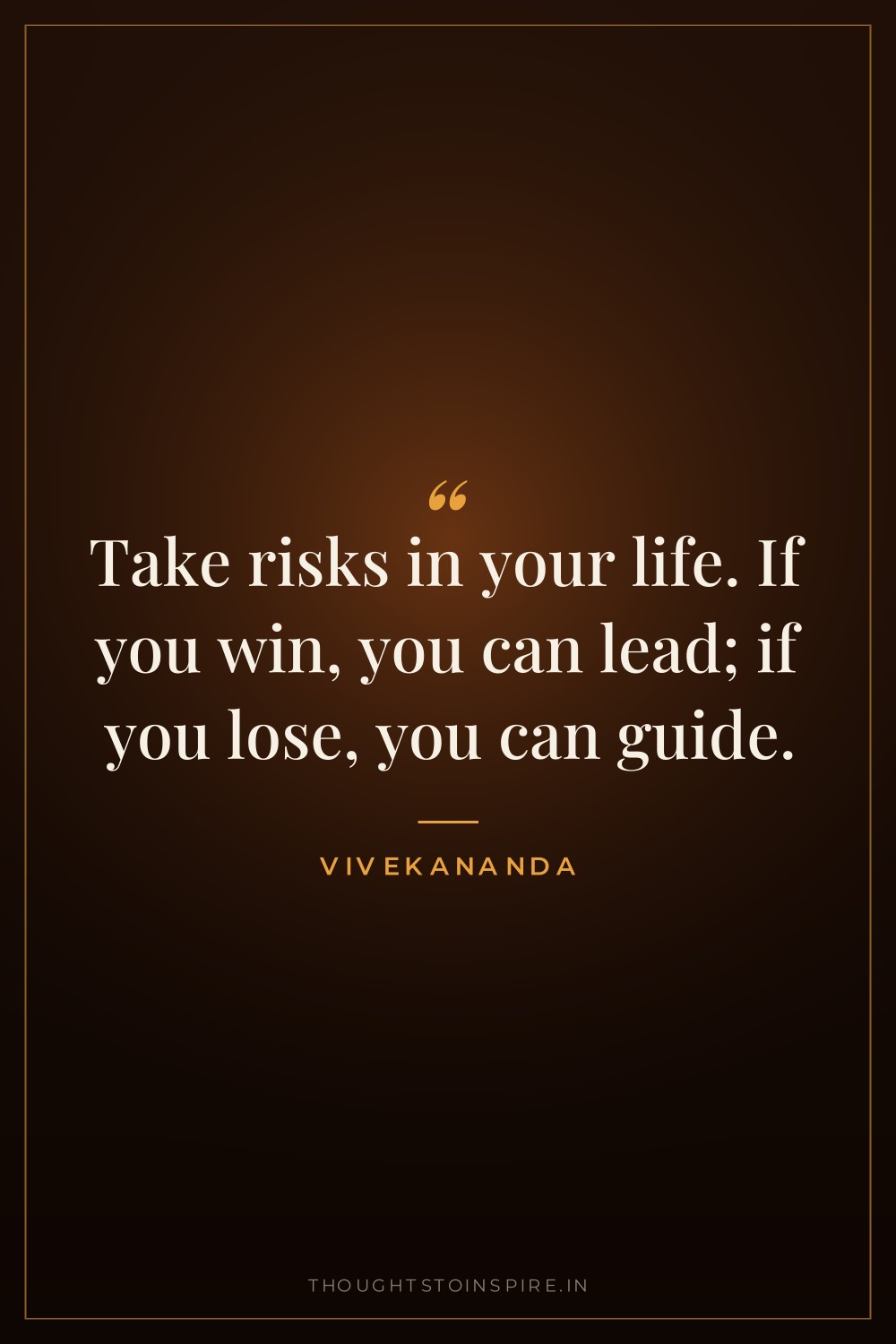
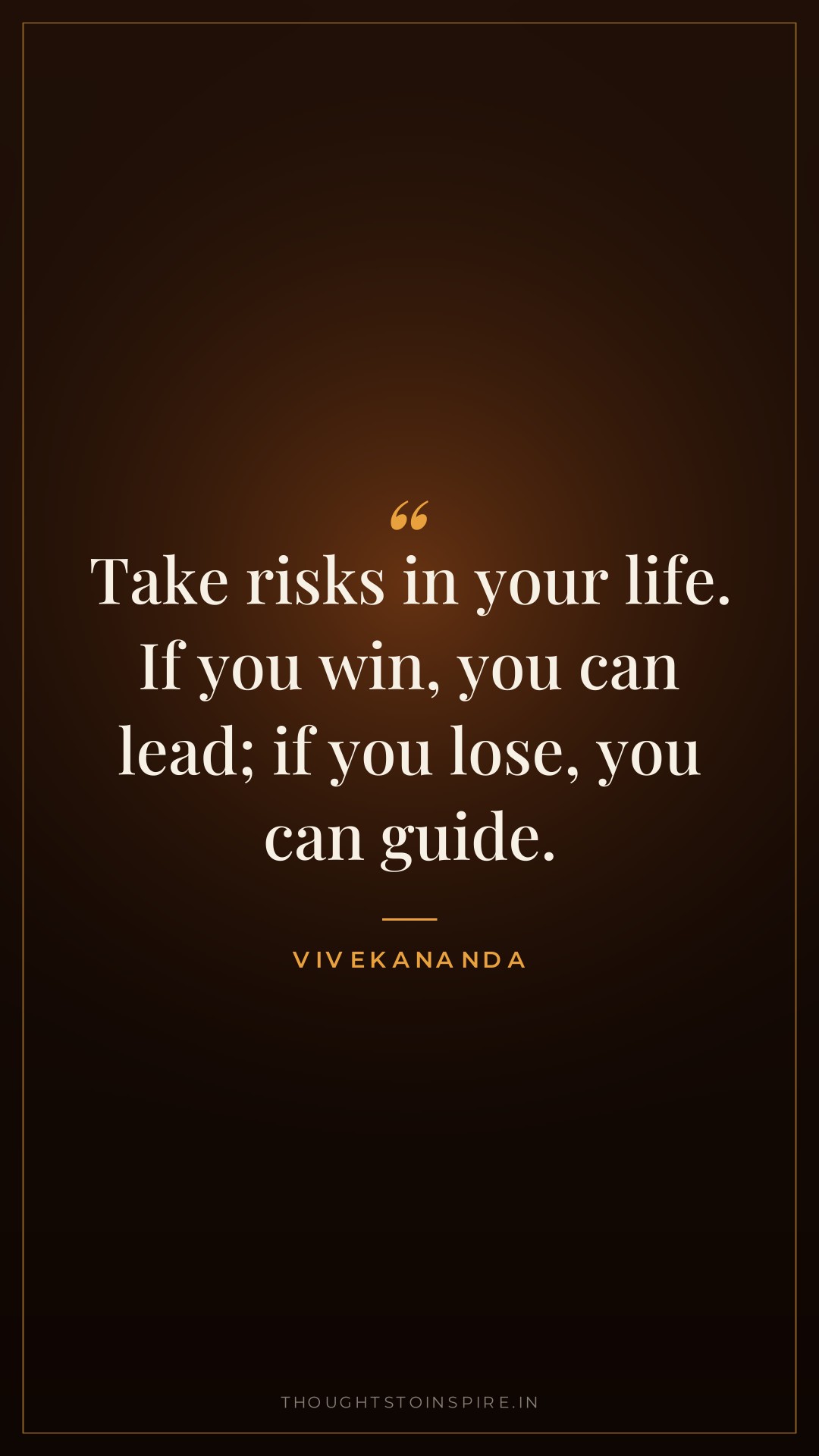
जीवन में जोखिम उठाइए। जीत गए तो नेतृत्व कर सकेंगे, हार गए तो राह दिखा सकेंगे।
What it means
The appeal of the couplet is its arithmetic: win and you lead, lose and you guide, so the risk appears to have no losing branch. That symmetry is rhetorical rather than observed. The world listens to winners far more readily than to people who tried and failed, and a great many losses buy no audience at all.
What does survive is narrower and more useful. Someone who has failed at a thing knows where it breaks, which the person who succeeded on the first attempt genuinely does not. Keep the line as a description of what failure can yield, not as a promise that the downside is already covered.
What it teaches you
Before taking a risk, write the loss down in concrete terms: how much money, how many months, and who besides you absorbs it. A risk whose worst case you could later describe to someone as useful information is a different category from one that would quietly consume a family’s savings — and this line only makes sense about the first kind.
अर्थ और सीख
इस पंक्ति का आकर्षण इसके गणित में है — जीते तो नेता, हारे तो मार्गदर्शक, यानी नुक़सान कहीं है ही नहीं। असल में दुनिया जीतने वालों को ही सुनती है; हार जाने पर अपने आप कोई सुनने वाला नहीं मिल जाता। इतना ज़रूर सच है कि जो असफल हुआ है वह जानता है कि चीज़ कहाँ टूटती है — इसलिए जोखिम लेने से पहले लिखकर देखिए कि हारने पर कौन, कितना और क्या चुकाएगा।
Where it comes from
Popularly attributed to Vivekananda, but not found in his Complete Works. Like several motivational one-liners bearing his name, it seems to be a modern composition retro-attributed to him.