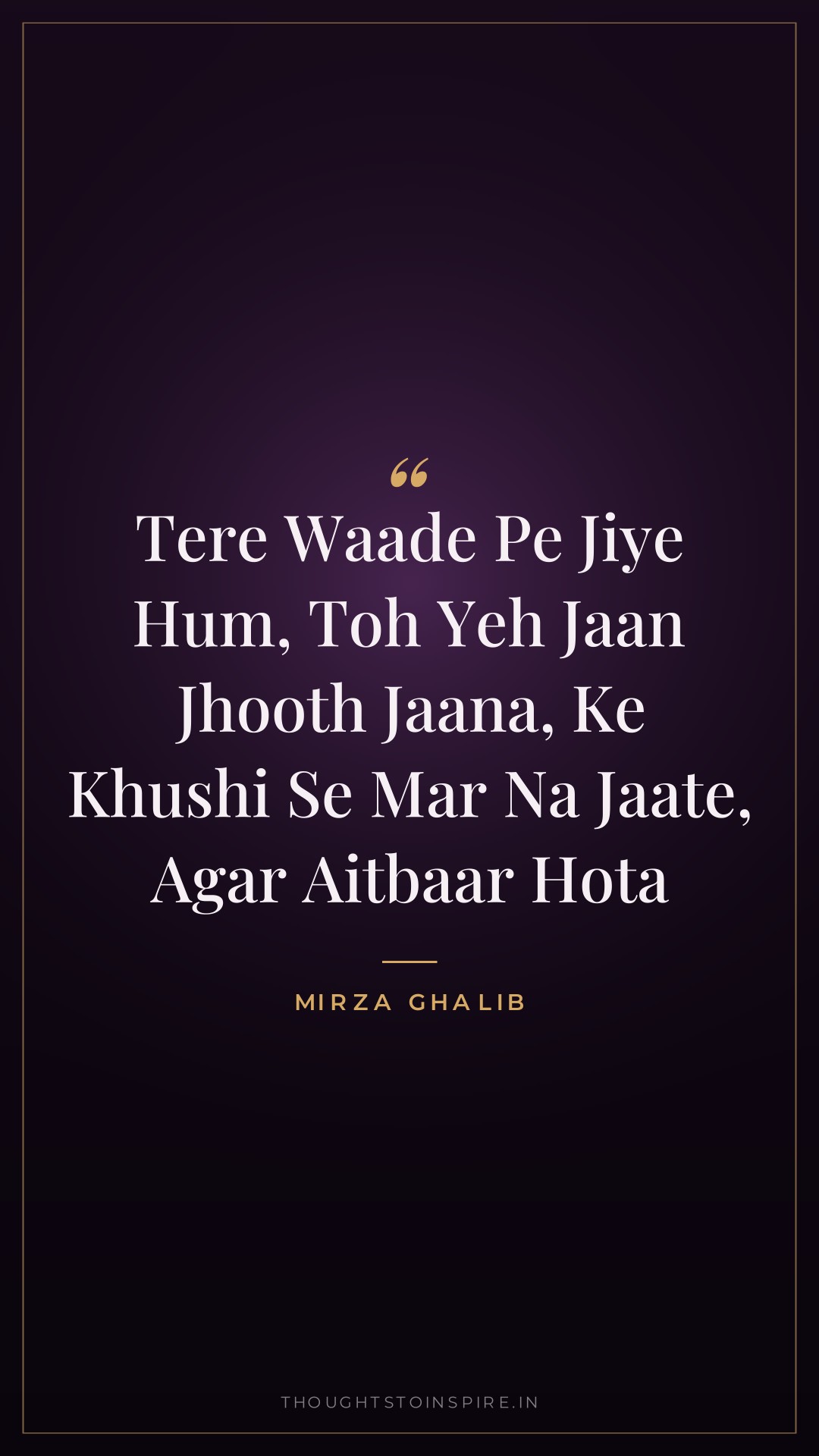
— Mirza Ghalib, ghazal Ye na thi hamari qismat
About this quote
हिन्दी में
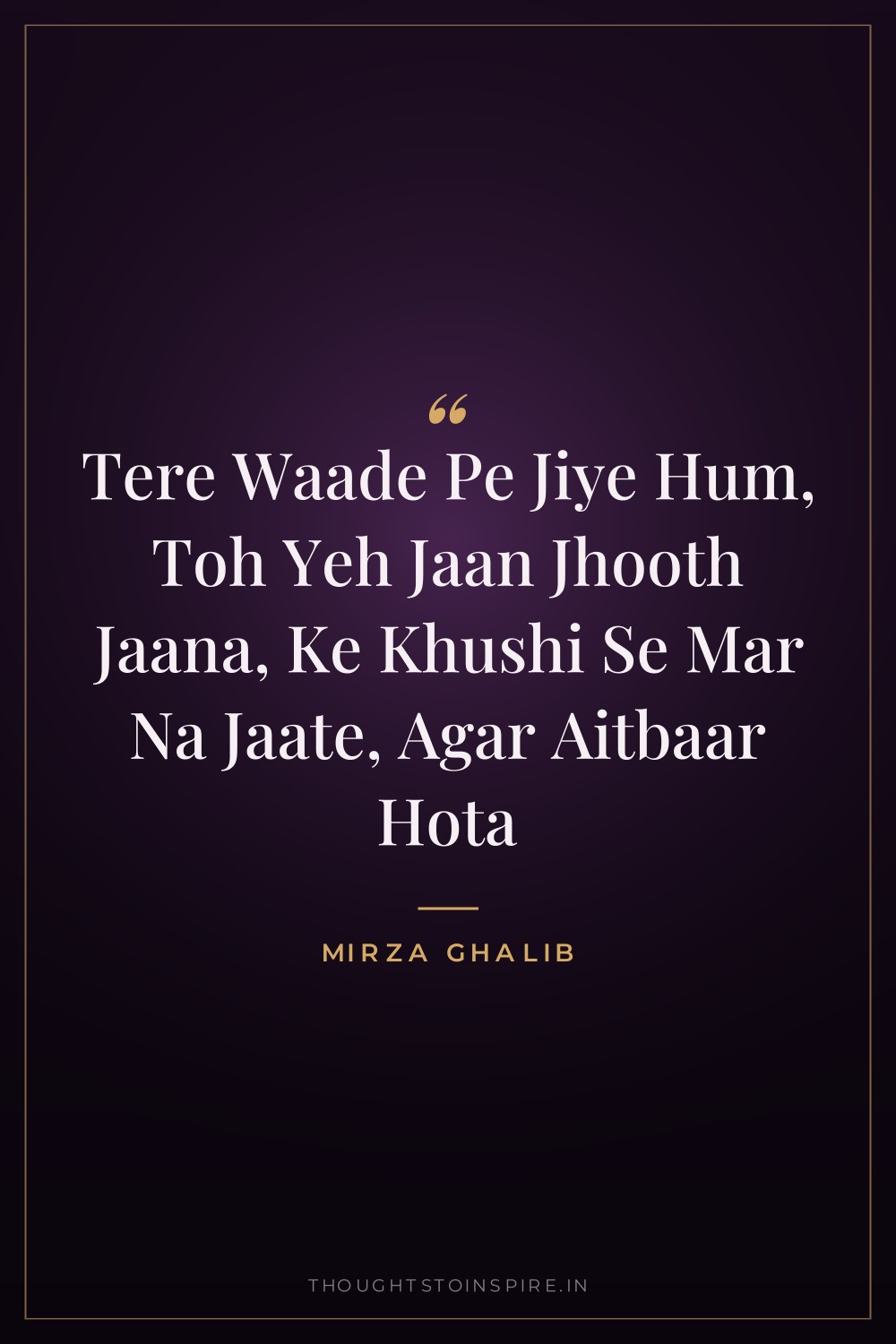
तेरे वादे पे जिए हम, तो ये जान झूठ जाना
कि ख़ुशी से मर न जाते, अगर ऐतबार होता
What it means
The couplet is built as a proof, not a complaint. The speaker submits his own survival as the evidence: he is still here, and had he believed the promise he would have died of the joy of it, so being alive convicts him of never having believed at all.
What makes it worth keeping is the direction the accusation travels. The reproach is delivered entirely as a statement about himself, and it lands on both parties — the promise was never credible, and he was never innocent enough to be taken in by it. The common reading that treats this as plain lovelorn sadness misses the cold wit; the register is closer to self-mockery than to grief.
What it teaches you
Read a sher as an argument and not only as a mood: here the second line supplies the premise — belief would have been fatal — that converts the first line’s apparent confession into a conclusion. Once you start asking which line carries the reasoning, a great many of Ghalib’s couplets that scan as merely sad turn out to be doing something considerably harder.
अर्थ और सीख
यह शेर शिकायत नहीं, एक दलील है — शायर अपने ज़िंदा होने को ही सबूत बनाकर पेश करता है कि उसने वादे पर कभी यक़ीन नहीं किया, वरना ख़ुशी से ही जान निकल जाती। उलाहना सामने वाले को है, पर कहा सब अपने ही बारे में गया है, और चोट दोनों पर पड़ती है। सीख पढ़ने की है — ग़ालिब के शेर को भाव के साथ-साथ तर्क की तरह पढ़िए, दूसरा मिसरा अक्सर दलील उठाए रहता है।
Where it comes from
A couplet from Mirza Ghalib’s celebrated ghazal Ye na thi hamari qismat: ‘If I lived on your promise, know that I knew it to be false — for would I not have died of joy, had I truly believed it?’ Ghalib (1797–1869) is the supreme poet of the Urdu ghazal, writing in the twilight of Mughal Delhi.