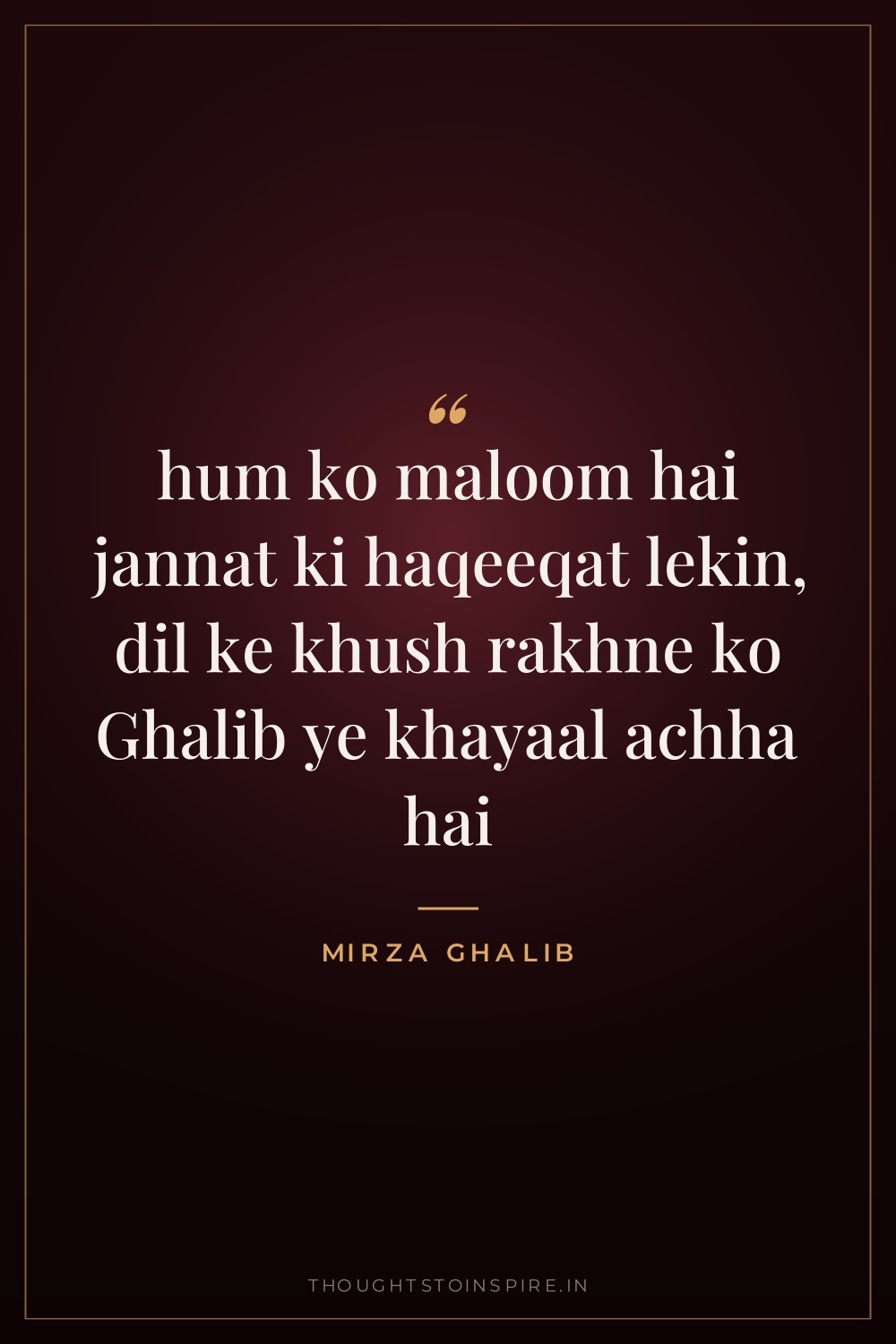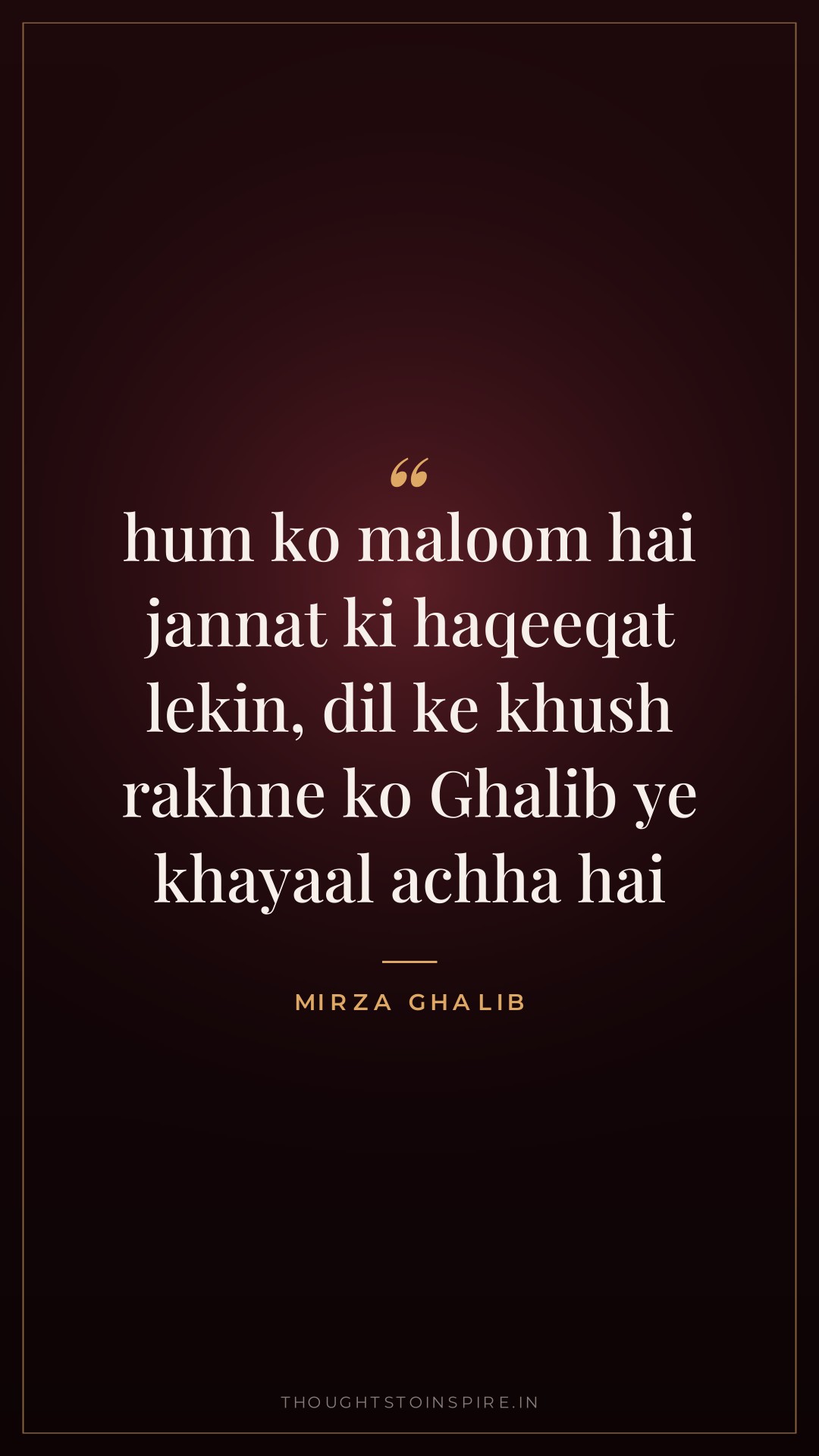
— Divan-e-Ghalib, from the ghazal "hum ko maloom hai jannat ki haqeeqat"
About this quote
देवनागरी
हम को मालूम है जन्नत की हक़ीक़त लेकिन
दिल के ख़ुश रखने को ‘ग़ालिब’ ये ख़याल अच्छा है
English
I know the truth about Paradise — but to keep the heart happy, Ghalib, it is a fine idea.
What it means
Ghalib’s scepticism in its most elegant dress: he neither affirms heaven nor denies comfort. The couplet allows both the doubter and the believer to smile, which is why both keep quoting it.
The hinge is the word haqeeqat and what follows it: he claims to know the reality of Paradise and then never says what it is. The knowledge is asserted and withheld in the same breath, which is why the couplet cannot be pinned down. Note also that the vocative is Ghalib — he is addressing himself, so the comfort being licensed is his own, not something granted condescendingly to simpler believers. That detail undoes the common reading of the line as a wink at the faithful from outside.
What it teaches you
Learn to hold two separate questions apart: is this true, and is this doing work. Ghalib grades the idea by its function — dil ke khush rakhne ko — without upgrading it to fact or demolishing it. The usable habit is the restraint: when someone’s belief is carrying them through a loss, you can decline to endorse it without dismantling it to win a point about evidence. And when it is your own consolation, notice whether you are asking it to be true or asking it to hold.
अर्थ और सीख
जन्नत सच हो या न हो — दिल बहलाने के लिए ख़याल अच्छा है। ग़ालिब का शक भी कितना ख़ूबसूरत है कि आस्तिक और नास्तिक दोनों इसे दोहराते हैं।
किसी बात के सच होने और काम की होने में फ़र्क़ करना सीखिए। अगर कोई ख़याल किसी का दिल थामे हुए है, तो सिर्फ़ तथ्य जीतने के लिए उसे तोड़ना ज़रूरी नहीं।
Where it comes from
An authentic couplet from the Divan-e-Ghalib, the collected Urdu ghazals of Mirza Asadullah Khan Ghalib (1797–1869), from the ghazal beginning “hum ko maloom hai jannat ki haqeeqat”. Transliteration and English rendering are our own.