— From the popular Gita Saar poster text, not the Sanskrit Gita; echoes 2.20 and 2.27
About this quote
हिन्दी में
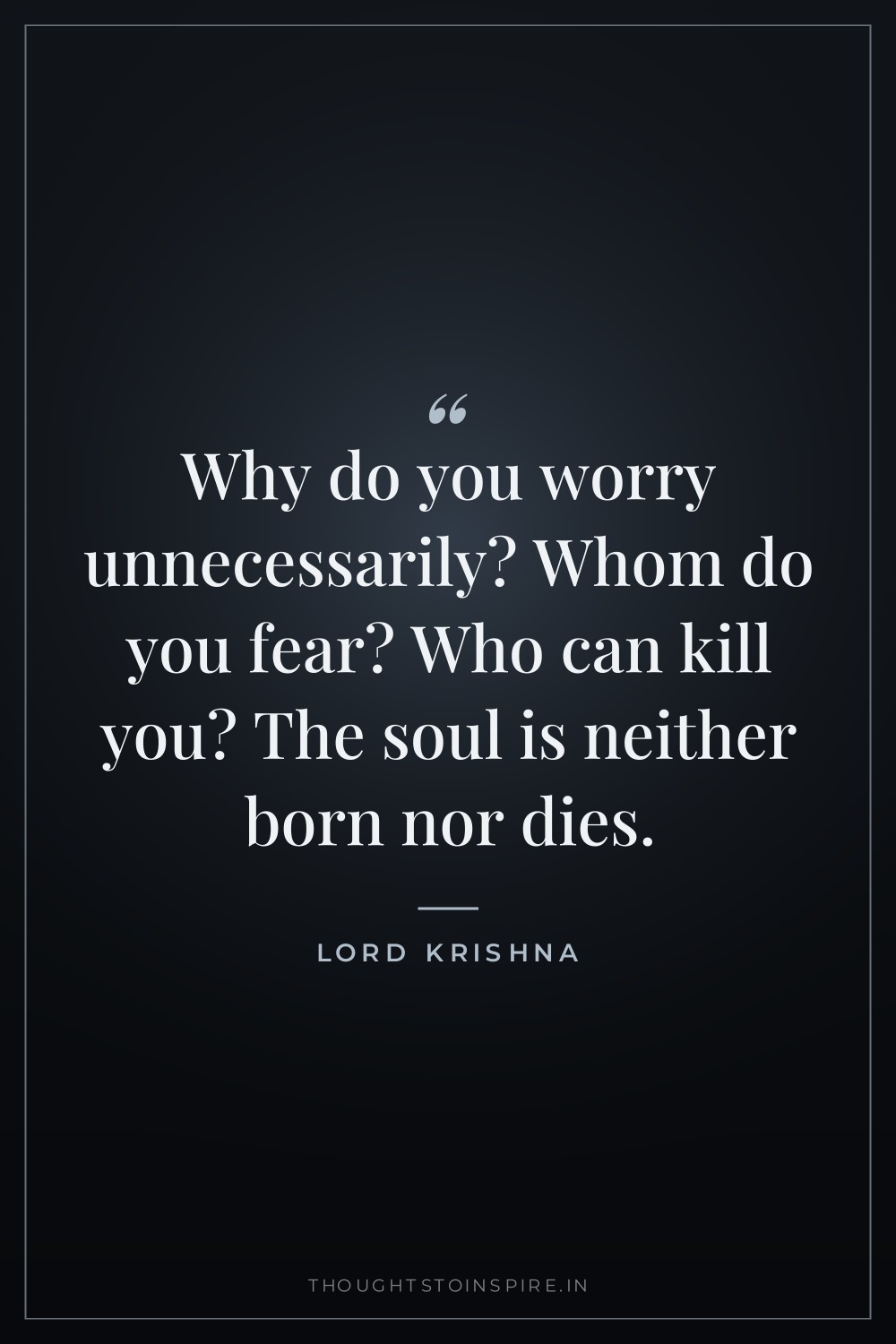
व्यर्थ चिंता क्यों करते हो? किसका भय? कौन तुम्हें मार सकता है? आत्मा न जन्म लेती है, न मरती है।
What it means
This is an argument, not a reassurance. Three questions in a row, each narrowing the last — why worry, then of whom, then who could actually do the thing you fear — and the fourth sentence supplies the premise that makes all three unanswerable. Fear of death presumes something destructible; if the thing you are is not of that kind, the fear has lost its object. The order matters: the comfort arrives last, as a conclusion, and is not offered on its own.
The word unnecessarily is easy to read past and worth keeping. The line does not forbid worry in general or call feeling fear a failure; it says this particular fear rests on a mistake about what you are. That is a narrower and more defensible claim than the sweeping calm the passage is usually quoted for, and it is also why the questions are rhetorical rather than dismissive — they are meant to be attempted, and to fail.
What it teaches you
When fear comes, name the thing you believe is about to be destroyed, because this argument only covers one item on that list. Reputation, savings, a body, a plan for the next ten years — all of those are genuinely losable, and the line is silent about them; it addresses only the fear that you yourself will be ended. Sorting the two apart usually shrinks the panic to something specific, and then the question stops being who can kill me and becomes what can actually be lost and whether you can bear it.
अर्थ और सीख
ये तीन प्रश्न तर्क की तरह रखे गए हैं और चौथा वाक्य उनका आधार देता है — जो न जन्मता है, न मरता है, उसके मिटने का भय निराधार है। ध्यान दें, यहाँ ‘व्यर्थ’ शब्द महत्वपूर्ण है: चिंता करना अपराध नहीं कहा गया, इस विशेष भय को निर्मूल कहा गया है। सबक यह है कि भय के समय यह पहचानें कि आप किसके नष्ट होने से डर रहे हैं — प्रतिष्ठा, धन या शरीर की हानि अलग बात है, और यह पंक्ति केवल आत्मा के विषय में बोलती है।
Where it comes from
Also from the popular ‘Gita Saar’ poster text rather than the Sanskrit Gita — though this line stays close to real verses: Gita 2.20 declares the soul ‘is not born, nor does it ever die,’ and 2.27 tells Arjuna not to grieve over the unavoidable.