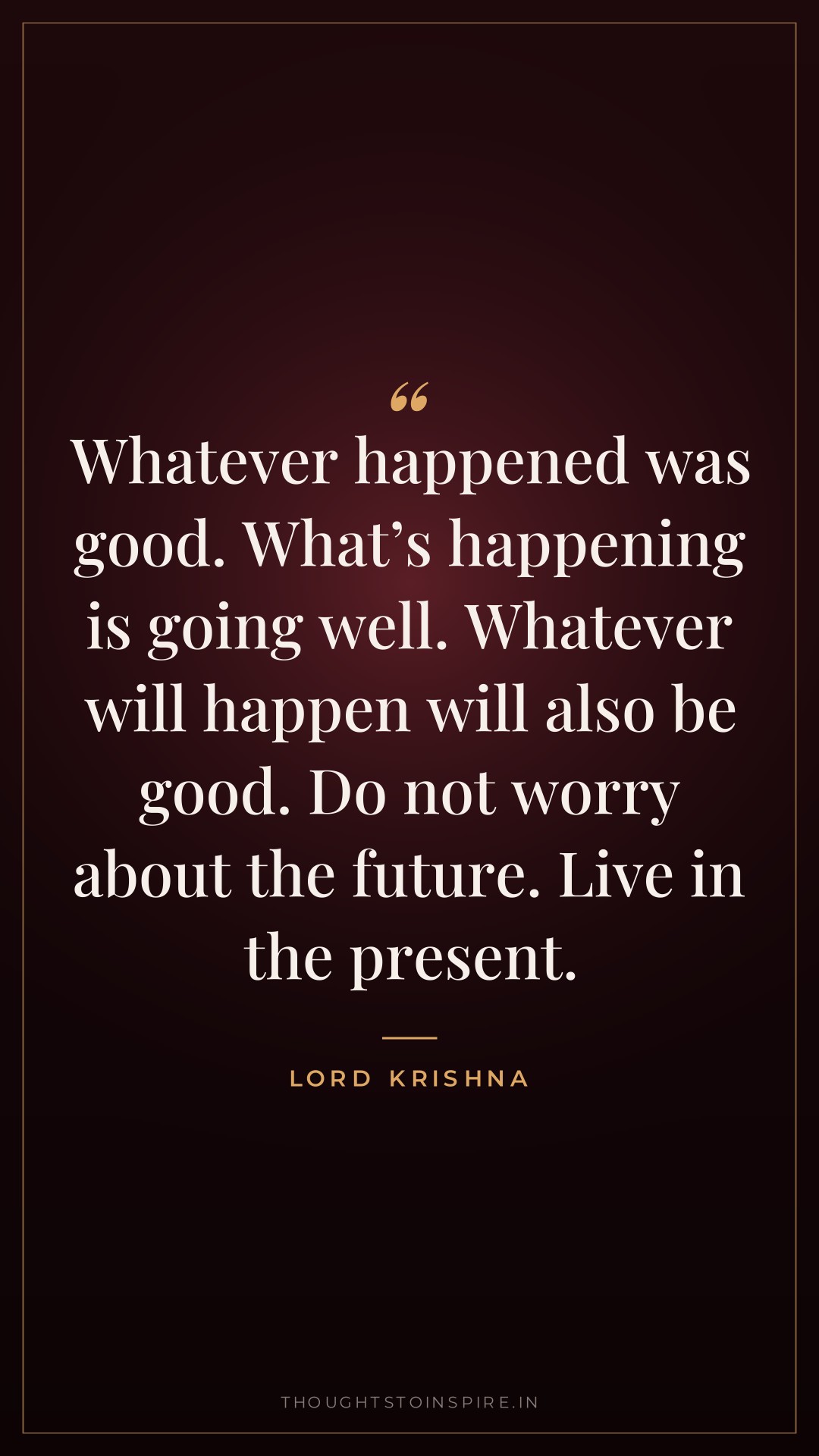
— Not in the Bhagavad Gita; from the popular Hindi Gita Saar poster text
About this quote
हिन्दी में
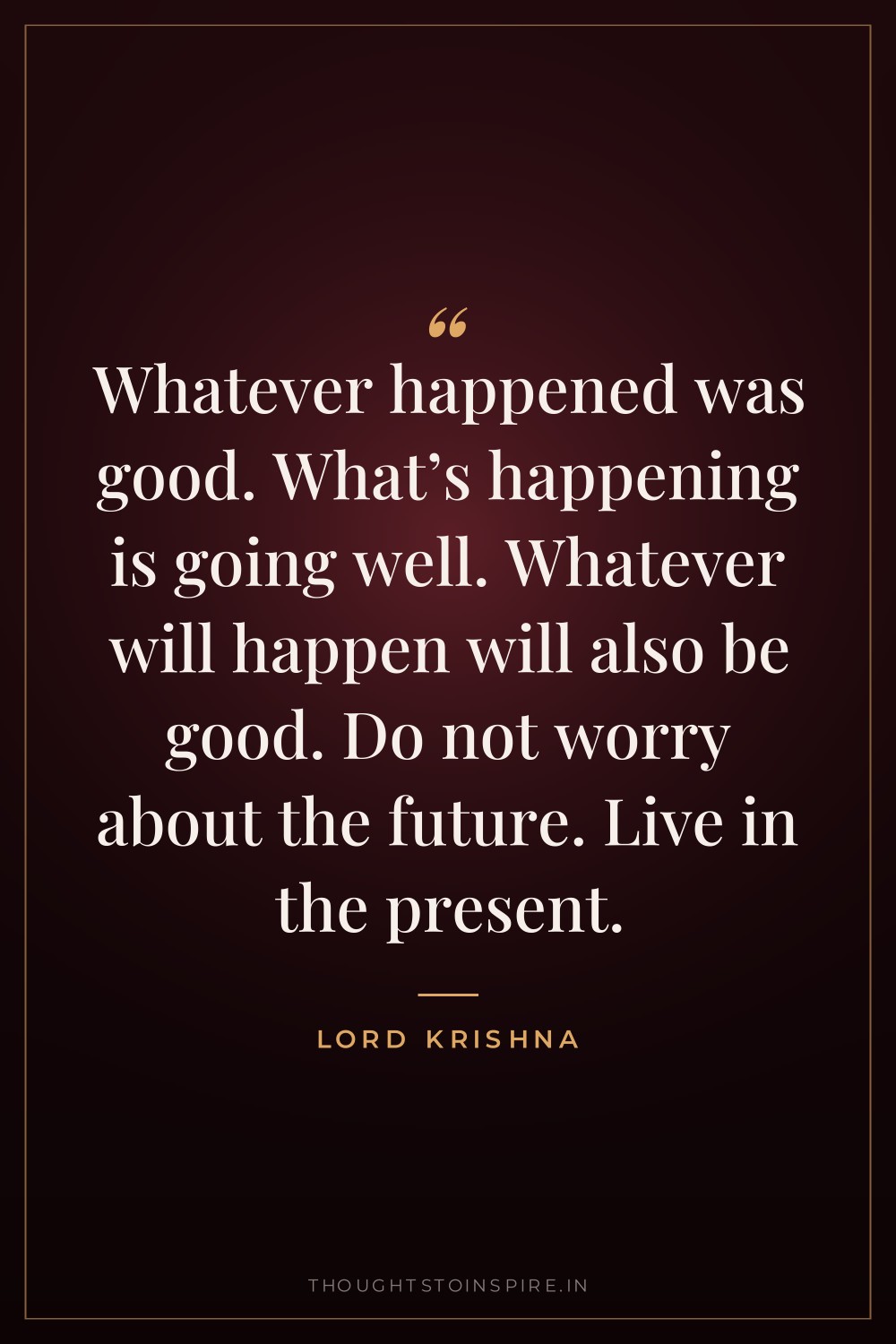
जो हुआ, अच्छा हुआ। जो हो रहा है, अच्छा हो रहा है। जो होगा, वह भी अच्छा ही होगा। भविष्य की चिंता छोड़ो, वर्तमान में जियो।
What it means
Three sentences cover past, present and future, and then a fourth draws the conclusion: since all three are accounted for, worry has nowhere to stand. The structure is doing the work — the repetition closes every exit an anxious mind normally uses, and only after all three are shut does the instruction to live in the present arrive.
Many readers take the three goods as a factual verdict on events, which is how the passage ends up sounding cruel to someone who has just buried a parent or lost a job. The sentences cannot prove that a particular loss was good, and they do not argue for it. What they state is a posture held in advance of the evidence — a decision about how to stand toward what comes, not a survey of what came. Held that way the line is honest; held as a report on reality it is something the speaker never establishes.
What it teaches you
Note which tense your worry is actually living in, because the passage treats the past and the future as the same mistake. Replaying a decision from last year and rehearsing a conversation for next month both take the present hour and spend it elsewhere, and most people who believe they are worrying about the future are in fact re-trying the past. In practice this means catching the tense mid-thought, not silencing the thought — the line asks where you are, not that you feel nothing.
अर्थ और सीख
यह पंक्ति भूत, वर्तमान और भविष्य — तीनों को अच्छा कहकर चिंता के लिए कोई जगह नहीं छोड़ती, और तब वर्तमान में जीने की बात कहती है। ध्यान रहे, यह घटनाओं पर कोई प्रमाण नहीं देती; यह भरोसे का एक रुख है, तथ्य की रिपोर्ट नहीं — इसीलिए किसी दुखी व्यक्ति पर इसे थोपना ठीक नहीं। सबक यह है कि अपनी चिंता का काल पहचानें, क्योंकि बीता हुआ दोहराना और आने वाला रचना, दोनों वर्तमान का समय ही खाते हैं।
Where it comes from
This beloved passage is not a verse of the Bhagavad Gita. It comes from the popular Hindi ‘Gita Saar’ — the one-page ‘essence of the Gita’ printed on posters and calendars across India. It compresses the Gita’s teaching of trust and surrender, but you will not find these sentences in the Sanskrit text.
For the Gita’s own words on grief and the present, see the sourced verses from Chapter 2 on this site.