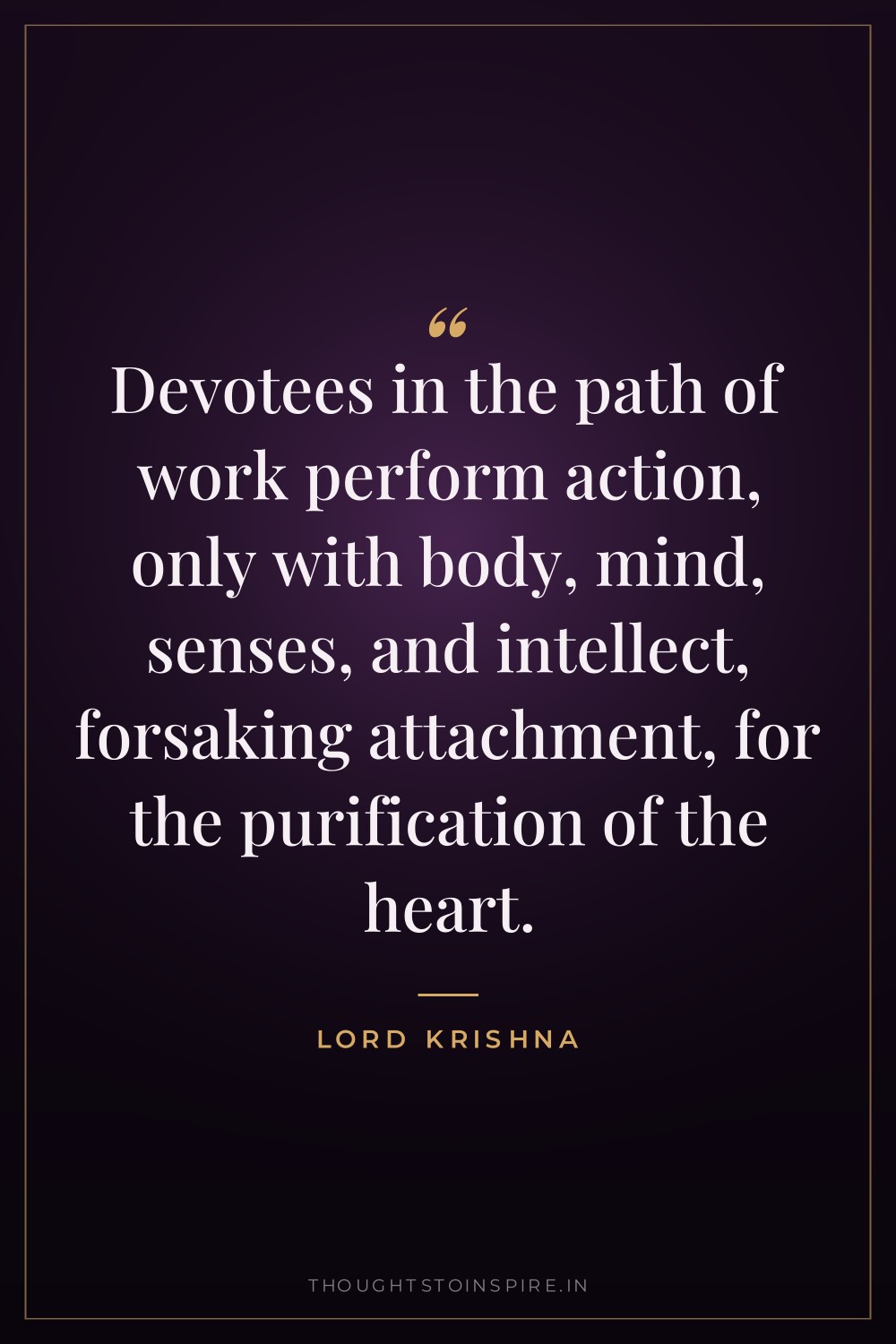
— Bhagavad Gita 5.11 (tr. Swami Swarupananda, 1909)
About this quote
हिन्दी में
कर्म के मार्ग पर चलने वाले भक्त आसक्ति छोड़कर केवल शरीर, मन, इंद्रियों और बुद्धि से कर्म करते हैं — अंतःकरण की शुद्धि के लिए।
What it means
Two things in this line are easy to skim past. First, the list — body, mind, senses, intellect — is a list of full engagement, not withdrawal; nothing is being held back from the work. Second, the stated purpose is purification of the heart, which is an inward result, not a better outcome in the world.
The popular reading of detached action is emotional flatness: care less, so it hurts less. That is not what is said. What is forsaken is attachment to the fruit, not attention to the task, and the reason given is not efficiency or peace of mind but that acting this way cleans something in the actor.
What it teaches you
Catch yourself in the common split — hands on the task, mind already in the meeting where the result gets announced — and notice that this verse reverses which half gets your attention. A usable test before starting something: ask what would still be worth doing well in it if the credit went to a colleague and no one ever knew it was yours. Whatever survives that question is the part you were doing for its own sake; the rest is where the attachment is.
अर्थ और सीख
यह श्लोक कहता है कि कर्मयोगी काम से कटते नहीं — शरीर, मन, इंद्रियाँ और बुद्धि, सब कुछ काम में लगाते हैं, बस फल से लगाव छोड़ देते हैं। और इसका कारण बेहतर नतीजा पाना नहीं, बल्कि अपने भीतर की सफ़ाई है। इसलिए ‘अनासक्ति’ का अर्थ उदासीनता या लापरवाही नहीं है; अर्थ है पूरा ध्यान काम पर और कोई दावा फल पर नहीं।
Where it comes from
This verse comes from Chapter 5 of the Bhagavad Gita, Karma Sannyasa Yoga (The Yoga of Renunciation) — the reconciliation of renunciation and action: both lead to freedom, but acting without attachment is the more practical path.
The Bhagavad Gita — ‘the Song of the Lord’ — is the dialogue between Krishna and the warrior Arjuna set within the Mahabharata, and one of the most influential spiritual texts ever composed. English translation by Swami Swarupananda (1909), a public-domain rendering from the Sanskrit; the exact chapter and verse are cited with this quote.