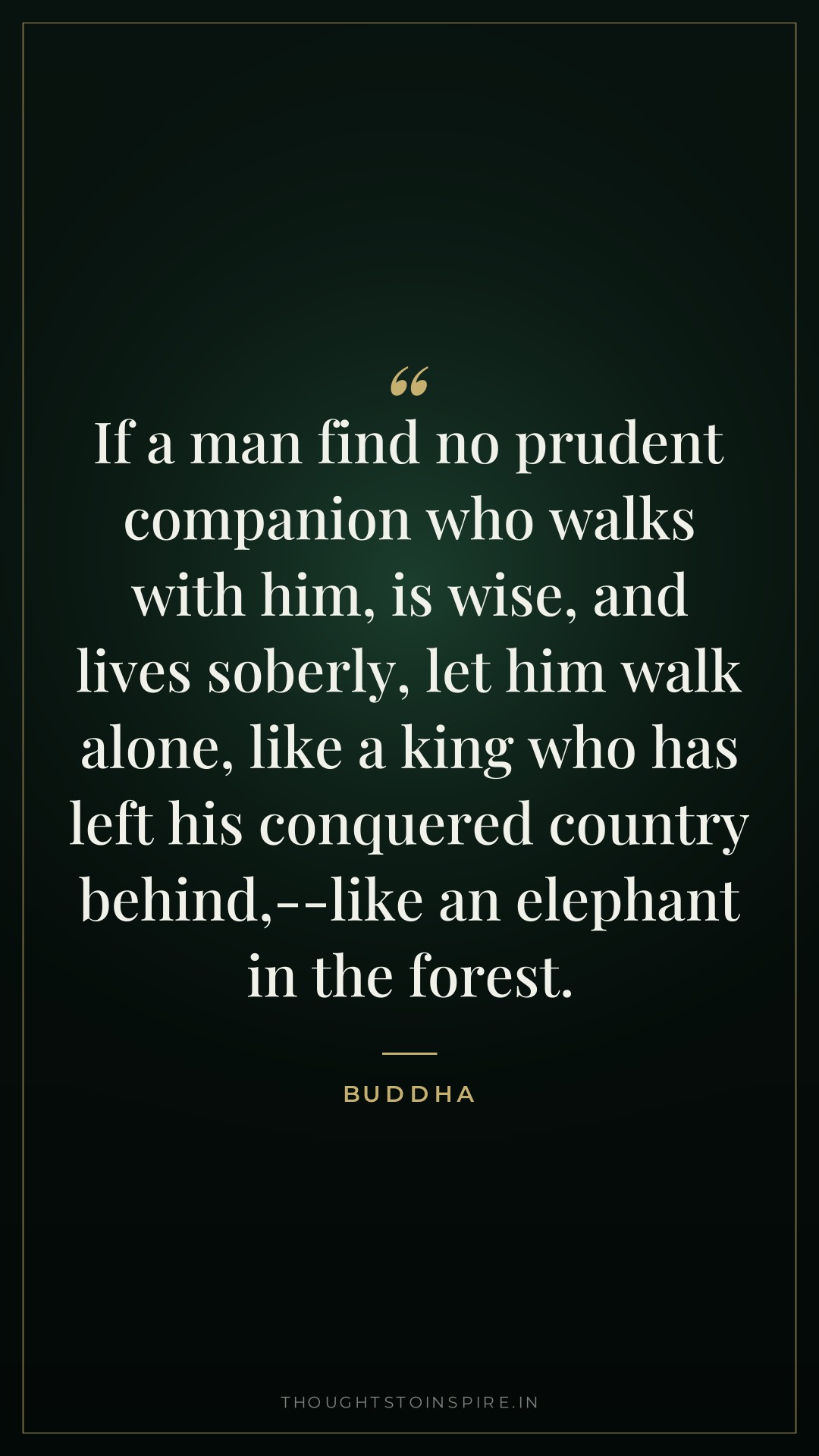
— The Dhammapada, verse 329 (tr. F. Max Müller, 1881)
About this quote
हिन्दी में
यदि कोई विवेकी साथी न मिले जो साथ चले, बुद्धिमान हो और संयम से जिए, तो अकेले ही चलो — जैसे राजा अपने जीते हुए देश को पीछे छोड़कर चला जाता है, जैसे वन में अकेला हाथी।
What it means
The sentence is a conditional, and the condition does most of the work. Three tests are set for a companion — that he walks with you, that he is wise, that he lives soberly — and only when nobody passes all three does the advice to walk alone apply. Solitude here is the second-best outcome, arrived at by elimination.
What makes it worth keeping is that both images are of subtraction rather than triumph. A king who has left his conquered country behind has won and then walked away from the winnings; the forest elephant is outside the herd, not above it. The line is usually quoted as a slogan for self-reliance, which drops the if and keeps the elephant.
What it teaches you
Before concluding that you are better off alone, run the line’s own checklist against the people actually available: does this person stay through the walk, do they have judgement, do they keep themselves in order? Failing one of the three is not failing all three. And if you do end up walking alone, the verse tells you in advance what it will feel like — territory given up — so do not expect the solitude to feel like a victory.
अर्थ और सीख
यह पंक्ति अकेले चलने की तारीफ़ नहीं है, बल्कि एक शर्त रखती है — साथी वही जो साथ निभाए, समझदार हो और संयम से जिए; ऐसा कोई न मिले, तभी अकेले चलो। दोनों उपमाएँ भी गर्व की नहीं, त्याग की हैं: राजा जीता हुआ देश छोड़ आया है, और हाथी झुंड छोड़कर वन में अकेला है। सीख यह है कि पहले साथ की कसौटी ठीक से लगाइए, और अकेलेपन को जीत समझने की भूल न कीजिए।
Where it comes from
This is verse 329 of the Dhammapada, from the chapter called The Elephant — the elephant similes: enduring abuse silently, taming oneself as the best of victories.
The Dhammapada is a collection of 423 verses in Pali, among the oldest and most widely read records of the Buddha’s teaching. This English translation is by F. Max Müller (1881), the pioneering Oxford scholar of Indian texts; the verse number is cited with this quote.