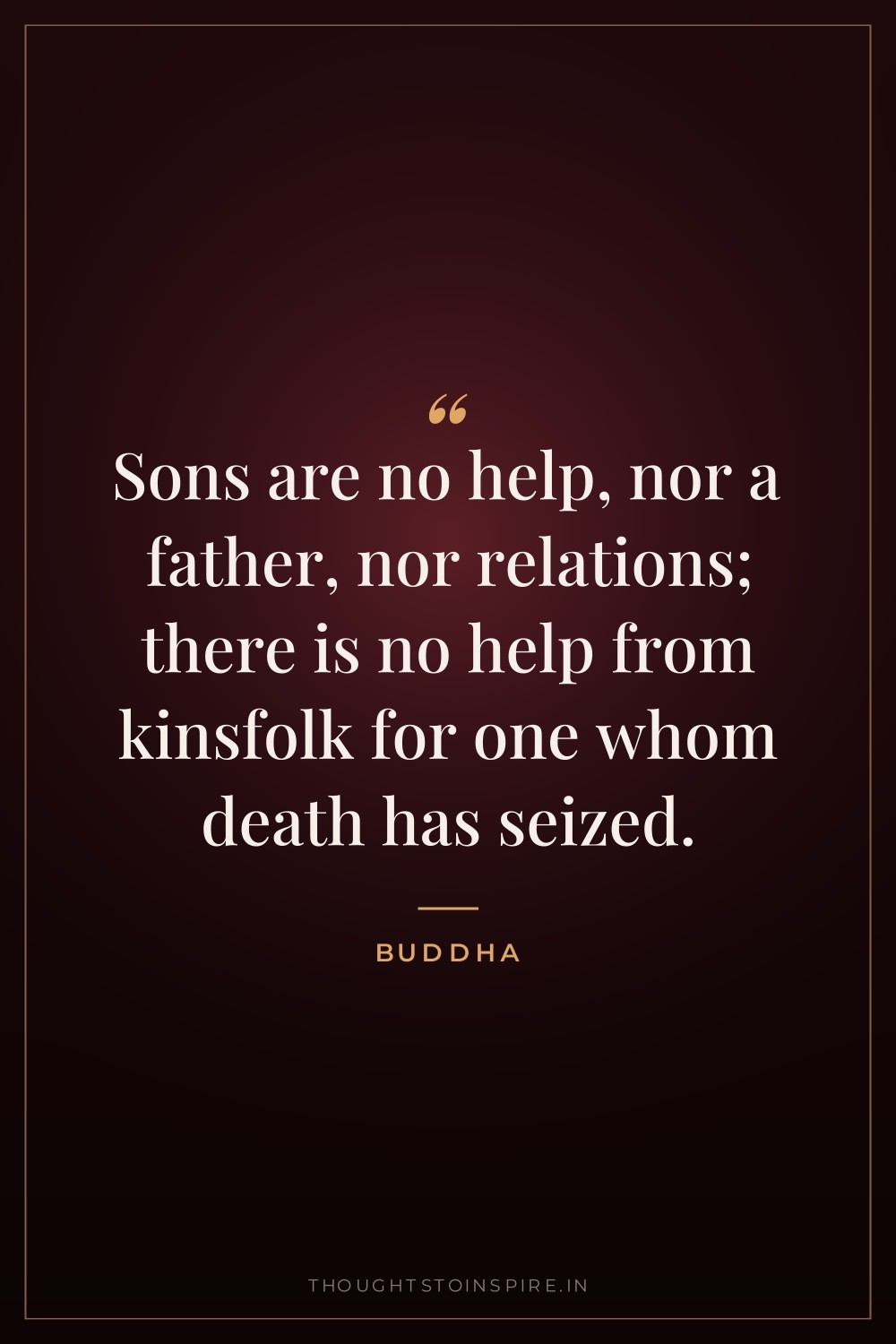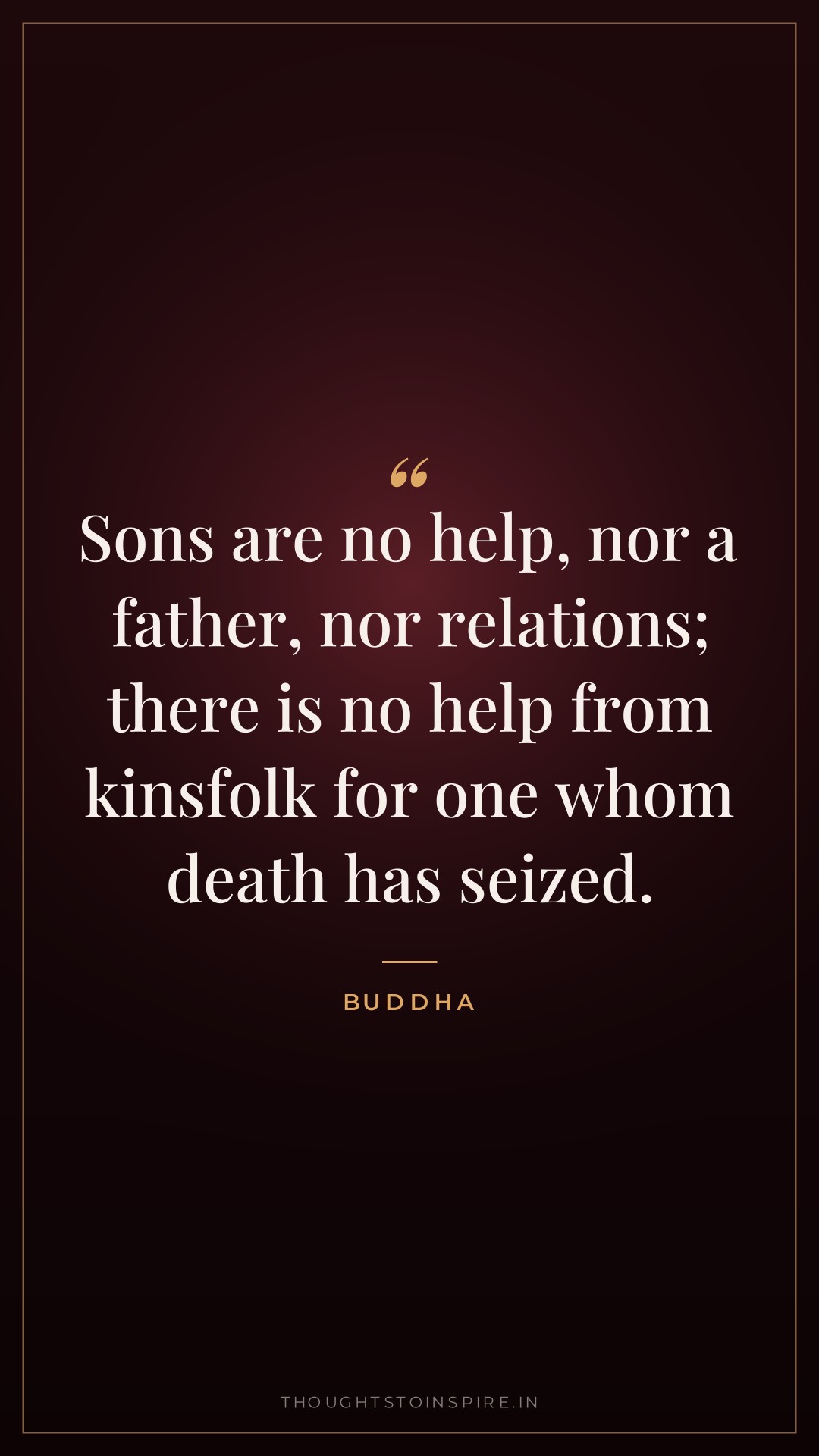
— The Dhammapada, verse 288 (tr. F. Max Müller, 1881)
About this quote
हिन्दी में
न पुत्र रक्षा कर सकते हैं, न पिता, न सगे-संबंधी; जिसे मृत्यु ने पकड़ लिया हो, उसके लिए कुटुंबजनों से कोई सहारा नहीं।
What it means
The claim is narrow and exact. It does not say kinsfolk are unimportant or that affection is an illusion; it names one specific transaction they cannot perform, and fixes the moment — one whom death has seized. Up to that moment sons and fathers and relations help constantly. At it, the help does not transfer.
Worth keeping because it is stated as a fact rather than as consolation or reproach, which is rare on this subject. Where family is the actual safety net for illness, money and old age, the verse is not arguing against that arrangement; it points at the single place the net has no thread and leaves you to draw the conclusion yourself.
What it teaches you
Look at what you are postponing on the quiet assumption that someone will be there for it — not the practical matters that can be delegated, but the ones that cannot: how you have actually treated people, what you believe, whether you can sit with your own mind unoccupied. The test is simple. If you could not hand a task to anyone even if they wanted to take it, that is not a task to leave until late.
अर्थ और सीख
यह पंक्ति परिवार को व्यर्थ नहीं कहती; वह एक ख़ास घड़ी की बात करती है — जिसे मृत्यु ने पकड़ लिया, उसके लिए पुत्र, पिता या संबंधी कुछ नहीं कर सकते। जहाँ बीमारी, पैसे और बुढ़ापे में परिवार ही असली सहारा होता है, वहाँ यह बात और चुभती है। सीख यह है कि जो काम किसी और को सौंपे ही नहीं जा सकते — अपने मन को समझना, अपने आचरण का हिसाब — उन्हें इस भरोसे पर न टालें कि कोई और संभाल लेगा।
Where it comes from
This is verse 288 of the Dhammapada, from the chapter called The Way — the eightfold path, and the reminder that effort must be one’s own.
The Dhammapada is a collection of 423 verses in Pali, among the oldest and most widely read records of the Buddha’s teaching. This English translation is by F. Max Müller (1881), the pioneering Oxford scholar of Indian texts; the verse number is cited with this quote.