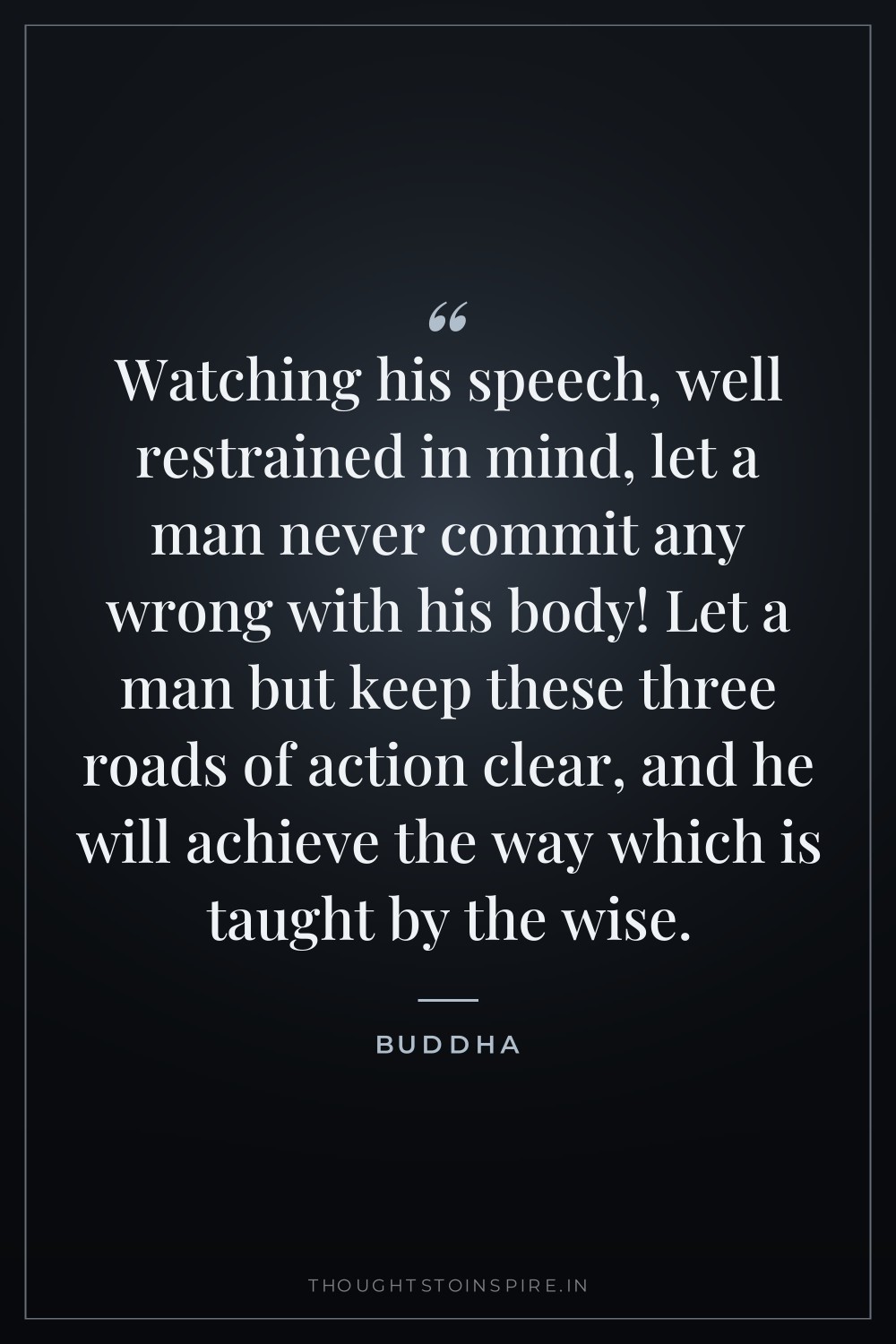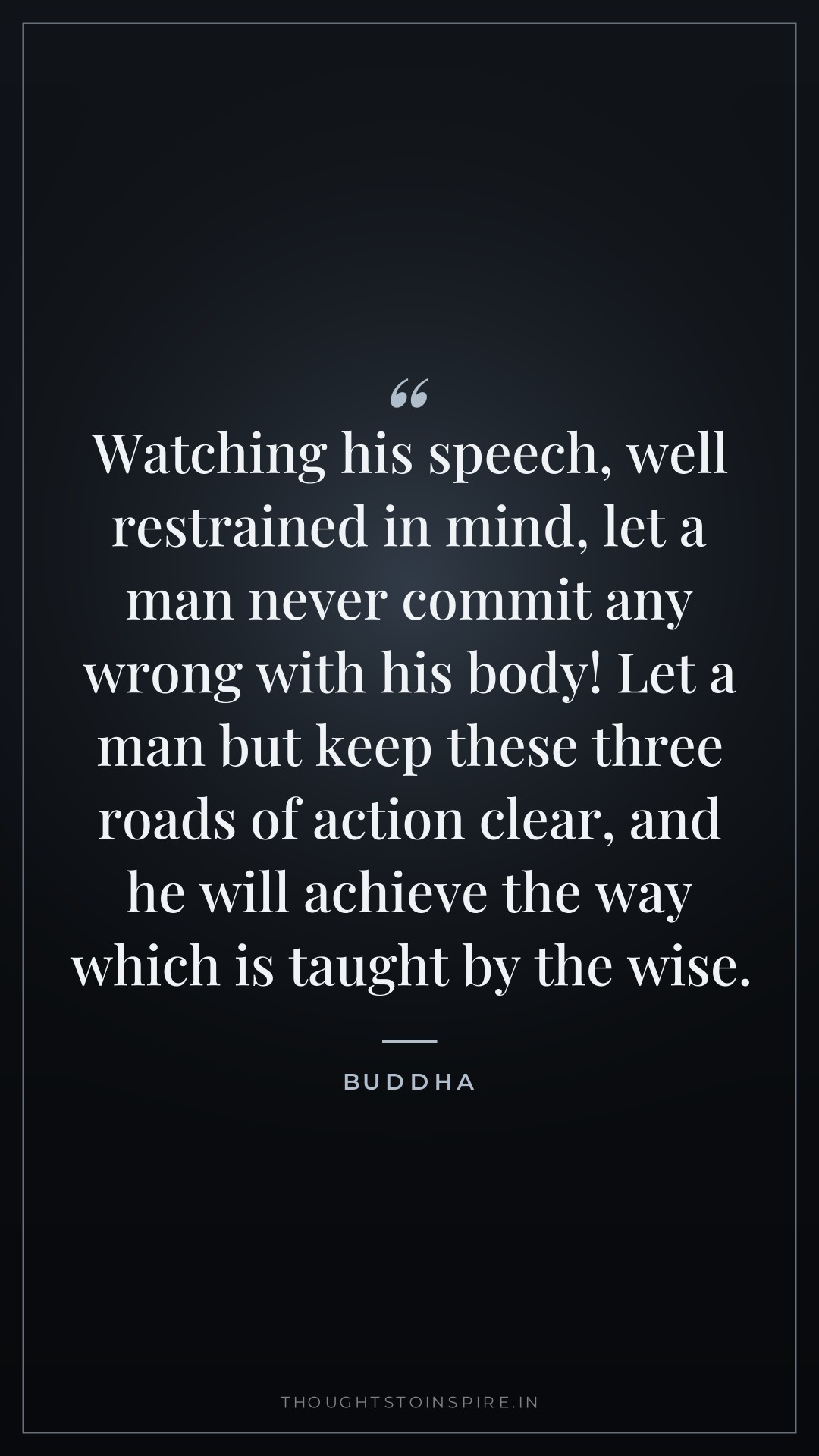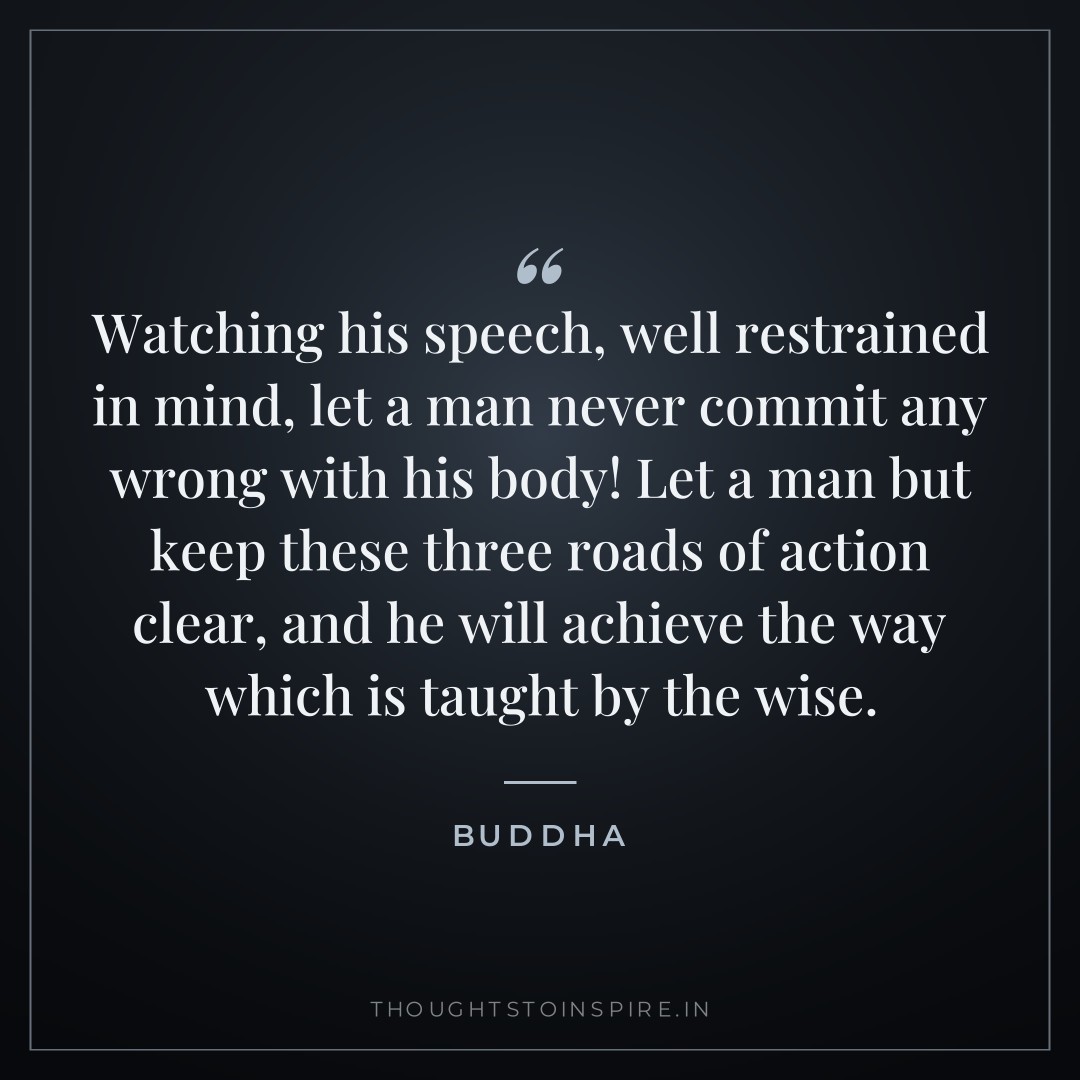
— The Dhammapada, verse 281 (tr. F. Max Müller, 1881)
About this quote
हिन्दी में
अपनी वाणी पर दृष्टि रखे, मन को भलीभाँति संयत रखे, और शरीर से कभी कोई बुरा कर्म न करे। जो इन तीनों कर्म-मार्गों को निर्मल रखता है, वही उस मार्ग को पा लेता है जो ज्ञानियों ने बताया है।
What it means
Three channels of action — speech, mind, body — and a different verb for each. Speech is to be watched, because it escapes before you decide. Mind is to be restrained, because it runs. The body is given the flat prohibition, because bodily wrongdoing is the one you can simply refuse. The order is also pointed: speech comes first, ahead of the body, which reverses how most people rank their own misconduct.
The criterion is negative — keep the three roads clear. Not impressive, not productive: clear. The verse claims that the whole path taught by the wise is reached by removing obstruction from three specific places rather than by adding any new practice. It is an audit, and its usefulness is that the three can be checked separately.
What it teaches you
Score the three channels separately for the past week rather than judging yourself as a single moral unit. Most people are disciplined in one and careless in another — punctual and hardworking in the body, but sarcastic in speech; or courteous in speech while the mind runs a long private grudge. The blocked road is almost always one you have stopped counting as conduct at all, and that is the one to work on, not the one you are already good at.
अर्थ और सीख
यह श्लोक कर्म के तीन मार्ग बताता है — वाणी, मन और शरीर — और तीनों के लिए अलग-अलग निर्देश देता है: वाणी पर दृष्टि रखो, मन को संयत करो, शरीर से बुरा कर्म मत करो। शर्त सकारात्मक नहीं बल्कि नकारात्मक है — इन तीनों रास्तों को केवल ‘साफ़’ रखना है, और यही पूरा मार्ग बन जाता है। सीख यह है कि स्वयं को एक इकाई मानकर आँकने के बजाय तीनों को अलग-अलग जाँचिए; रुकावट प्रायः उसी मार्ग पर होती है जिसे आपने आचरण मानना ही छोड़ दिया है।
Where it comes from
This is verse 281 of the Dhammapada, from the chapter called The Way — the eightfold path, and the reminder that effort must be one’s own.
The Dhammapada is a collection of 423 verses in Pali, among the oldest and most widely read records of the Buddha’s teaching. This English translation is by F. Max Müller (1881), the pioneering Oxford scholar of Indian texts; the verse number is cited with this quote.