— Songs of Kabir, I.57 (tr. Rabindranath Tagore, 1915)
About this quote
हिन्दी में
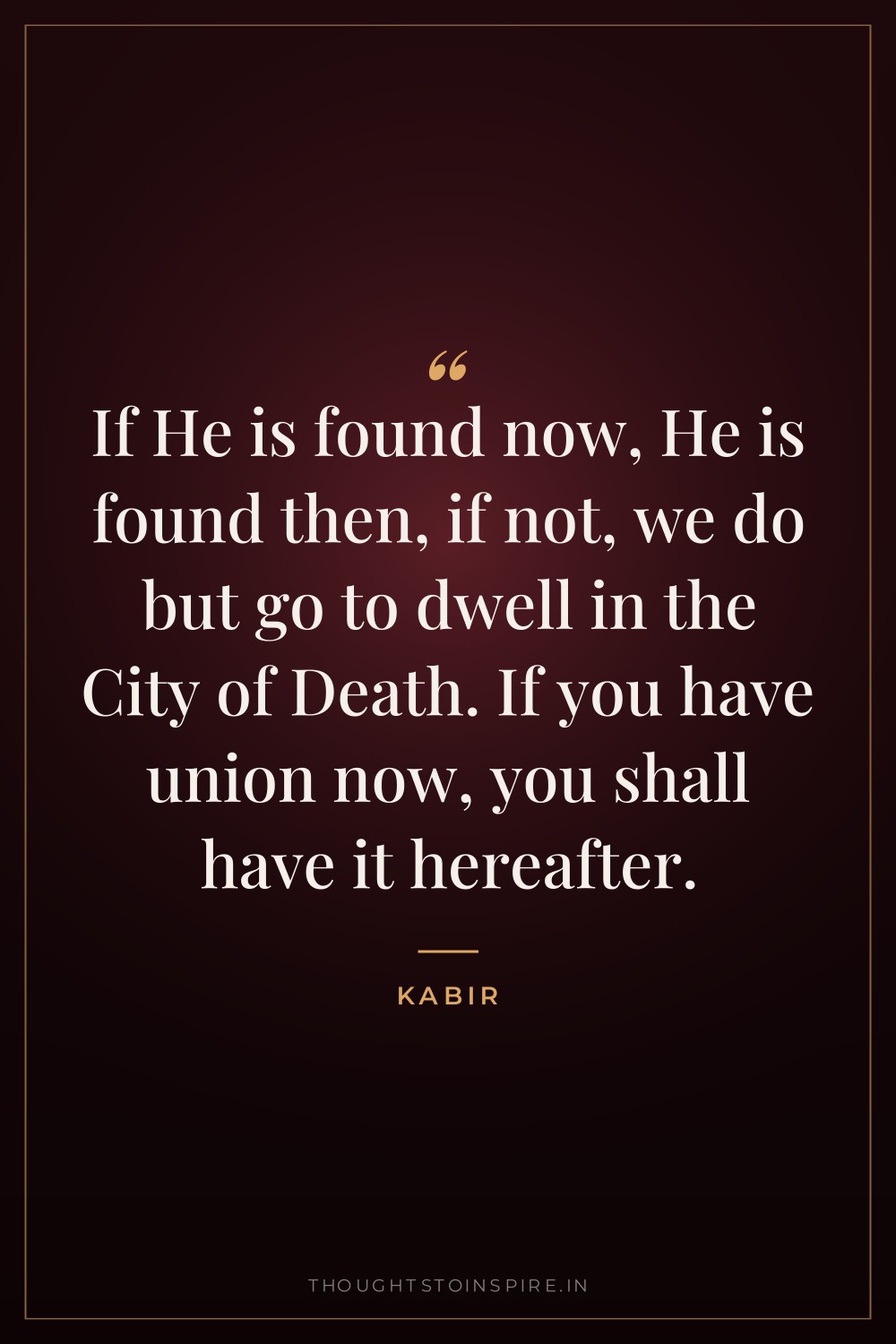
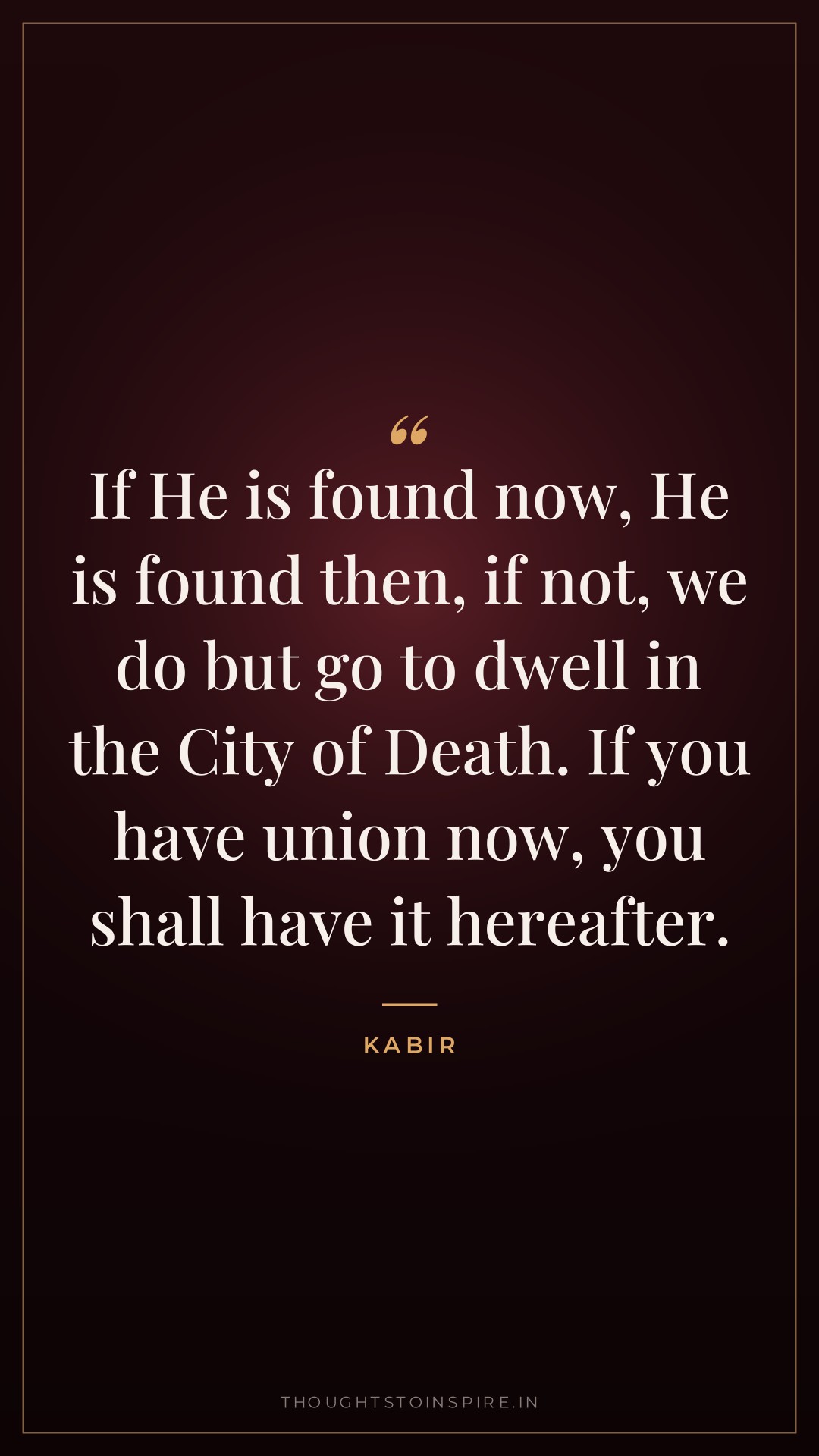
अगर वह अभी मिल गया, तो तभी मिलेगा; और अगर अभी नहीं, तो हम बस मृत्यु के नगर में बसने चले जाएँगे। मिलन अगर अभी है, तो आगे भी रहेगा।
What it means
The lines turn on a conditional with no middle term. If now, then hereafter; if not now, then the City of Death. There is no third branch in which the search resumes later under better conditions, and that missing branch is the whole argument: later is not a separate stock of time, it is only whatever now has turned into.
What is worth keeping is how unfrightening the phrasing stays. The alternative is not punishment but residence — you go to dwell there, the way a family moves to a town and settles. The warning is not about torment; it is that postponement has an address, and people live at it.
What it teaches you
Take whatever practice you have deferred to a quieter phase — after the exams, after the wedding, after the loan clears — and notice that these lines treat a start date in the future as identical to no start at all. The test they propose is blunt and checkable: did it happen today, in the conditions you actually have, not the ones you are waiting for.
अर्थ और सीख
यह पंक्ति सिर्फ़ दो ही रास्ते छोड़ती है — या तो मिलन अभी, या फिर मृत्यु के नगर में बसेरा; बीच का कोई तीसरा रास्ता, जहाँ खोज बाद में आराम से पूरी हो जाए, है ही नहीं। ‘बाद’ कोई अलग जमा किया हुआ समय नहीं, वह इसी ‘अभी’ का बदला हुआ रूप है। सीख यह कि जिस साधना या बदलाव को आप ‘हालात ठीक होने पर’ के लिए टाल रहे हैं, यहाँ उसे शुरू ही न करने के बराबर माना गया है।
Where it comes from
From song I.57 of the Songs of Kabir.
Kabir (15th century) was a weaver of Benares whose songs mock every search for God outside one’s own heart; Hindus and Muslims both claimed him, and he refused both. This rendering is from Songs of Kabir, translated by Rabindranath Tagore (1915); the song number is cited with this quote.