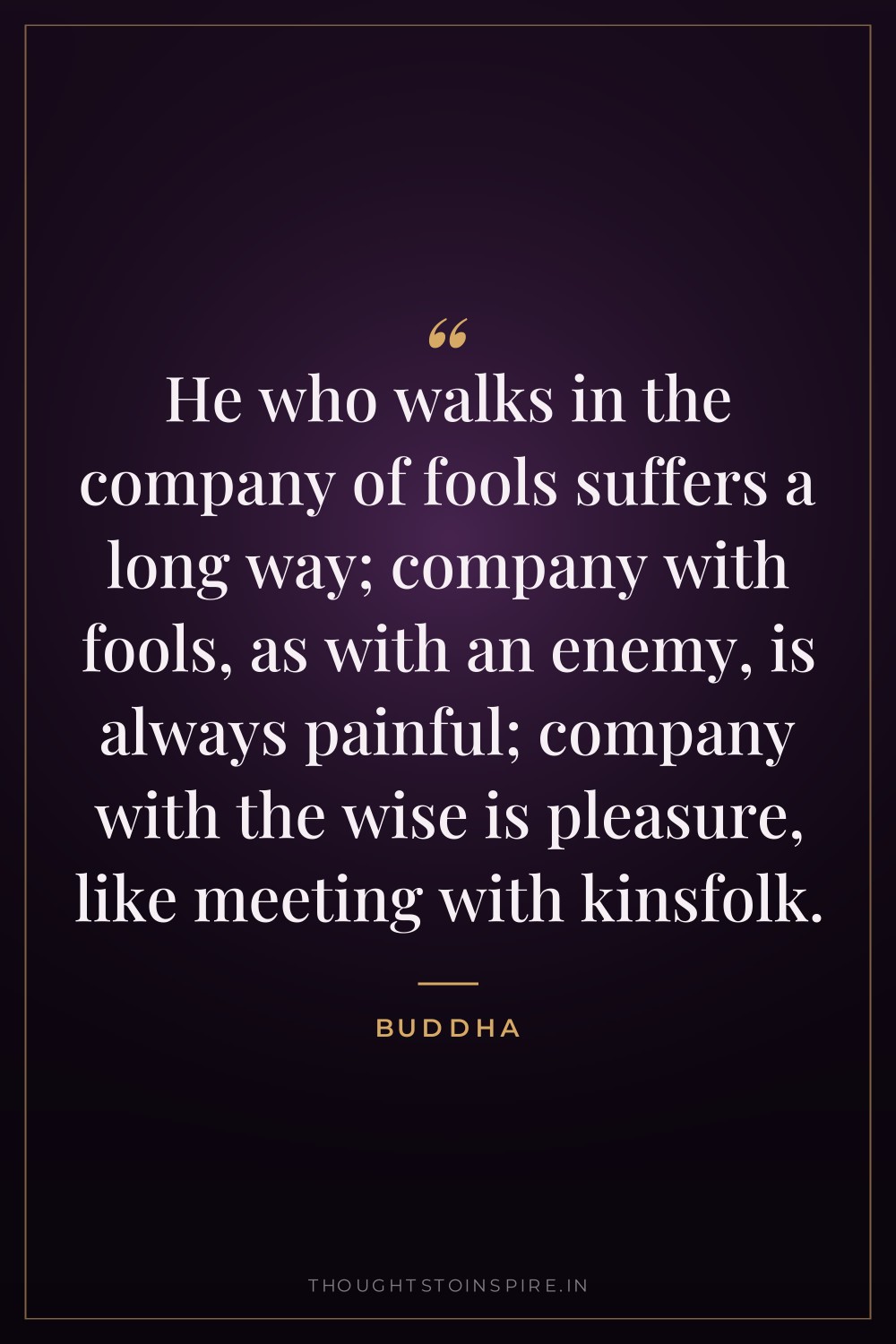
— The Dhammapada, verse 207 (tr. F. Max Müller, 1881)
About this quote
हिन्दी में
मूर्खों के साथ चलने वाले का रास्ता लंबा और दुखदायी होता है; मूर्ख का साथ शत्रु के साथ जैसा है, सदा कष्ट देता है — और बुद्धिमान का साथ उतना ही सुखद, जितना अपनों से मिलना।
What it means
Two comparisons carry the whole line, and they are not symmetrical. Bad company is compared to an enemy, which quietly concedes that the fool need intend you no harm at all for the cost to come out the same as an enemy’s. Good company is compared to meeting kinsfolk — a claim about ease, not about improvement. The wise are described as restful to be near, not as useful to you.
The line is often quoted as permission to drop people for being slow or unsuccessful, and it says nothing of the kind; cleverness is not the axis it measures. What it measures is duration and accumulated cost — suffers a long way puts the whole thing on a road, stretched over time. A single evening with anyone is survivable; this is about who you travel with.
What it teaches you
Apply it to recurring company rather than to individuals: the standing Friday group, the daily commute, the family group chat you never mute. Notice whether you come away from each arrangement loosened or tightened, and treat that as a fact about the arrangement rather than an accusation against anyone in it. Since the verse’s test is cumulative, judge it over months, not over one bad evening.
अर्थ और सीख
मूर्ख का साथ शत्रु के साथ जैसा बताया गया है — दुख देने के लिए उसका बुरा इरादा होना ज़रूरी नहीं; और बुद्धिमान का साथ इसलिए सुखद नहीं कि वह कुछ सिखाता है, बल्कि इसलिए कि उसके पास मन को आराम मिलता है। यह पंक्ति बुद्धि या सफलता की कसौटी नहीं है, समय की है — इसीलिए कहा गया कि रास्ता लंबा होता है। सीख: जिनके साथ आप बार-बार और लंबे समय तक रहते हैं, उस संगति का हिसाब महीनों में लगाएँ, एक शाम में नहीं।
Where it comes from
This is verse 207 of the Dhammapada, from the chapter called Happiness — living happily without hatred among the hating, and the sweetness of solitude.
The Dhammapada is a collection of 423 verses in Pali, among the oldest and most widely read records of the Buddha’s teaching. This English translation is by F. Max Müller (1881), the pioneering Oxford scholar of Indian texts; the verse number is cited with this quote.