— The Dhammapada, verse 49 (tr. F. Max Müller, 1881)
About this quote
हिन्दी में
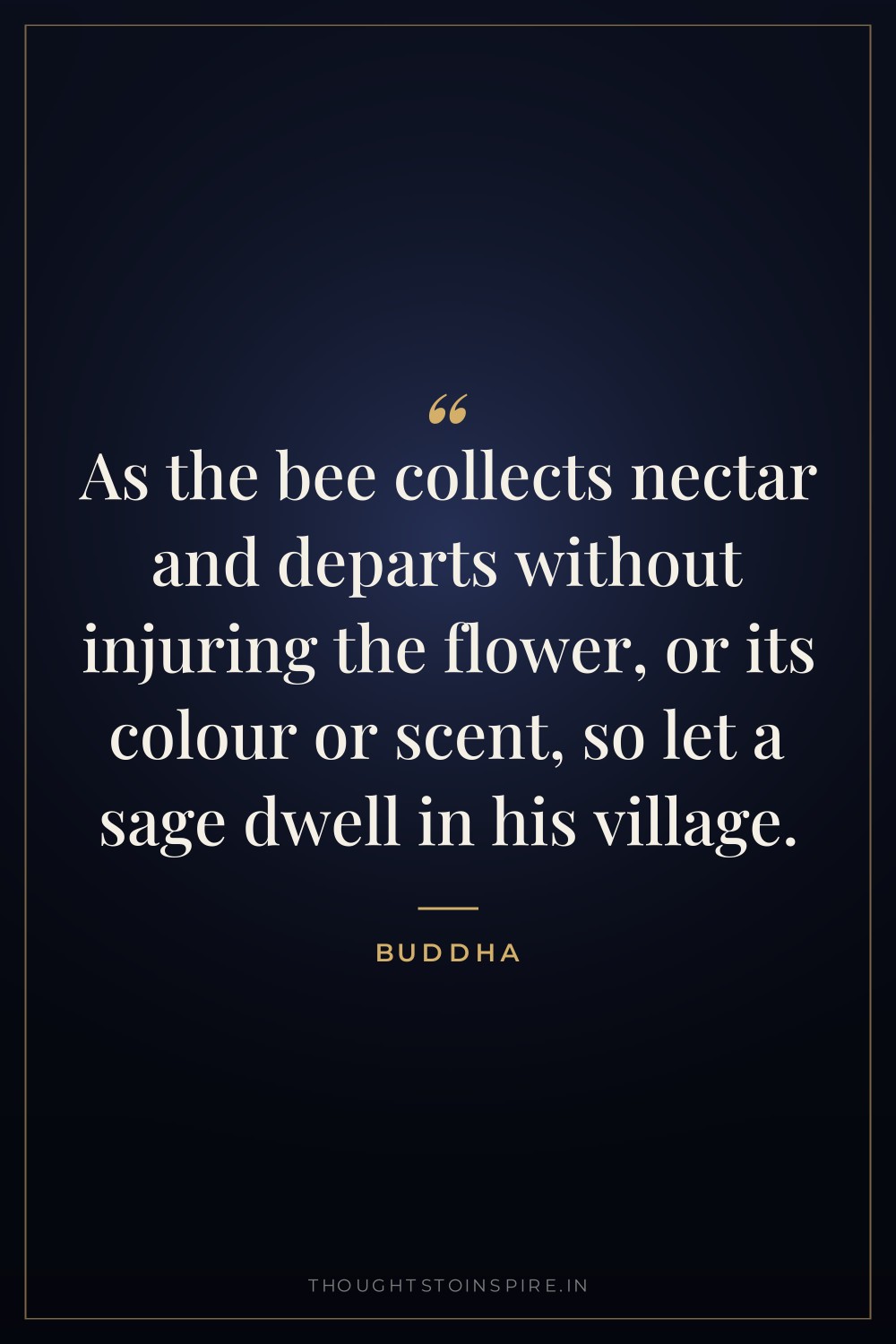
जैसे भौंरा फूल को, उसके रंग और गंध को बिना कोई हानि पहुँचाए उसका रस लेकर चला जाता है, वैसे ही मुनि को अपने गाँव में रहना चाहिए।
What it means
Notice what the bee is not doing: it is not abstaining. It comes for the nectar and it takes it. The simile permits full use — what it forbids is damage, and the damage is itemised with unusual care. Not the flower alone, but its colour and its scent: substance, appearance, and the intangible thing the flower gives off.
Applied to a sage in his village, that itemising becomes pointed. A monk lived on food the village cooked, so this is not advice to withdraw; it describes how to be a dependent without becoming a weight. Colour and scent are the village’s good name, its mood, the goodwill between its people — all of them things a visitor can spoil while taking nothing that would show up as missing. The common reading turns this into a line about consuming less, which is the easiest of the three to obey.
What it teaches you
Audit your presence somewhere by the two costs that leave no receipt. You may have taken nothing material from a household, a team or a group you joined and still have used up its patience, changed how its people speak to each other, or left it carrying a story about you. The working test on the way out is not did I take more than I needed but can this place still give the next person what it gave me.
अर्थ और सीख
भौंरा रस लेने से मना नहीं करता — वह पूरा रस लेता है, पर फूल, उसका रंग और उसकी गंध ज्यों की त्यों छोड़ जाता है। मुनि गाँव के अन्न पर ही जीता था, इसलिए यह पद त्याग नहीं सिखाता, बल्कि यह सिखाता है कि जिस समाज पर आप निर्भर हैं उस पर बोझ या दाग न बनें। सीख यह है कि जाते समय केवल यह न देखें कि आपने कितना कम लिया, बल्कि यह देखें कि उस जगह की साख, आपसी भरोसा और सद्भाव वैसे ही बचे हैं या नहीं।
Where it comes from
This is verse 49 of the Dhammapada, from the chapter called Flowers — the flower similes: beauty without fragrance, the bee that harms no bloom.
The Dhammapada is a collection of 423 verses in Pali, among the oldest and most widely read records of the Buddha’s teaching. This English translation is by F. Max Müller (1881), the pioneering Oxford scholar of Indian texts; the verse number is cited with this quote.