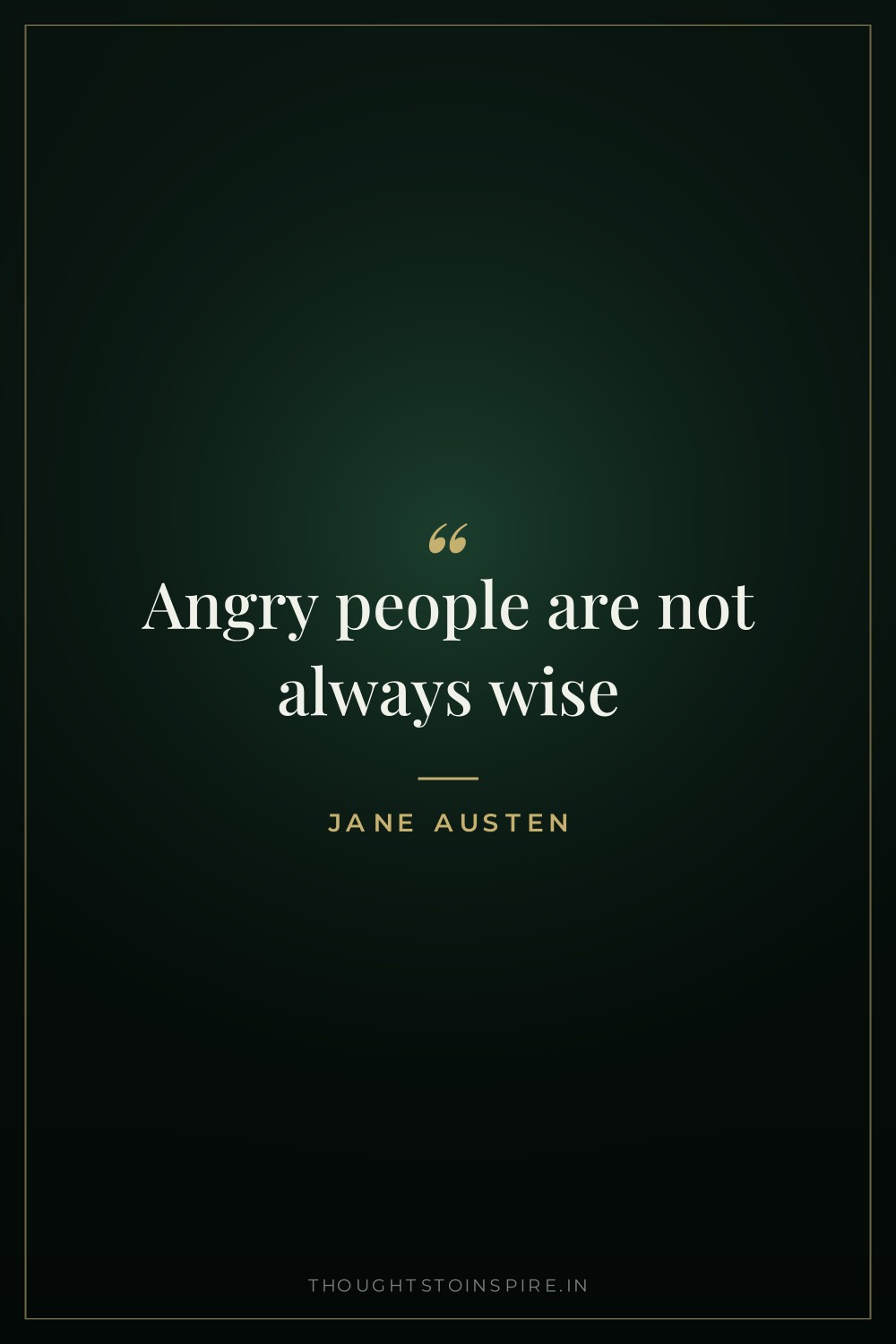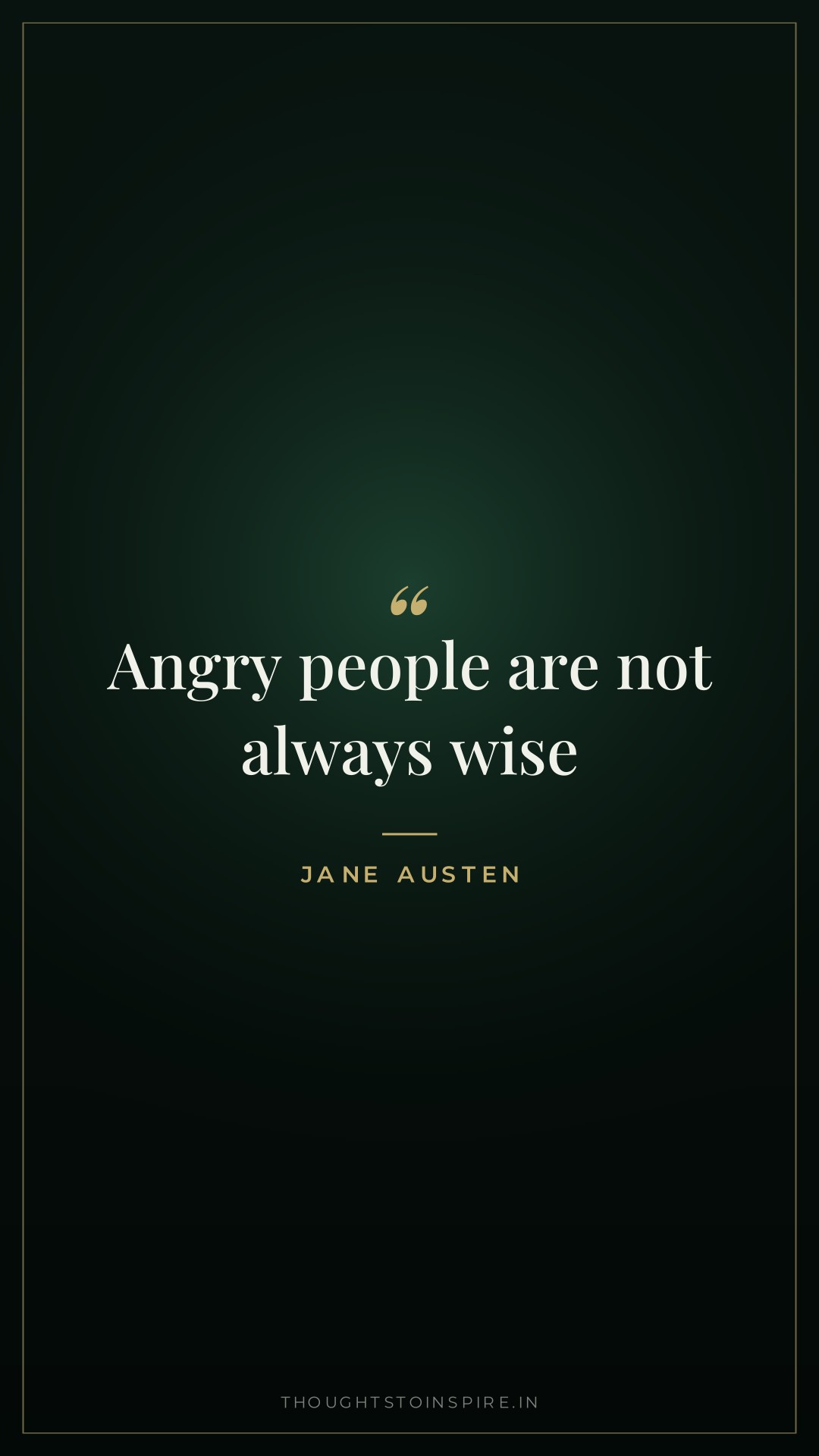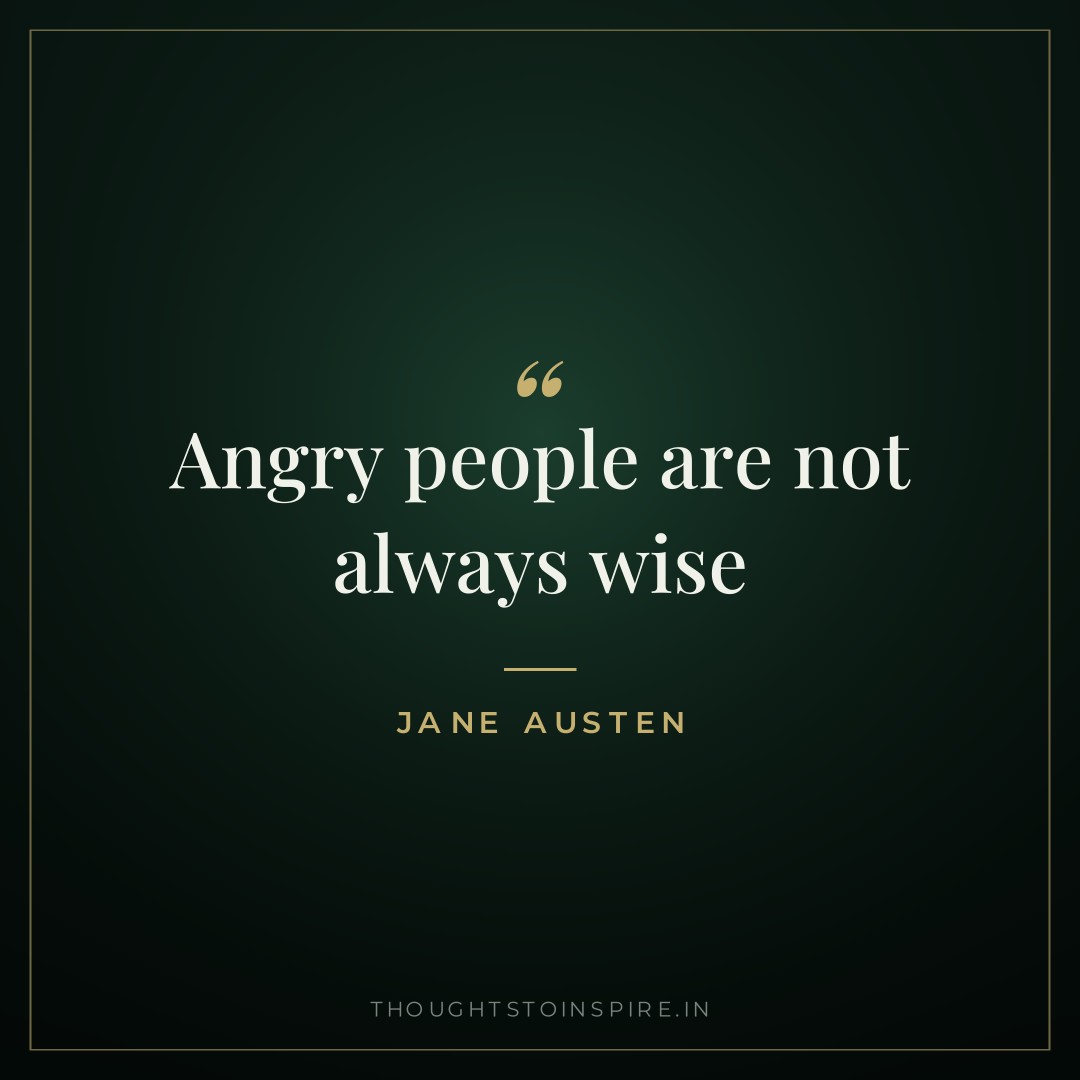
— Pride and Prejudice (1813), Chapter 45
About this quote
हिन्दी में
क्रोधित लोग हमेशा समझदार नहीं होते।
What it means
The claim is weaker than it first sounds, and deliberately so. Austen does not say anger makes people foolish; she says it carries no guarantee of wisdom. Not always leaves standing room for the angry person who happens to be entirely right.
That precision is what makes it worth keeping over the blunter proverb it usually gets flattened into. The popular use is a way of dismissing somebody who is angry with you; the sentence as written dismisses no one, it only withdraws a presumption.
What it teaches you
The line is nearly useless as a reply to another person and genuinely useful as a check on yourself: your anger neither proves nor disproves your case, so make the argument out of facts you would still cite tomorrow. And when it is quoted at you, notice that it answers your temper rather than your point.
अर्थ और सीख
ऑस्टिन कहती हैं कि क्रोधित लोग हमेशा समझदार नहीं होते — यानी यह नहीं कि क्रोध आदमी को मूर्ख बना देता है, बल्कि यह कि क्रोध समझदारी की कोई गारंटी नहीं देता। यह हल्का-सा वाक्य उस मोटी कहावत से कहीं ज़्यादा सटीक है जिसमें इसे बदल दिया जाता है। गुस्से में यह देखिए कि आपकी बात उन्हीं तथ्यों पर टिकी है या नहीं जिन्हें आप कल भी दोहरा सकें।
Where it comes from
A small aside from the narrator rather than a speech, which is why the line appears in lower case here: Austen drops it mid-sentence while Miss Bingley is busy making things worse for herself.
Quoted alone it sounds like folk wisdom. In place it is a precise piece of plotting — Austen telling you that the character is about to damage her own cause, and inviting you to watch it happen.