— Divan-e-Ghalib, from the ghazal "be-khudi be-sabab nahin"
About this quote
देवनागरी
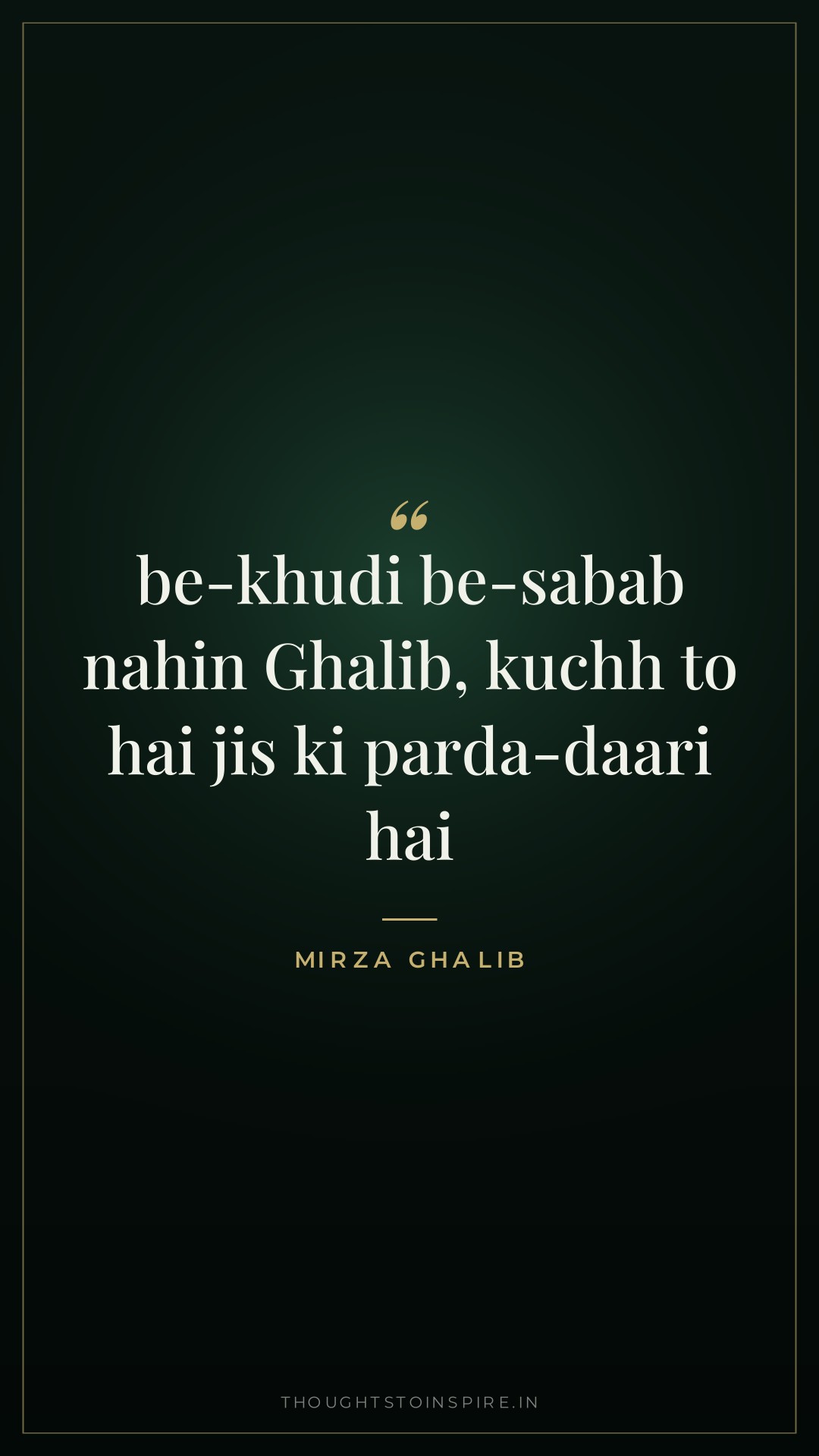
बे-ख़ुदी बे-सबब नहीं ‘ग़ालिब’
कुछ तो है जिस की पर्दा-दारी है
English
This self-forgetting is not without cause, Ghalib — there is something being kept behind the veil.
What it means
Ghalib notices his own distraction and reads it as evidence: the heart is hiding something from its owner. A couplet for every mood we cannot explain — the veil itself is the proof that something lies behind it.
The force of the couplet sits in parda-daari, which is not a veil hanging by itself but the work of veiling — somebody is actively keeping the curtain in place, and that somebody is inside him. So be-khudi is not emptiness or absence of mind; it is the visible edge of an ongoing act of concealment. And kuchh to hai stays deliberately unnamed: readers who supply the missing word — God, the beloved, a buried wound — close a door Ghalib left open, and the couplet is stronger for naming nothing at all.
What it teaches you
Treat an unexplained mood as information rather than a fault. Next time you cannot hold your attention on something ordinary, don’t scold yourself into focus — stop and write down what you were thinking about in the second before your mind slipped away. That sentence is usually the thing you were arranging not to look at.
अर्थ और सीख
बे-ख़ुदी यूँ ही नहीं होती — ज़रूर कुछ है जो छुपाया जा रहा है। जो बेचैनी समझ न आए, उसके पीछे कोई राज़ ज़रूर है।
जब मन बेवजह भटके, तो अपने को डाँटिए नहीं — पूछिए कि भीतर क्या छिपाया जा रहा है। बेचैनी सज़ा नहीं, इशारा है।
Where it comes from
An authentic couplet from the Divan-e-Ghalib, the collected Urdu ghazals of Mirza Asadullah Khan Ghalib (1797–1869), from the ghazal beginning “be-khudi be-sabab nahin”. Transliteration and English rendering are our own.