— Attributed to Rumi; a modern English rendering, not a literal translation
About this quote
हिन्दी में
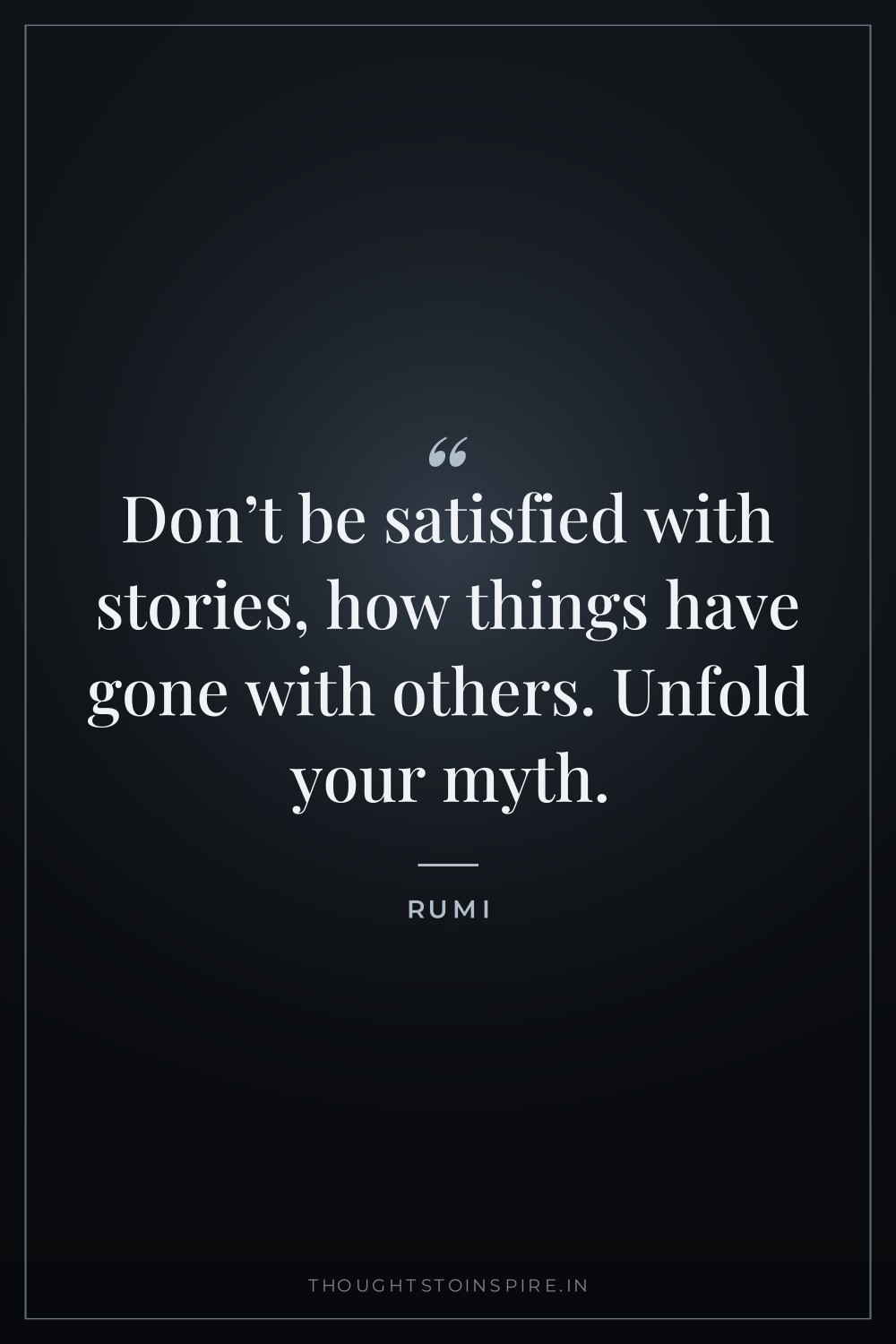
दूसरों के साथ क्या-क्या हुआ, बस उन्हीं क़िस्सों से संतुष्ट मत हो जाओ। अपनी गाथा ख़ुद खोलो।
What it means
Two word choices do all the work. The target is not stories but satisfaction with them — the objection is to the point at which hearing about a life starts to feel like the equivalent of having one. And the contrast is between a story and a myth: a story is an account of what happened, while a myth is a shape that means something, the thing a life turns out to have been about. The first can be borrowed; the second cannot.
The verb is the honest surprise here. Unfold, not invent, not build. It assumes the pattern already exists and is folded up, so the work is disclosure rather than construction — which is a much less flattering assignment than the self-creation slogan this line usually gets flattened into. Like nearly all of Rumi in English, it reaches us through a modern rendering rather than a literal translation, so the English word-play is the translator’s instrument as much as the poet’s.
What it teaches you
The practical marker is the word satisfied. Notice the moment when reading about someone who did the thing gives you the settled feeling of the thing being handled — that specific relief is the signal, and it is easy to mistake for research. Biography and case studies stay useful right up to the point where they become a substitute arc. And since the instruction is to unfold rather than to design, the question to sit with is not what story you would like to have, but which one you have already been telling without noticing.
अर्थ और सीख
असली एतराज़ क़िस्सों पर नहीं, उनसे मिलने वाली तृप्ति पर है — जब दूसरों के जीवन के बारे में पढ़ना ही अपने जीवन जैसा लगने लगे। ‘गाथा’ और ‘क़िस्से’ में फ़र्क़ है: क़िस्सा बताता है कि क्या हुआ, गाथा बताती है कि उसका अर्थ क्या था। और शब्द ‘खोलो’ है, ‘गढ़ो’ नहीं — यानी कुछ नया बनाना नहीं, जो पहले से मुड़ा-तुड़ा रखा है उसे खुलने देना है।