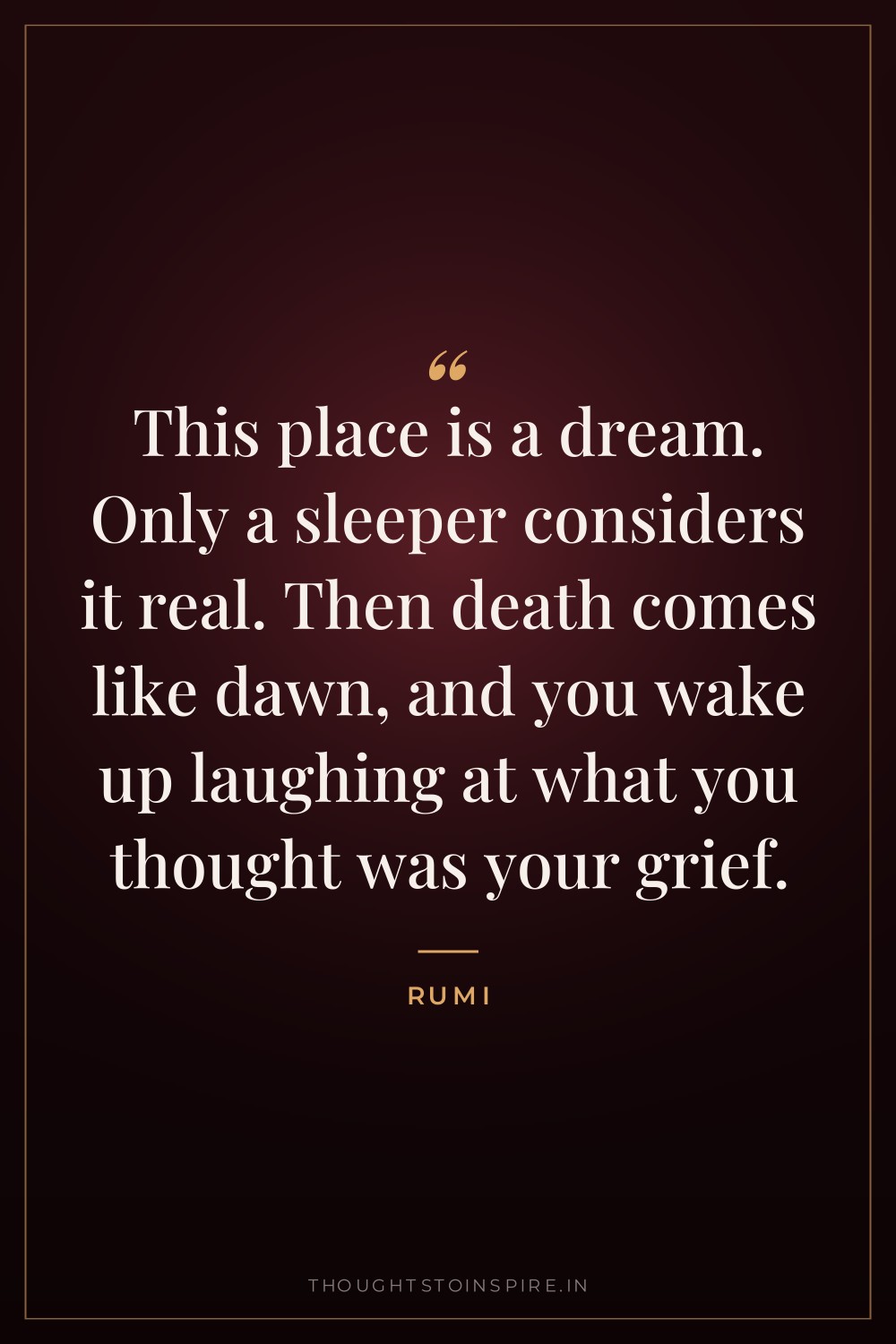
— Attributed to Rumi; modern English rendering of a theme running through the Masnavi
About this quote
हिन्दी में
यह जगह एक सपना है। केवल सोया हुआ व्यक्ति ही इसे सच मानता है। फिर मृत्यु भोर की तरह आती है, और तुम जागकर उस पर हँसते हो जिसे अपना दुख समझते थे।
What it means
Look at where the second sentence puts the burden. It does not argue that the world is unreal; it makes the verdict of reality a symptom — only a sleeper considers it real. The unreality is never defended, because in the logic of the image it does not need to be: you cannot be argued out of a dream from inside it, you can only wake. That is also why death is given as dawn rather than as an ending, since dawn is the one event that ends a dream without harming the dreamer.
The chosen reaction is laughter, and it is precise. Not relief, not peace, not understanding — laughter is what people do when they discover a category mistake, when a thing turns out to be a different kind of thing than they took it for. Worth noting too that the sentence is spoken about the reader’s own death and the reader’s own grief. It circulates as comfort offered to the bereaved, which is a use it was not written for and does not quite fit.
What it teaches you
There is a small version of the claim you can actually check: recall being frightened in a dream. The fear was entirely real while it lasted; only its object was not. That is the exact structure the line is asserting on a larger scale, and it is worth noticing that nothing in the structure asks you to feel less now, or to treat present sorrow as a mistake to be corrected. The claim concerns the estimate, made from inside sleep, and estimates are revised by waking rather than by effort.
अर्थ और सीख
पंक्ति यह नहीं कहती कि दुनिया झूठी है, बल्कि यह कि उसे सच मान लेना नींद की निशानी है — और नींद से तर्क नहीं, जागरण ही निकालता है। इसीलिए मृत्यु को अंत नहीं, भोर कहा गया है, क्योंकि भोर सपने को ख़त्म करती है, सपना देखने वाले को नहीं। ध्यान दें कि हँसी का ज़िक्र है — यह वह प्रतिक्रिया है जो तब आती है जब पता चले कि चीज़ जिस क़िस्म की समझी थी, उस क़िस्म की थी ही नहीं; यह आज के दुख को छोटा बताने की सलाह नहीं है।
Where it comes from
Death rendered as waking rather than ending, with the sting placed in the last word: you laugh at what you thought was your grief. Not that the grief was fake — that its scale was wrongly estimated by someone who was asleep.
A modern English rendering of a theme that genuinely runs through the Masnavi. Rumi (1207–1273) wrote in Persian; almost every English line shared online is a modern rendering rather than a literal translation. Sourced passages from the Masnavi, with their selection titles, are collected under Rumi on Love.