— Attributed to Gandhi; circulates in several wordings rather than one fixed text
About this quote
हिन्दी में
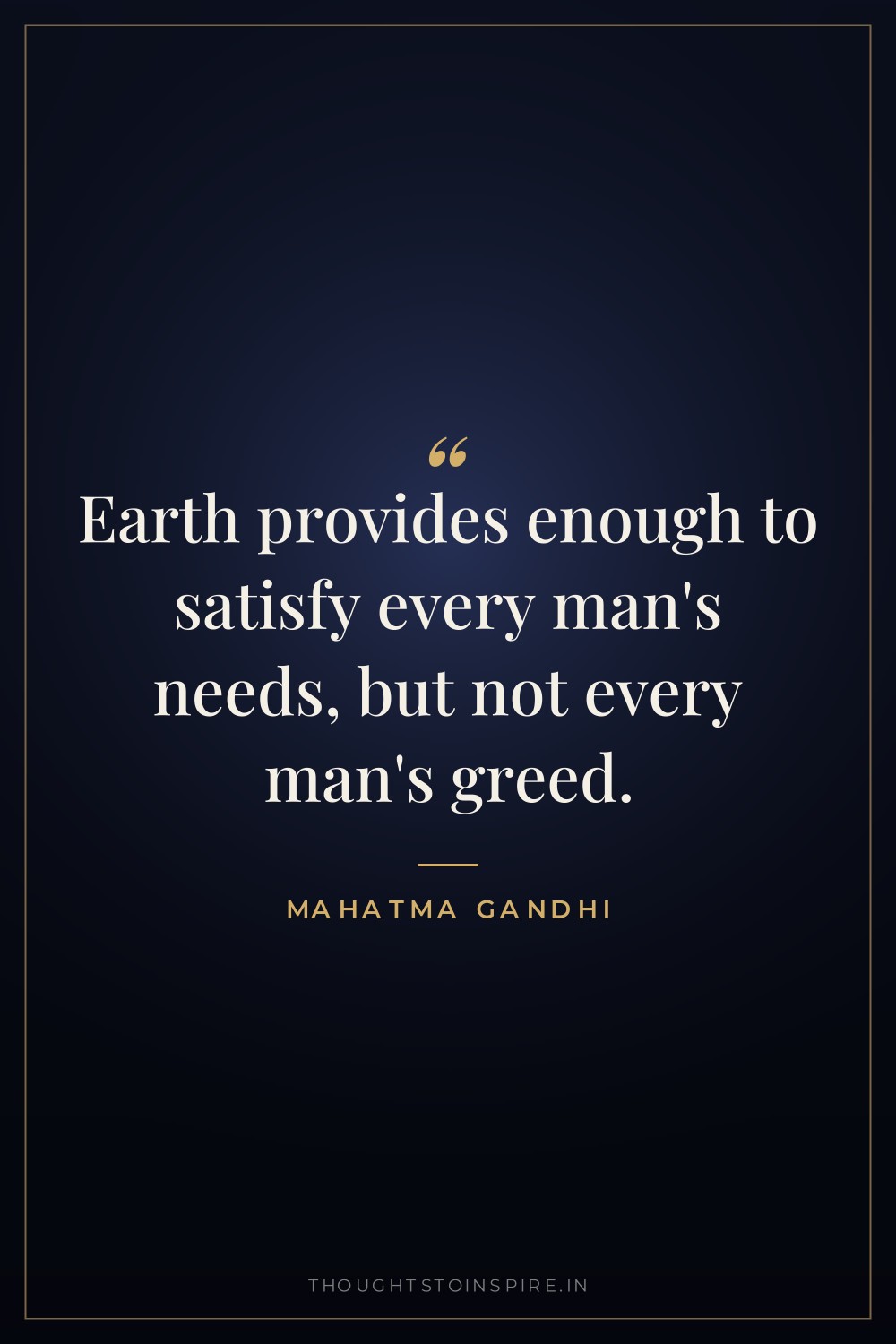
धरती के पास हर आदमी की ज़रूरत पूरी करने भर है, पर हर आदमी के लालच के लिए कुछ भी नहीं।
What it means
The whole sentence turns on one distinction, and its force comes from putting the shortage on the demand side. Scarcity, it claims, is not a fact about the planet’s capacity but about appetite — which makes hunger a question of distribution and wanting rather than of yield. That is an empirical claim, and a bold one, not a piety.
Its crack is that it supplies no boundary. Nobody files their own consumption under greed, and the line is quoted most confidently by people describing somebody else’s car. The rhyme of needs and greed makes the thought feel settled when the hard part — where need ends — is exactly what has been left out. It also travels in several wordings rather than one fixed sentence, so quote it for the idea and not as an exact text.
What it teaches you
Give the distinction a unit, since that is what it is missing. Next time you justify a purchase, write the need it meets and the quantity that would meet it — two rooms cooled, not ‘cooling’; one phone for four years, not ‘a phone’ — and treat the point where you cannot name a number as the place greed begins. At the policy end, the same logic argues that the answer to shortage is a limit on appetite at the top, not more output at the bottom.
अर्थ और सीख
बात यह है कि कमी धरती में नहीं, माँग में है — ज़रूरत सबकी पूरी हो सकती है, लालच किसी एक का भी नहीं। कमज़ोरी यह है कि ‘ज़रूरत’ कहाँ ख़त्म होती है, यह पंक्ति नहीं बताती, और हर आदमी अपने ख़र्च को ज़रूरत ही कहता है। इसलिए काम की बात यह है — ख़रीदने से पहले मात्रा लिखकर देखिए कि कितना चाहिए; जहाँ संख्या बताना मुश्किल हो, वहीं से लालच शुरू होता है।