— Mahatma Gandhi, speech of 1920, Collected Works
About this quote
हिन्दी में
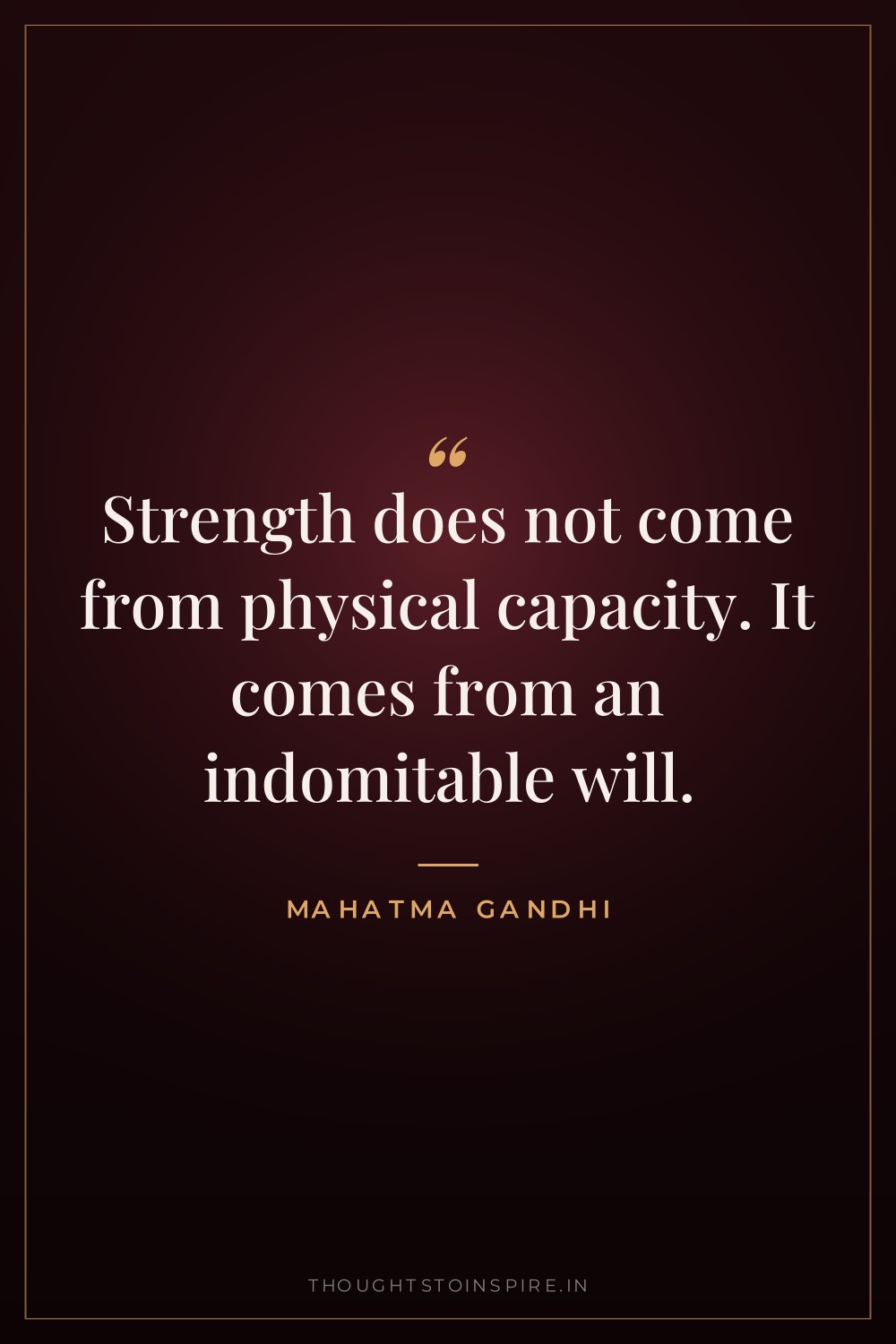
शक्ति शारीरिक क्षमता से नहीं आती; वह अदम्य इच्छाशक्ति से आती है।
What it means
This is a redefinition in two moves — a denial, then a substitution. Strength stops meaning what a body can do in a moment and starts meaning what a person will keep doing after the moment has passed. The implied claim is about contests decided by duration: whoever can be outlasted loses, however much force they are able to apply.
It is worth keeping because it is a statement about tactics, not the consolation for the physically weak that it is usually read as. Its honest defect is that an indomitable will can only be measured backwards — anyone who gave up is then said to have lacked it — which makes the line easy to turn into a verdict on the defeated.
What it teaches you
Sort your current difficulties into ones settled by a single push and ones settled by who stops first: a negotiation, a course of treatment, a long case in court, an exam year, a boycott. For the second kind, put your preparation into stamina rather than intensity — money that lasts the length of it, sleep, people who can take a turn, a pace you can still hold in a bad week — because that is the variable the line says decides it.
अर्थ और सीख
गांधी यहाँ ‘शक्ति’ शब्द का अर्थ बदल देते हैं — देह की ताक़त से हटाकर टिके रहने की क्षमता पर। इसका मतलब यह है कि जो मुक़ाबले इस बात पर तय होते हैं कि कौन पहले रुकता है, उनमें तेज़ी से नहीं, दमखम की तैयारी से जीत मिलती है। साथ में यह भी देखिए कि हारने वाले पर ‘इच्छाशक्ति की कमी’ का इलज़ाम लगाने के लिए इसी वाक्य का दुरुपयोग बहुत आसान है।
Where it comes from
Genuine Gandhi — from a 1920 speech, recorded in his Collected Works: ‘Strength does not come from physical capacity. It comes from an indomitable will.’ Spoken in the context of satyagraha, where the unarmed had to outlast the armed.