— Peter Pan (1911), Chapter 3
About this quote
हिन्दी में
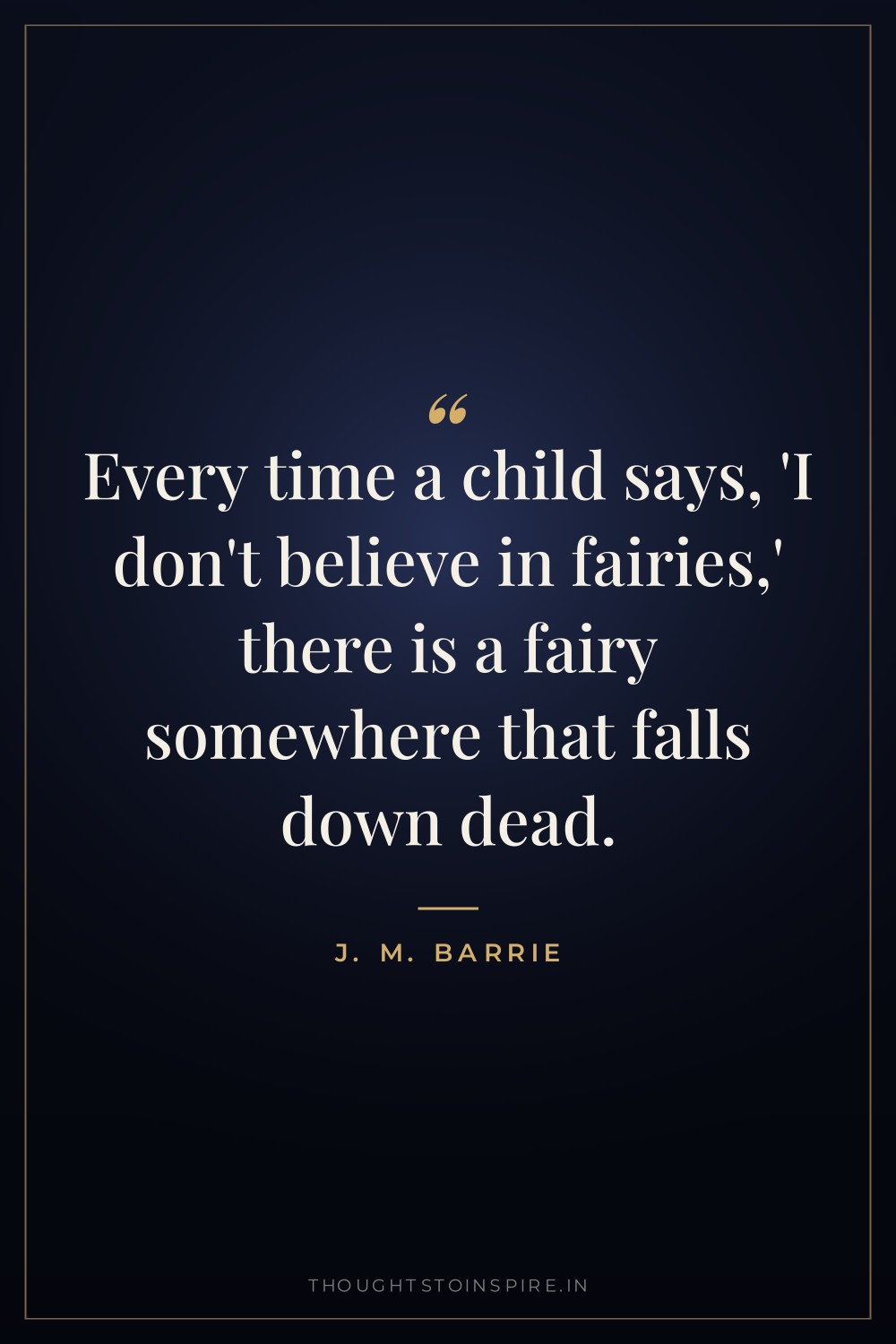
जब भी कोई बच्चा कहता है, ‘मैं परियों को नहीं मानता,’ कहीं न कहीं कोई परी गिरकर मर जाती है।
What it means
The sentence describes a mechanism, not a mood. Notice how the casualty is arranged: the child who speaks is not harmed, and the fairy who dies is somewhere, unnamed, unconnected to the speaker and invisible to them. Disbelief is set up as an act with a body count that the person responsible will never see, which is a much harder proposition than anything about the value of imagination.
It is worth keeping because it is stated in the present tense of natural law — this is how the world works, every time, without exception or appeal. There is no suggestion that the child is wicked or should be scolded. The cost is simply attached to the words, automatically, and that flatness is what makes the line land rather than sweeten.
What it teaches you
Look at the argumentative shape, because you will meet it outside nurseries: your doubt kills something you cannot see moves the burden off the claim and onto the doubter, who now has to weigh a death against an opinion. Recognising it is worth more than either believing or refusing — and it explains why the theatre version works, since an audience told this cannot stay an audience and must act to stop a death it has been made responsible for.
अर्थ और सीख
यह वाक्य भावना नहीं, एक नियम बता रहा है: अविश्वास से नुकसान बोलने वाले बच्चे का नहीं होता, बल्कि ‘कहीं दूर’ किसी ऐसी परी का होता है जिसे वह कभी देखेगा भी नहीं। इसी में इसकी बेचैन करने वाली धार है — यहाँ विश्वास कोई मीठी भावना नहीं, किसी और के जीने की शर्त बना दिया गया है। सीख यह है कि इस तर्क का ढाँचा पहचानिए: ‘तुम्हारे शक से किसी की जान जाएगी’ कहकर बोझ दावे से हटाकर शक करने वाले पर डाल दिया जाता है।
Where it comes from
Peter, explaining the economics of fairies to Wendy. It is the passage that produced the audience-participation moment in the play, where children are asked to clap to save Tinker Bell.
Barrie states it as a flat fact of the world rather than as sentiment, which is what gives it its unsettling edge — belief is not comfort here, it is life support.