— Notes from the Underground (1864), Chapter 2
About this quote
हिन्दी में
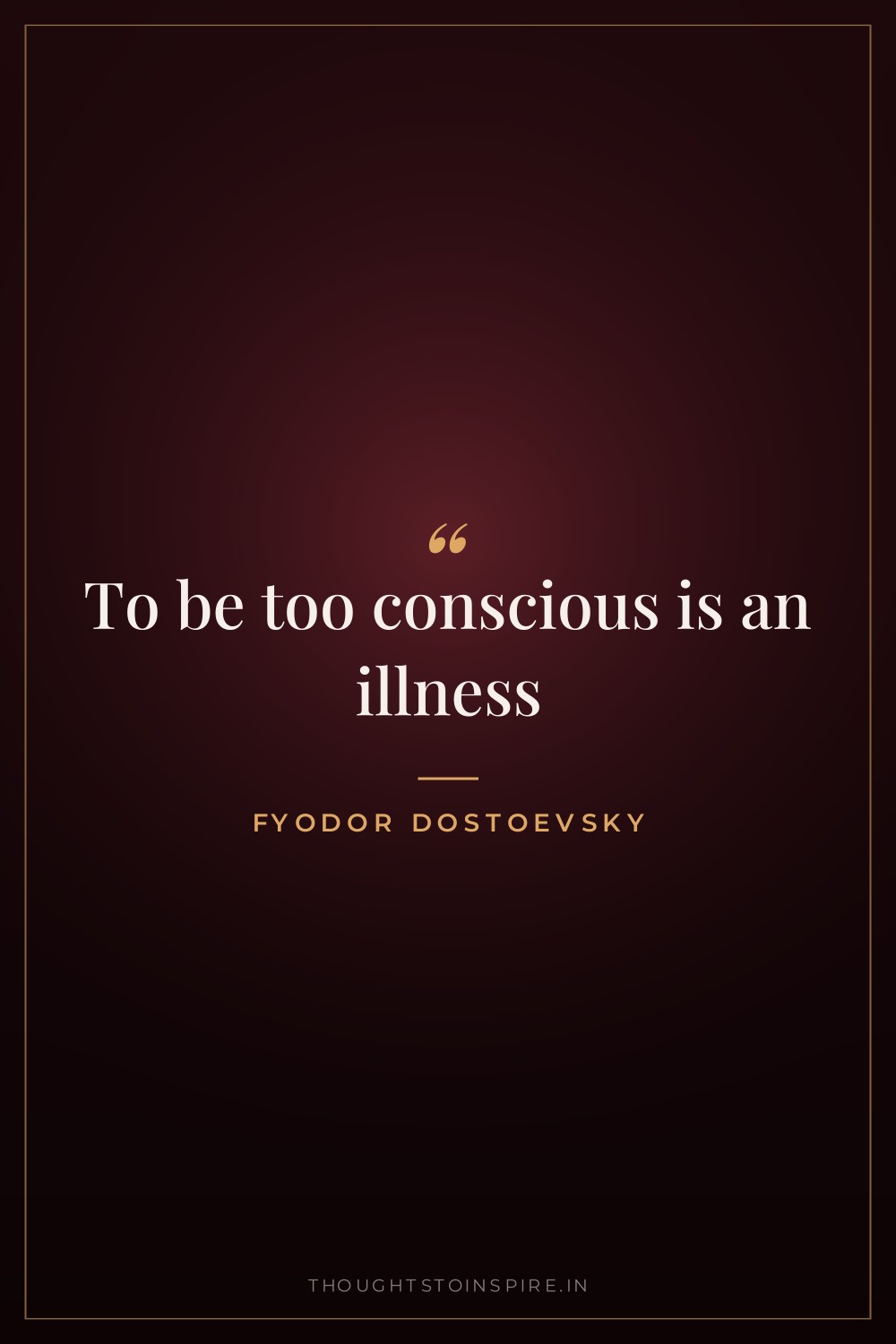
ज़रूरत से ज़्यादा सचेत होना एक बीमारी है।
What it means
The force of the sentence sits in one word: illness. Not a burden, not a curse, not a price — an illness, which is a medical category, and it carries three implications at once. It assumes a standard of health that the sufferer has fallen below; it implies the condition is not chosen; and it strips self-awareness of any heroic dignity. The other load-bearing word is too. This is a quantitative claim, not a case against thinking: there is a threshold past which more awareness makes a person worse off, and the sentence pointedly declines to say where that threshold lies.
It is most often quoted as a compliment to the overthinker — proof that the sensitive mind suffers because it sees more. That is close to the reverse of what the words do. Naming a condition as a disease is the one framing that refuses to make it admirable, and the mechanism it points to is deflationary rather than flattering: the more completely you can see every side of a choice and every motive behind your own preference, the fewer grounds remain for preferring anything, and the result is paralysis rather than depth. Worth keeping because it is the sharpest short statement of that trap, and because it will not let you enjoy being caught in it.
What it teaches you
There is a practical version of the threshold this line gestures at, and it is measurable: watch for the round of thinking after which your answer stopped changing. Analysis that keeps revising the decision is doing work; analysis that keeps arriving at the same place while the decision stays unmade has switched from thinking to substituting for action, and the added clarity is buying nothing. The same test applies to examining your own motives — if tracing the motive behind a good intention has only made you less likely to act on it, the tracing was not insight. Keep a note of when you first knew what you would do, and compare it to when you did it; the gap is the thing the sentence calls a symptom.
अर्थ और सीख
असली ज़ोर बीमारी शब्द पर है — बोझ या अभिशाप नहीं, बल्कि रोग, यानी कोई ऐसी हालत जो न चुनी गई हो और जिसमें कुछ भी गौरव जैसा नहीं। साथ ही ज़्यादा शब्द बताता है कि बात सोचने के ख़िलाफ़ नहीं, बल्कि एक हद के बाद की है: जब आप हर पहलू और अपनी हर नीयत को इतना साफ़ देख लें कि किसी भी तरफ़ झुकने का कारण ही न बचे, तो नतीजा गहराई नहीं, जड़ता होती है। इसे आम तौर पर संवेदनशील और ज़्यादा सोचने वाले लोगों की तारीफ़ मानकर उद्धृत किया जाता है, जो इसका उलटा है — व्यावहारिक सबक़ यही है कि पहचानिए किस मोड़ के बाद और सोचने से आपका जवाब बदलना बंद हो गया, क्योंकि उसके आगे का विचार फ़ैसले की जगह लेने लगता है।
Where it comes from
The Underground Man’s central claim: that awareness past a certain point stops being a virtue and becomes a condition. He argues it against the confident rationalists of his day, who held that a person who truly understood their own interest would act on it.
His counter-example is himself — he understands perfectly and acts against his interest anyway, for the pleasure of proving he can.