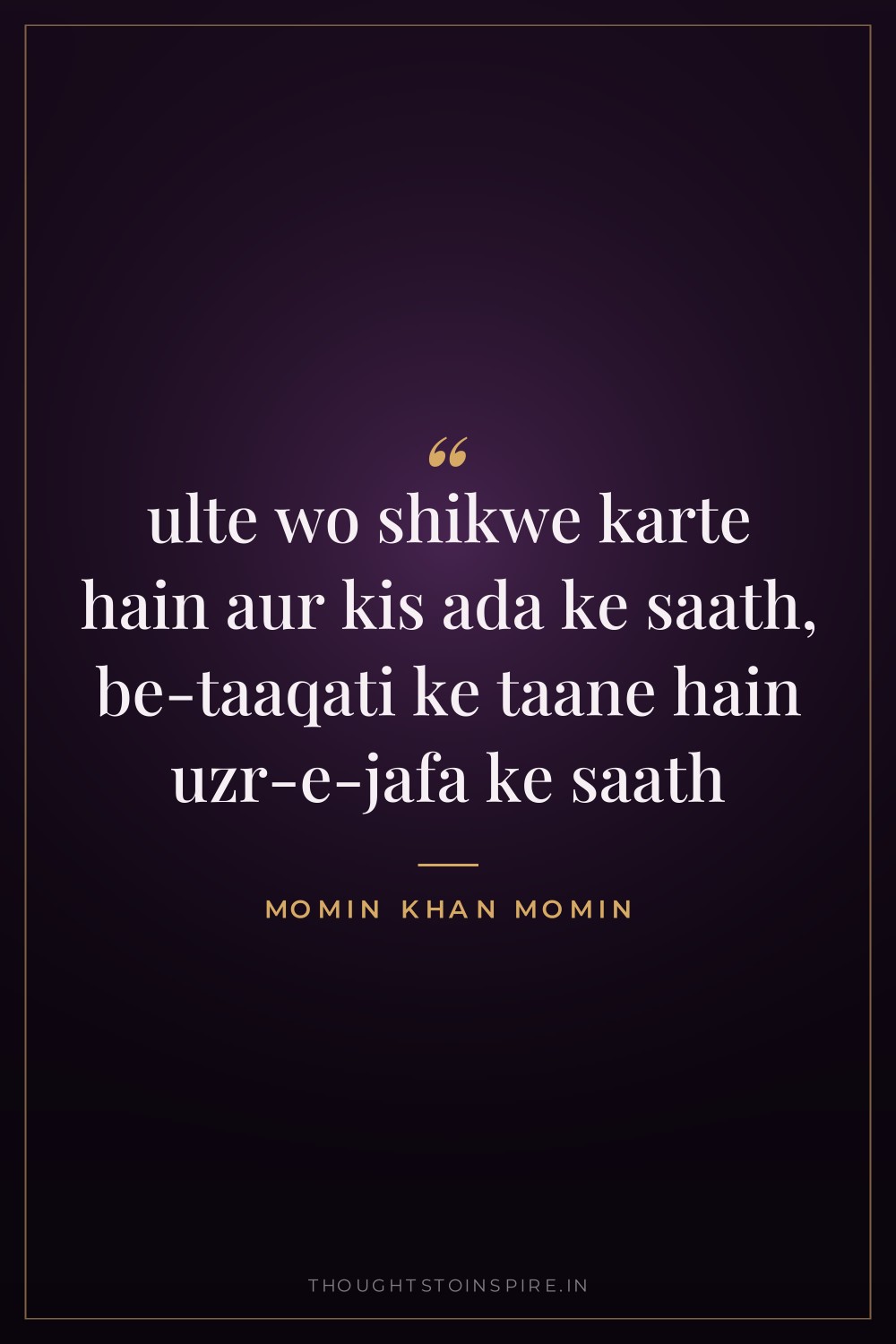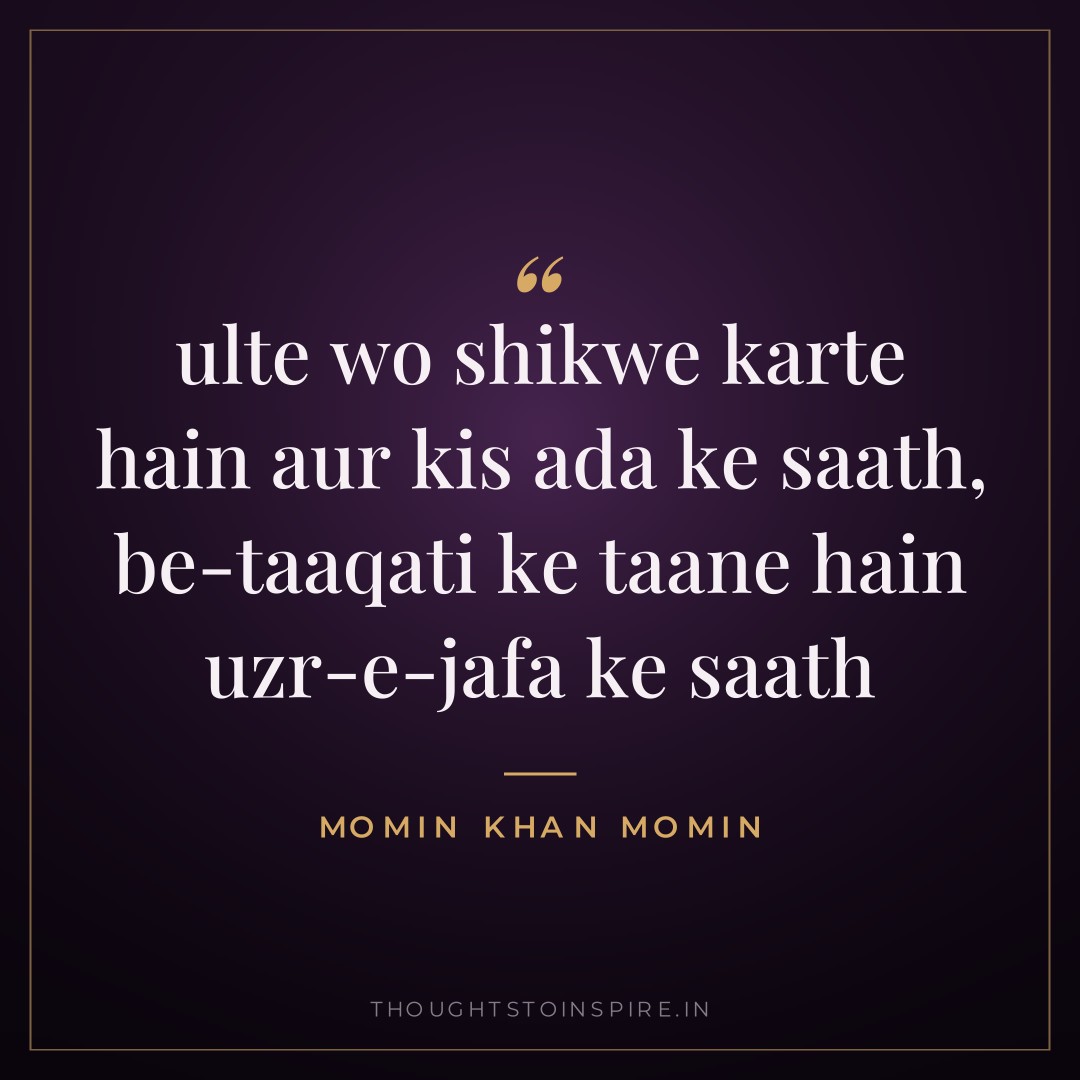
— from the ghazal beginning “ulte wo shikwe karte hain aur kis ada ke saath”, Momin Khan Momin (1800–1852)
About this quote
देवनागरी
उल्टे वो शिकवे करते हैं और किस अदा के साथ
बे-ताक़ती के ताने हैं उज़्र-ए-जफ़ा के साथ
اردو
الٹے وہ شکوے کرتے ہیں اور کس ادا کے ساتھ
بے طاقتی کے طعنے ہیں عذر جفا کے ساتھ
English
Instead it is they who complain — and with what style: taunts about my weakness, delivered alongside excuses for their own cruelty.
What it means
A precise description of a manoeuvre everyone has been on the receiving end of: the apology that arrives bundled with an accusation. Uzr-e-jafa is the excuse offered for an injury; the taunt about weakness is thrown in free.
What it teaches you
The practical skill this couplet teaches is separation. When an apology arrives with a taunt bolted on — sorry for the injury, and by the way you were too weak to take it — accept or reject the two halves independently instead of swallowing the package as offered. Name the injury; decline the comment on your capacity. Then run the same check on your own apologies: if yours needs a clause about the other person being too sensitive, it is not yet an apology.
अर्थ और सीख
शिकायत हम करें तो बेजा, और वो उल्टा ताना भी दें और ज़ुल्म का बहाना भी साथ रखें। माफ़ी और इलज़ाम को एक साथ पेश करने का यह हुनर आज भी उतना ही आम है।
माफ़ी के साथ जब ताना भी जुड़ा आए, तो दोनों को अलग-अलग तौलिए — चोट की बात मानिए, अपनी कमज़ोरी वाला ताना मत लीजिए। और अपनी माफ़ी भी जाँचिए: अगर उसमें सामने वाले के ‘ज़्यादा महसूस करने’ का ज़िक्र है, तो वह माफ़ी नहीं है।
Where it comes from
Verified against the collected work of Momin Khan Momin (1800–1852) on Urdu Wikisource, in the poem beginning الٹے وہ شکوے کرتے ہیں اور کس ادا کے ساتھ (source). Devanagari transliteration and English rendering are our own.