— from the ghazal beginning “asar us ko zara nahin hota”, Momin Khan Momin (1800–1852)
About this quote
देवनागरी
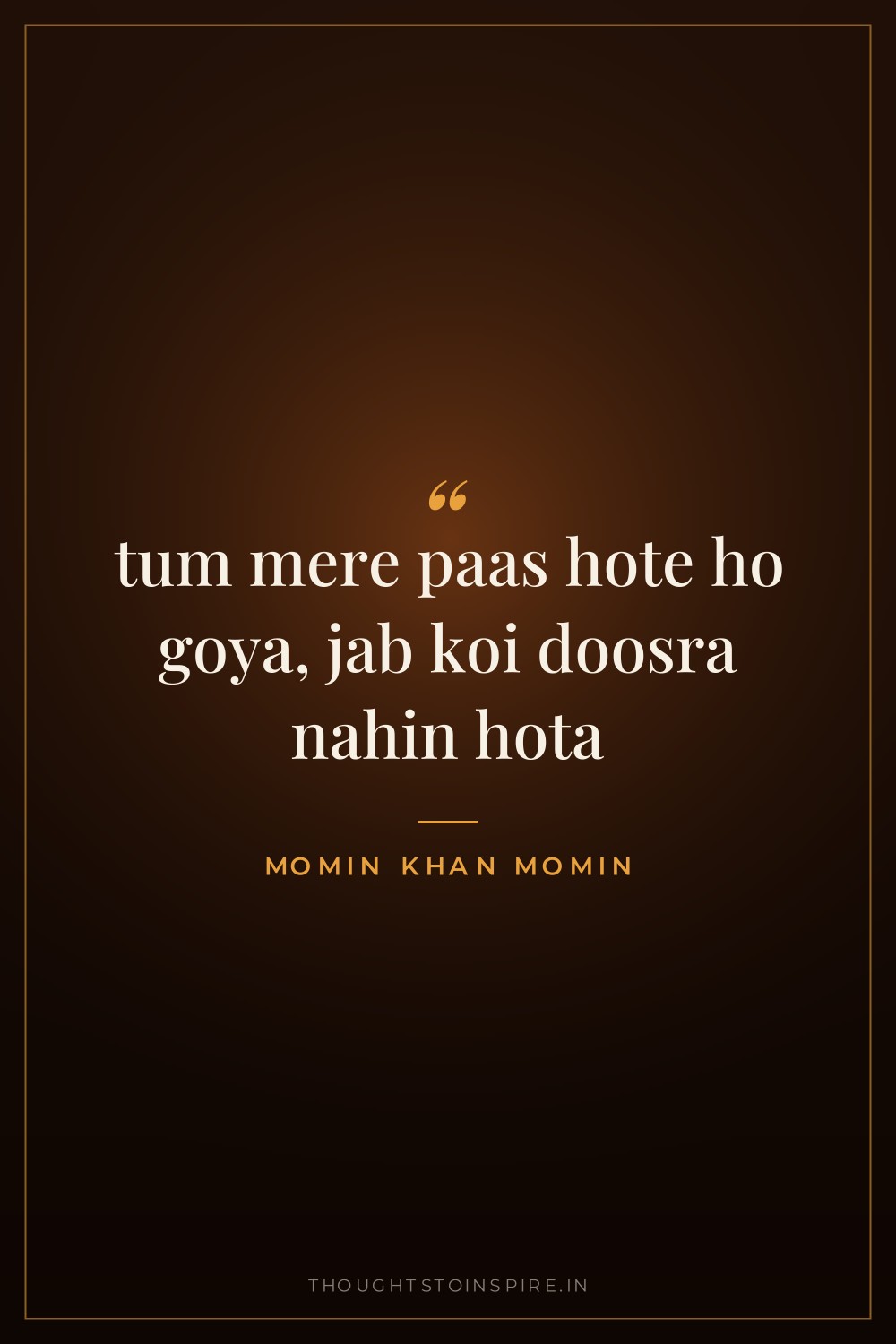
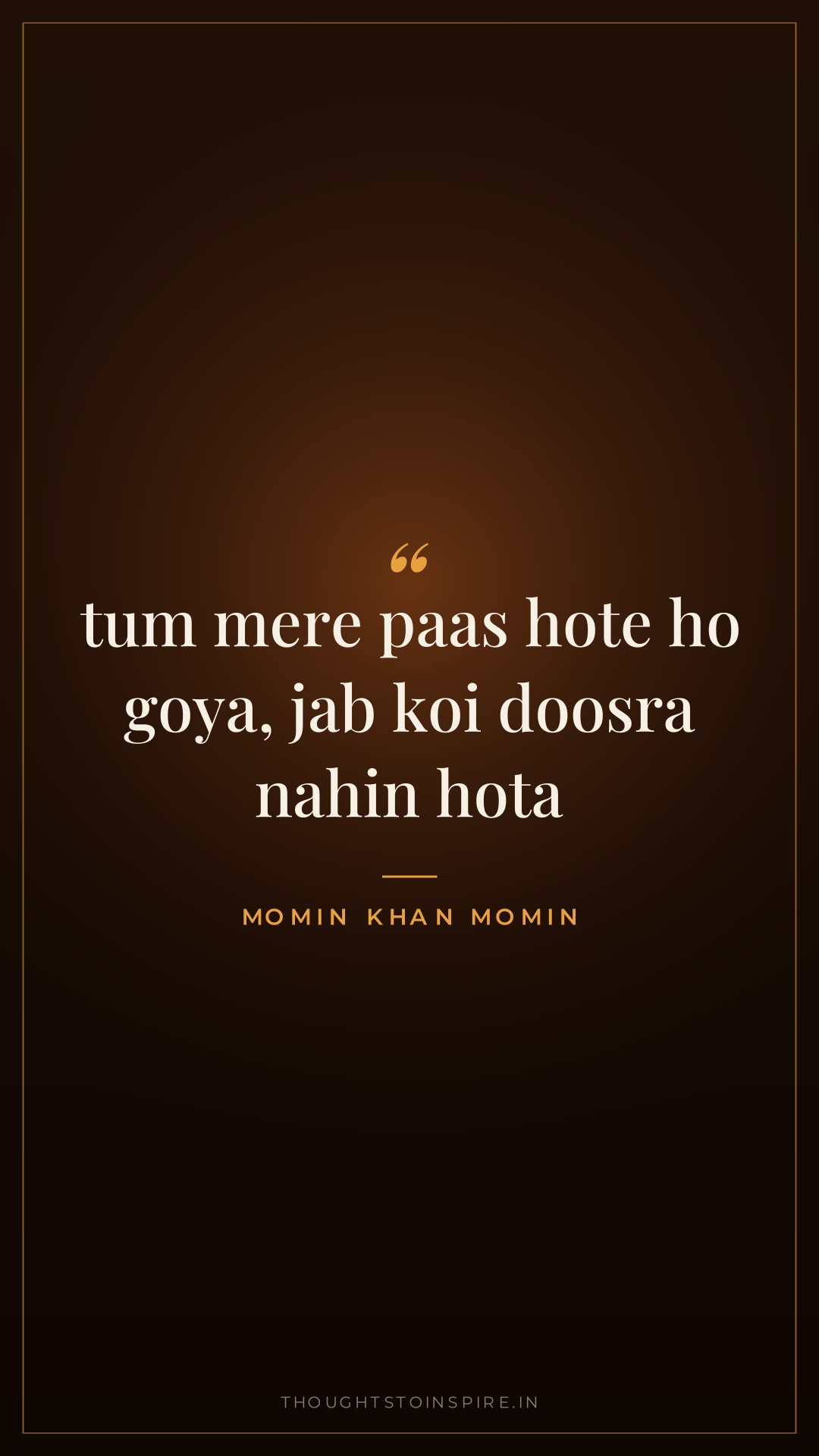
तुम मेरे पास होते हो गोया
जब कोई दूसरा नहीं होता
اردو
تم مرے پاس ہوتے ہو گویا
جب کوئی دوسرا نہیں ہوتا
English
It is as though you are beside me — whenever no one else is.
What it means
Eleven words, and at least three readings: you are with me when I am alone; you are with me only when nobody is watching; and, most cruelly, when you are with me I feel as though no one is there at all. The couplet is famous partly for a story — that Ghalib offered his entire divan in exchange for it. The anecdote is repeated everywhere and traced to no contemporary source, so treat it as legend rather than record.
What it teaches you
Try saying the line aloud three times, stressing a different word each time — you, beside me, no one else — and notice which reading comes to you first and without effort. That reading is information about your own situation, not about Ghalib’s, and it is the most useful thing this couplet can give you: the same eleven words are a consolation, an accusation of secrecy, and a confession of loneliness in company, and the person reciting it has usually already chosen one without noticing. Second, and separately: the divan-for-one-couplet story attached to it traces to no contemporary source, so if you pass the couplet on, pass it on without the anecdote, or say plainly that the anecdote is legend.
अर्थ और सीख
तनहाई में तुम्हारा एहसास साथ होता है — या फिर, तुम तभी पास आते हो जब कोई देखने वाला न हो। एक ही शेर में कई मतलब खुलते हैं, इसीलिए यह उर्दू का सबसे ज़्यादा बहस वाला शेर है।
इस शेर के तीन अर्थ हैं — और आपको जो अर्थ सबसे पहले सूझे, वह आपके अपने हाल का पता देता है। साथ में जुड़ा दीवान वाला क़िस्सा किसी समकालीन स्रोत में नहीं मिलता, इसलिए उसे तथ्य की तरह न दोहराएँ।
Where it comes from
Verified against the collected work of Momin Khan Momin (1800–1852) on Urdu Wikisource, in the poem beginning تم مرے پاس ہوتے ہو گویا (source). Devanagari transliteration and English rendering are our own.