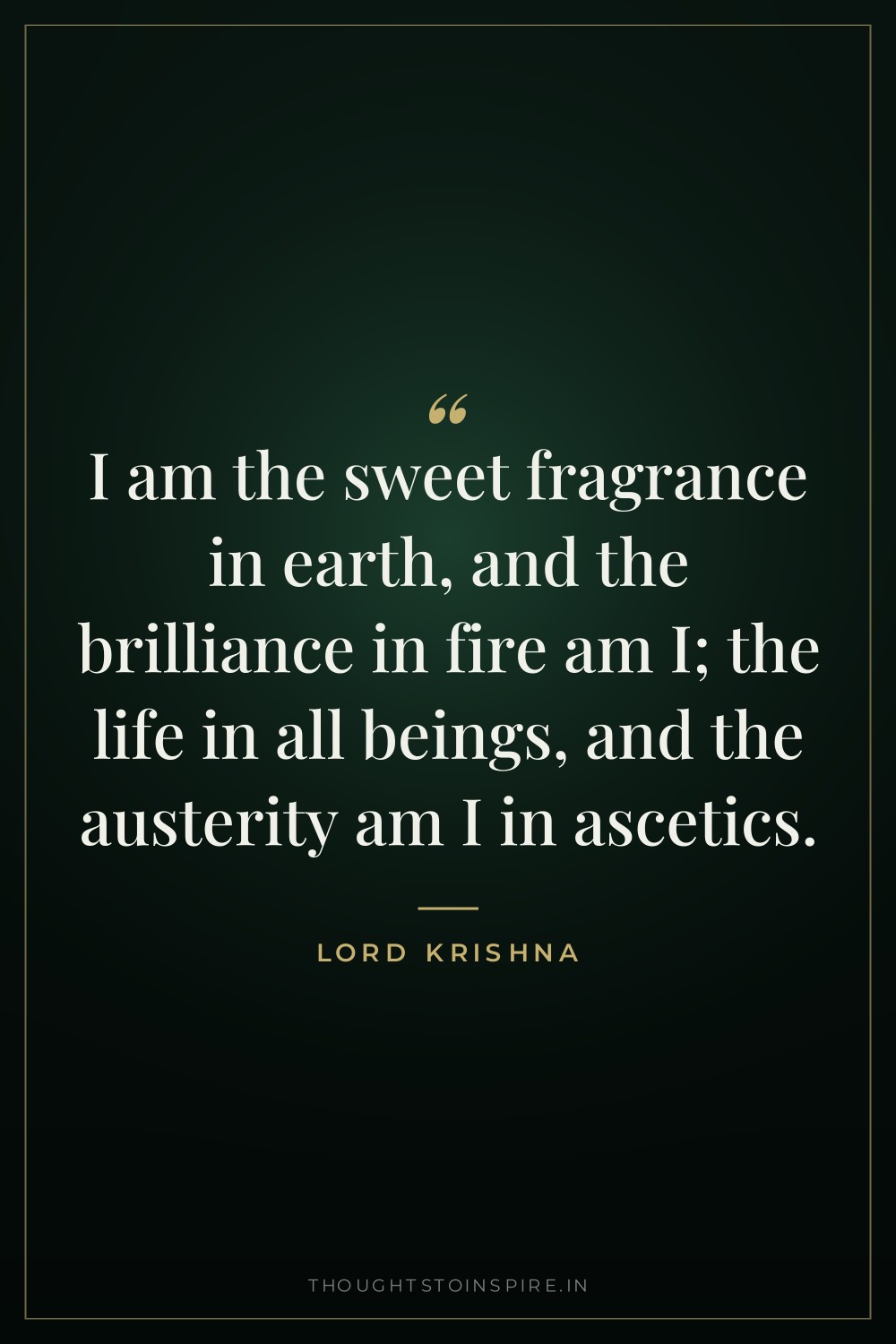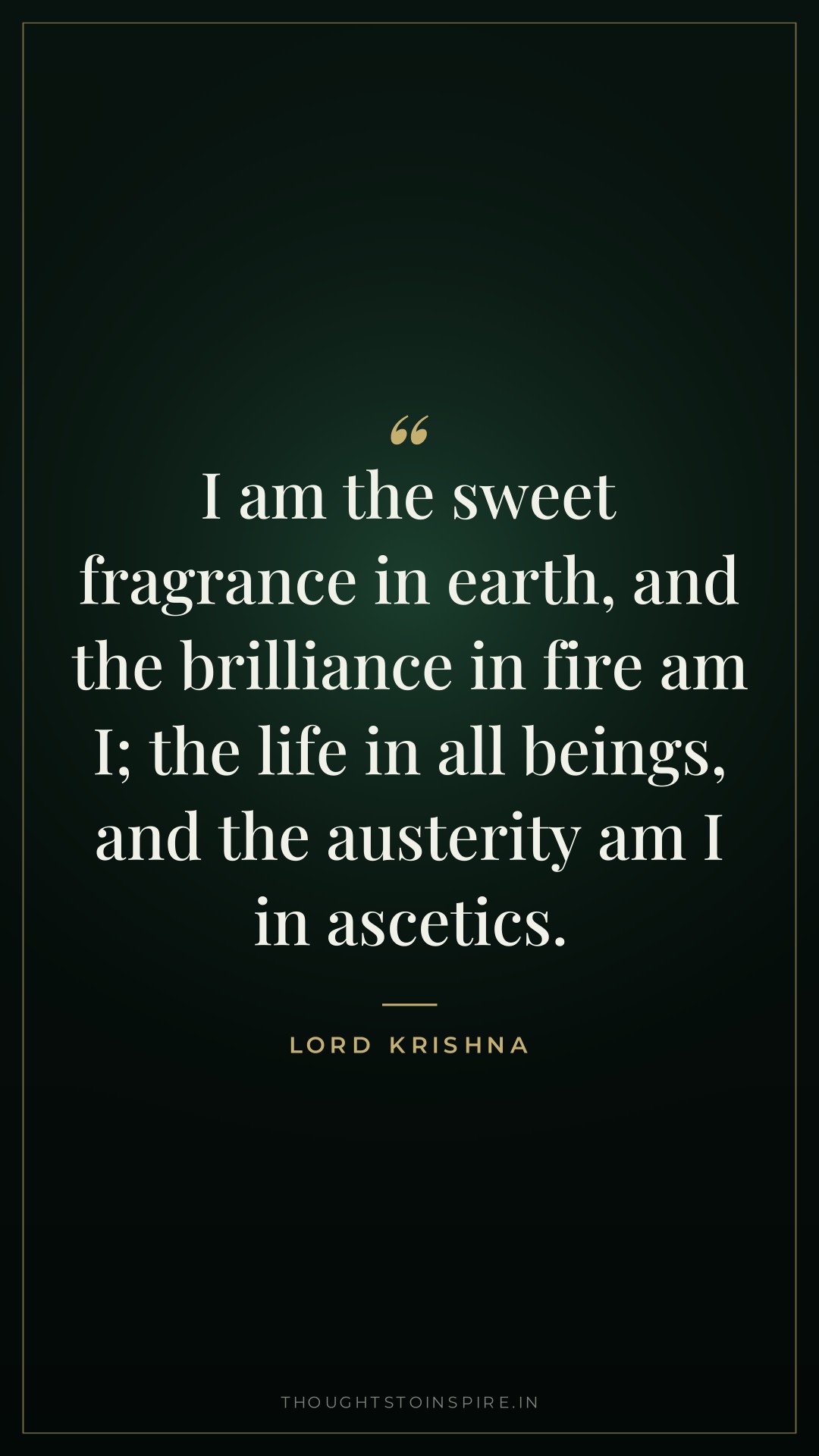
— Bhagavad Gita 7.9 (tr. Swami Swarupananda, 1909)
About this quote
हिन्दी में
मैं पृथ्वी की पवित्र सुगंध हूँ, अग्नि का तेज हूँ; सब प्राणियों में जीवन हूँ, और तपस्वियों में तप हूँ।
What it means
Every item in the list is a quality that cannot be lifted off the thing it belongs to. You cannot keep the fragrance and return the earth, or take the brilliance and leave the fire. Krishna is not claiming to be the objects; he is claiming to be the property by which each object is recognised as itself.
This is why reading it as simple pantheism — God is in everything — flattens it. The last item is also the one that breaks the pattern: fragrance and brilliance and life are involuntary, but austerity in ascetics is something a person chose and worked at. The verse quietly extends the claim from nature into human effort, including effort you would normally file as your own achievement.
What it teaches you
Take something you are genuinely good at and try to name it the way this verse names things — not my discipline or my patience but the quality running through the work. The exercise is not modesty theatre; it changes what you do when the quality is absent one morning, because a property you never owned cannot be lost the way a possession can.
अर्थ और सीख
इस श्लोक में गिनाई गई हर चीज़ ऐसी है जिसे उसके आधार से अलग नहीं किया जा सकता — सुगंध को मिट्टी से, तेज को अग्नि से। कृष्ण वस्तु नहीं, बल्कि वह गुण होने की बात कह रहे हैं जिससे वस्तु पहचानी जाती है। और अंतिम उदाहरण सबसे मार्मिक है: तप तो साधक का अपना परिश्रम है, फिर भी वह उसकी निजी संपत्ति नहीं — यही सीख है।
Where it comes from
This verse comes from Chapter 7 of the Bhagavad Gita, Jnana Vijnana Yoga (The Yoga of Knowledge and Realisation) — Krishna as the essence within all things — the taste in water, the light in sun and moon — and the rarity of those who truly seek.
The Bhagavad Gita — ‘the Song of the Lord’ — is the dialogue between Krishna and the warrior Arjuna set within the Mahabharata, and one of the most influential spiritual texts ever composed. English translation by Swami Swarupananda (1909), a public-domain rendering from the Sanskrit; the exact chapter and verse are cited with this quote.